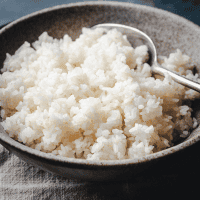
Sushi Rice in a Rice Cooker
Silky, lightly seasoned sushi rice—steamed in the rice cooker with a strip of kombu for gentle umami.
Servings: 8 people
Ingredients
- 1 1/2 cups sushi rice (short-grain white rice)
- 1 2/3 cups water
- 3 tablespoons rice vinegar
- 4 teaspoons granulated sugar or 1 tablespoon honey
- 3/4 teaspoon fine sea salt
- 1 piece dried kombu 4-by-4-inch piece
Instructions
Rinse the rice until the water runs clear
- Place the rice in a fine mesh strainer set over a bowl. Rinse under cool running water, gently stirring the grains with your fingers. When the water in the bowl turns cloudy, lift the strainer, discard the water, and repeat. Do this several times until the water stays mostly clear.
Soak the rice and prep the vinegar
- Transfer the rinsed rice to a medium bowl and cover with the measured fresh water. Let it sit at room temperature for 15 minutes. Meanwhile, stir together the rice vinegar, sugar, and salt in a small bowl until dissolved; set aside.
Cook the rice with kombu
- Pour the soaked rice and its water into the rice cooker insert. Place the kombu on top and close the lid. Cook using the white rice setting (or sushi rice setting, if your cooker has one). When the cycle finishes, turn off the machine and let the rice steam undisturbed for 10 minutes.
Season and cool the rice
- Remove and discard the kombu. Gently transfer the hot rice to a wide bowl. Drizzle the vinegar mixture evenly over top. Using a rice paddle, fold the rice with light, slicing motions—don’t mash or stir too hard. Cover with a damp towel and let cool to room temperature before using.
Video
Notes
- Rice type: Use short-grain Japanese rice (often labeled “sushi rice”). Medium-grain Calrose works in a pinch, but it won’t have quite the same stickiness.
- Rinsing matters: Don’t skip it. Rinsing removes excess starch so the rice cooks up fluffy, not gummy.
- Kombu tip: Adds subtle umami to the rice. If you don’t have any, it’s fine to leave it out.
- Mix gently: Folding in the vinegar with a light hand helps keep the grains intact and the texture airy.
- Timing: Sushi rice is best used at room temperature. Make it 1–2 hours before rolling or assembling.
Nutrition
Calories: 137kcal | Carbohydrates: 30g | Protein: 2g | Fat: 0.2g | Saturated Fat: 0.04g | Polyunsaturated Fat: 0.1g | Monounsaturated Fat: 0.1g | Sodium: 224mg | Potassium: 27mg | Fiber: 1g | Sugar: 2g | Vitamin A: 0.4IU | Vitamin C: 0.01mg | Calcium: 6mg | Iron: 1mg
QR code
Scan this QR code with your phone's camera to view this recipe on your mobile device.
