

Cooking sushi rice in a rice cooker feels almost unfairly simple, which is precisely why I reach for it so often. Instead of hovering over a pot, I trust the cooker to hum along while I slice fish and prep fillings, with no second guessing and no scorched bottoms.

This post may contain affiliate links. Please read our disclosure policy.
Once the water‑to‑rice ratio is set and the seasoned vinegar folded in, each grain stays distinct but sticky enough to hold together. I use this method for everything from a quick lunch roll to a full sushi spread with friends.
Table of Contents
Recipe at a Glance
- Ready in about 50 minutes (5 minutes hands-on)
- Uses a rice cooker—no need to watch the stove
- Just 4 ingredients plus water and kombu (optional)
- Lightly seasoned with vinegar, sugar, and salt
- Perfect base for sushi rolls, bowls, or nigiri
Ingredients for Rice Cooker Sushi Rice
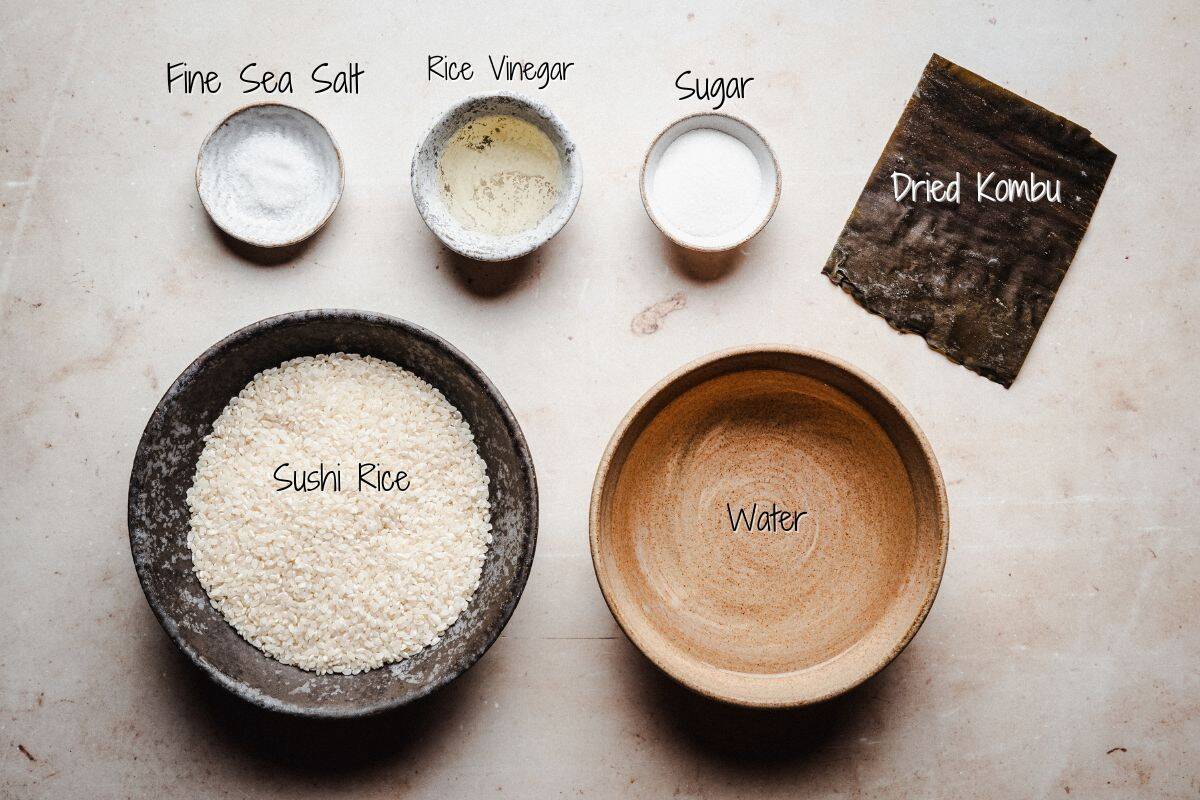
- Sushi rice – Short‑grain Japanese rice like Nishiki or Kokuho Rose. Its extra surface starch gives sushi that gentle stick.
- Water – Filtered if your tap tastes of chlorine; plain tap is fine if it tastes clean.
- Rice vinegar – Choose unseasoned so you can balance sweetness and salt.
- Sugar – Regular white sugar dissolves quickly. Swap in honey one‑for‑one if you prefer its light floral note.
- Fine sea salt – Dissolves without leaving gritty bits.
- Dried kombu (optional) – A small square of kelp lends quiet umami; skip it if it is hard to find.
Testing note: I ran three water ratios—1:1, 1:1.1, and 1:1.11—and tasted each batch side by side. The recipe’s 1 ⅔ cups water to 1 ½ cups rice delivered the best balance of fluff and stick every time.
How to Make Sushi Rice in a Rice Cooker
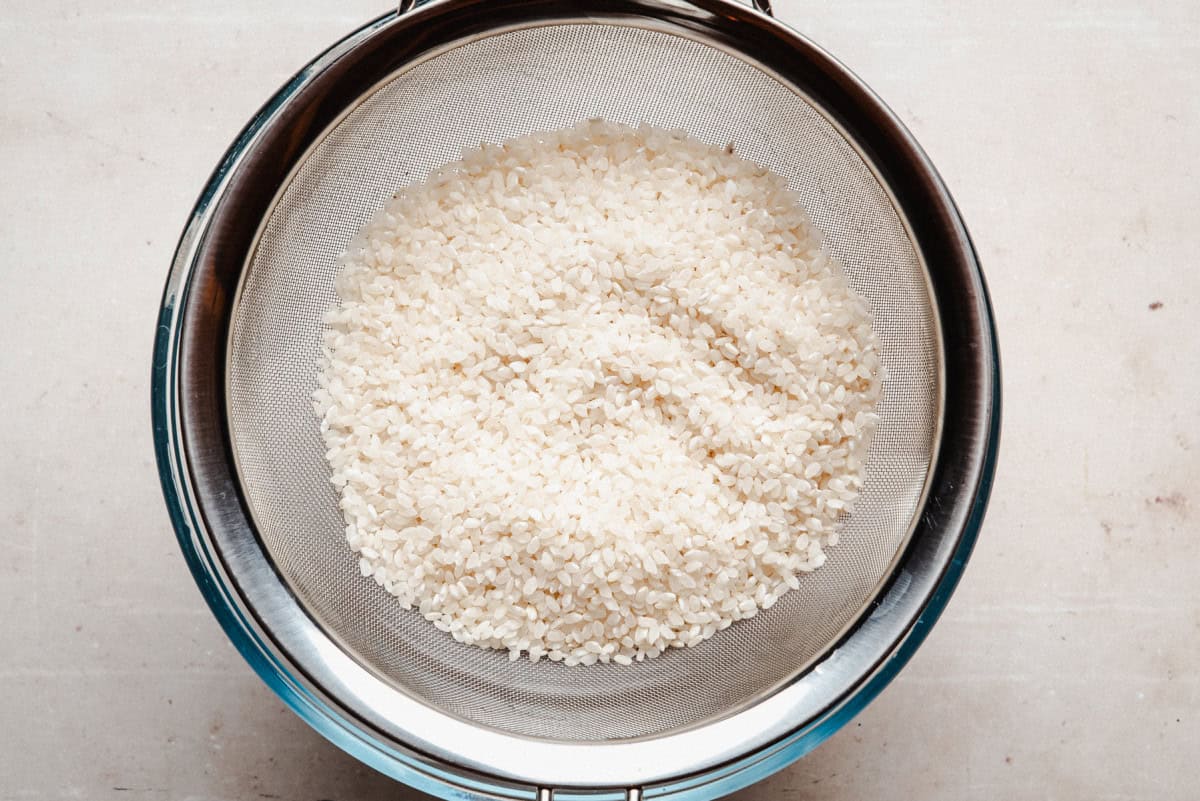
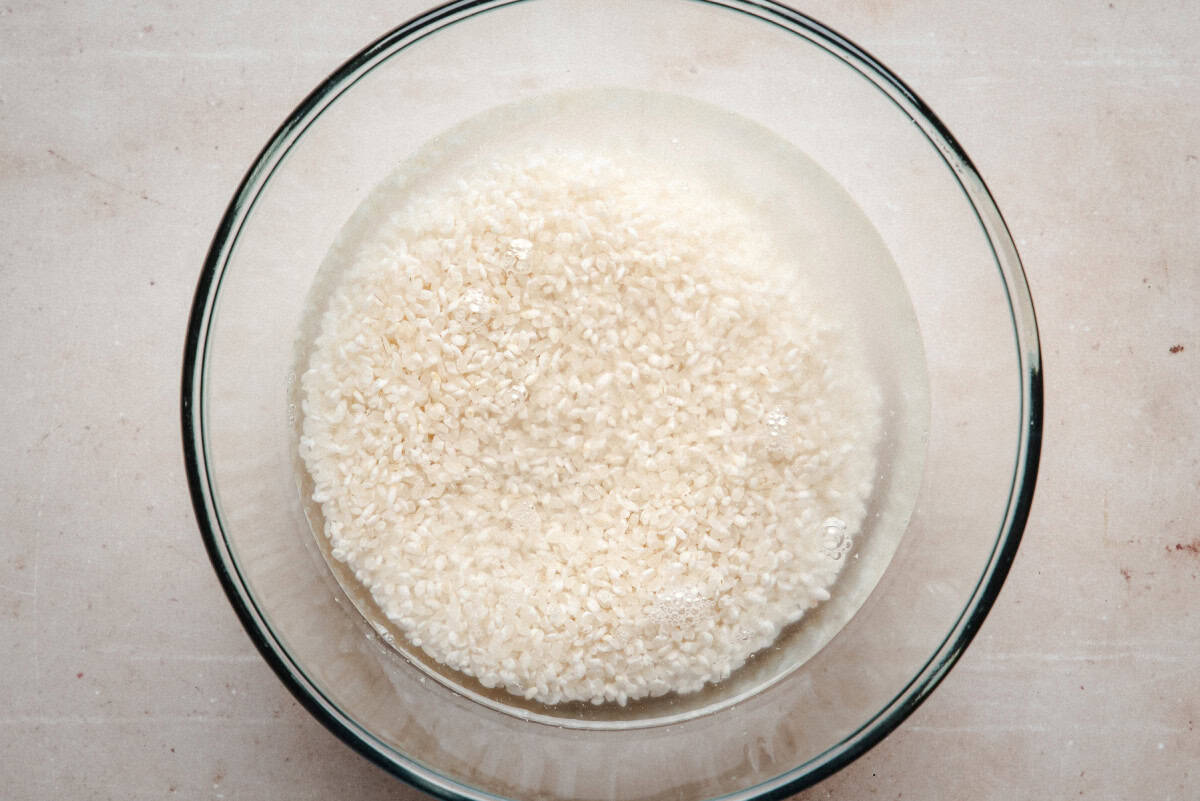
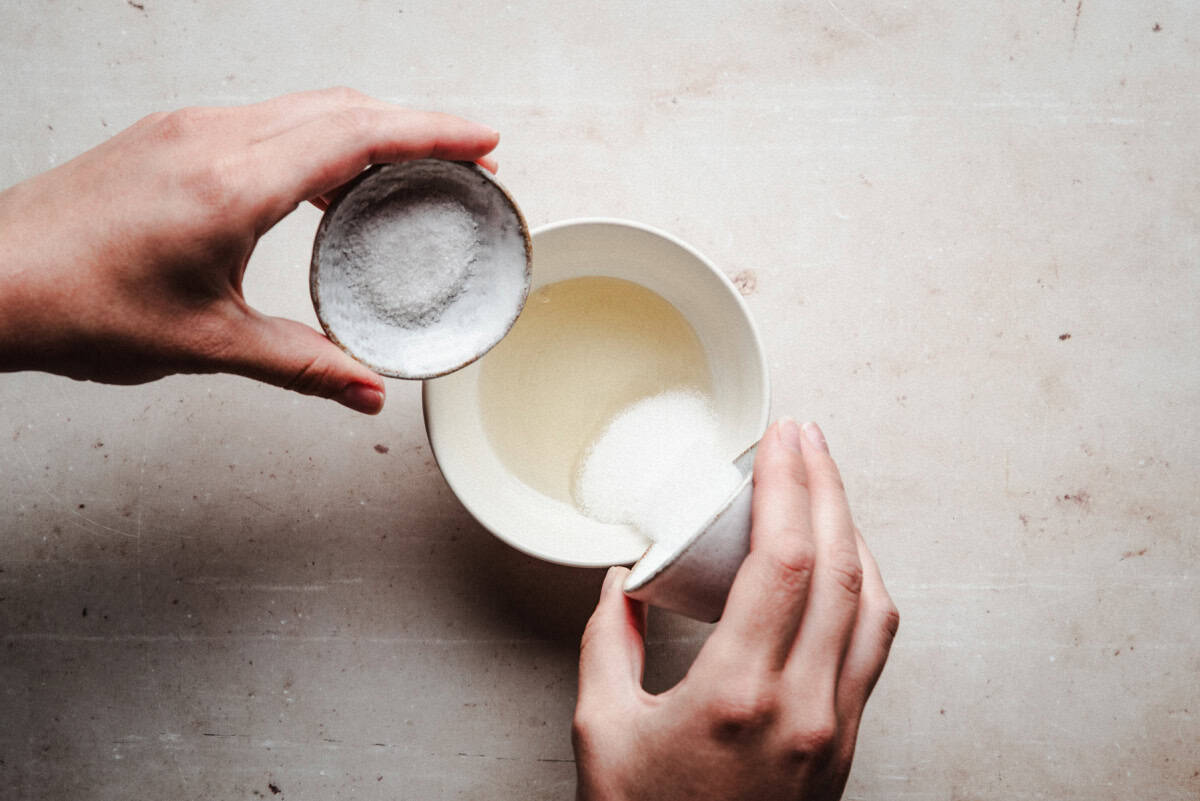
Rinse the rice in a fine-mesh strainer until the water runs mostly clear, then soak it in the measured water for 15 minutes. While the rice soaks, dissolve the rice vinegar, sugar, and salt together for the seasoning mixture.
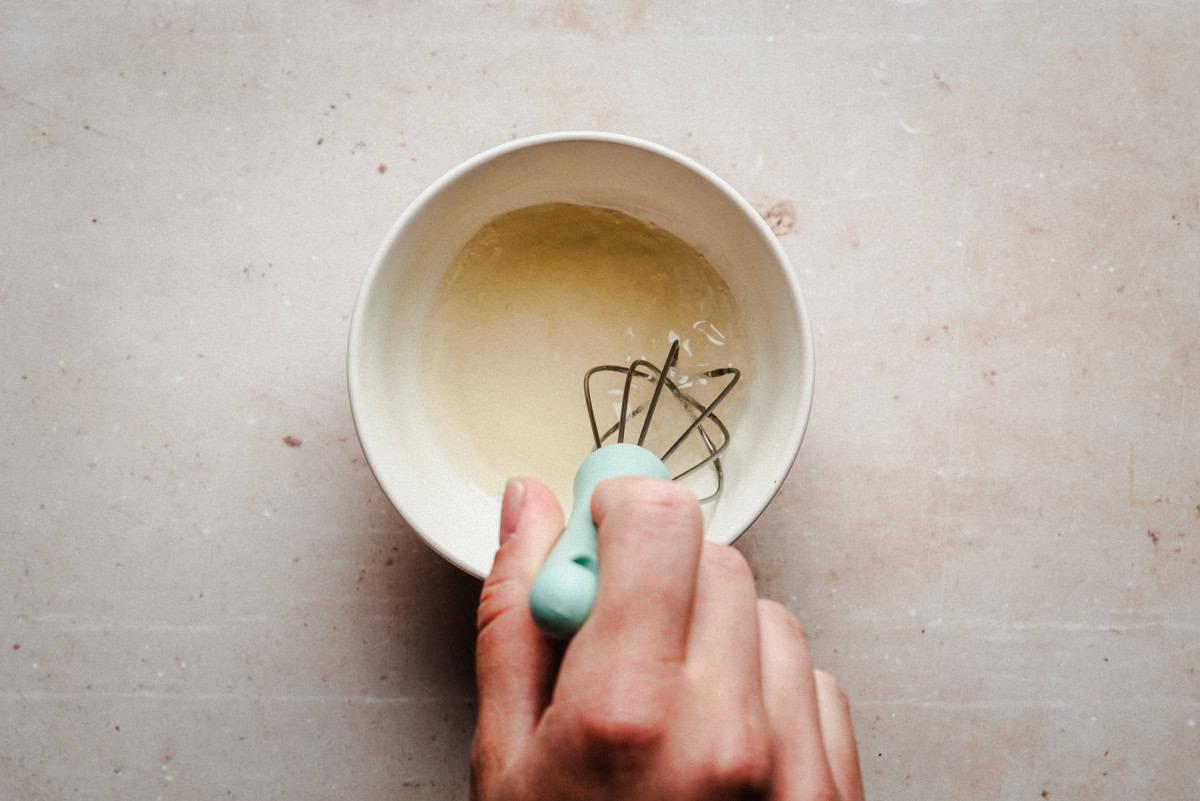
Cook the soaked rice and water in your rice cooker with the kombu on top, then let it steam for 10 minutes after cooking. Transfer the hot rice to a wide bowl, fold in the vinegar mixture with gentle slicing motions, and let it cool to room temperature under a damp towel.
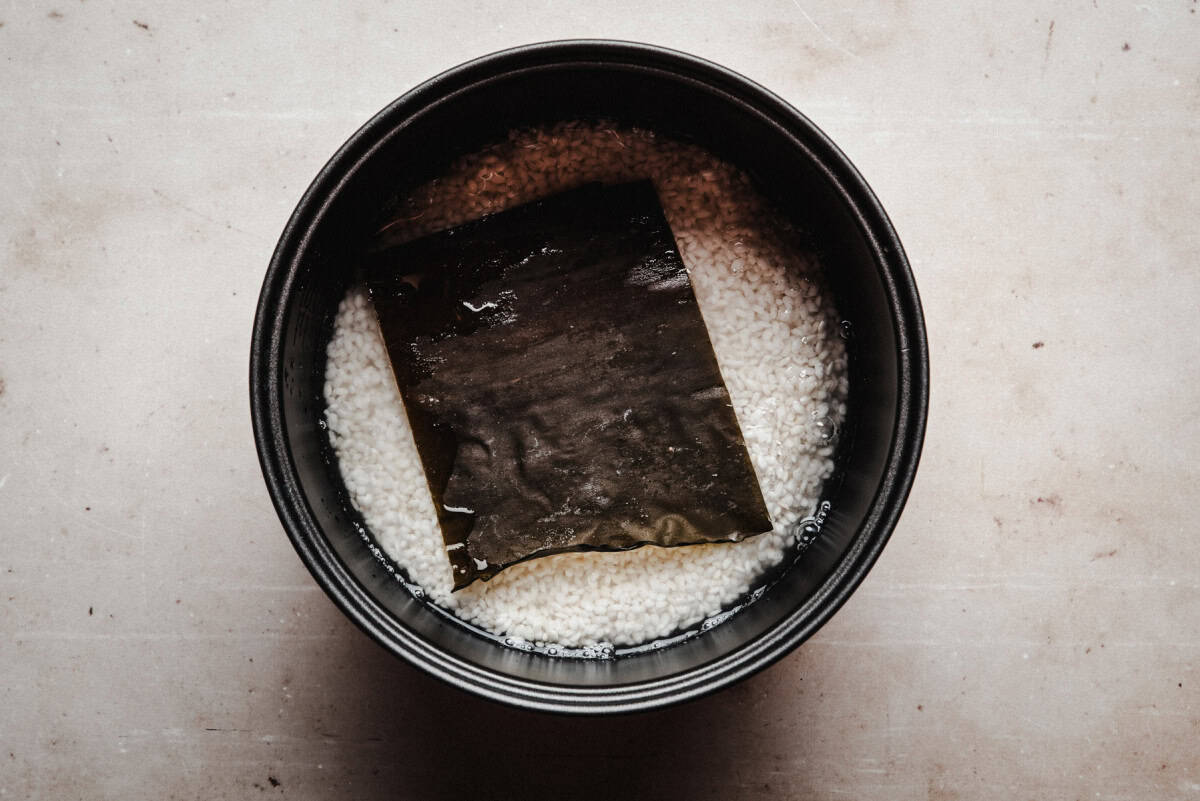
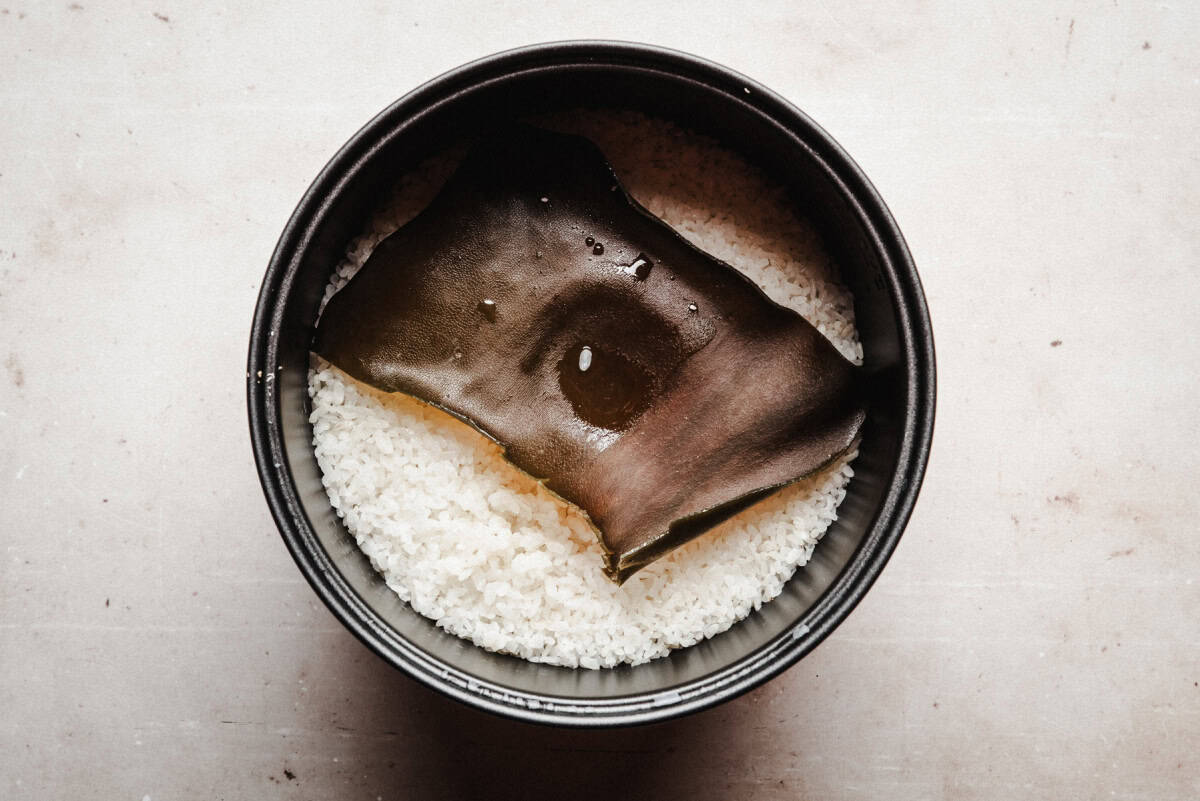
TROUBLESHOOTING SUSHI RICE
- Rice turns out mushy or gummy – Usually too much water or over‑mixing. Confirm your ratio, then fold with a slicing motion rather than stirring in circles.
- Rice is too firm or undercooked – Your cooker might run cool. Soak for 20–30 minutes instead of 15, or add 2 tablespoons water and steam 5 more minutes.
- Rice falls apart while rolling – It may have dried out. Keep cooked rice under a damp towel and be sure you are using short‑grain rice.
- Vinegar flavor is too strong – Reduce vinegar by ½ tablespoon next time or add another ½ teaspoon sugar.
Equipment Notes
- Rice cooker variations: Any basic rice cooker works; a sushi setting is handy but not required. I’ve tested this with both an inexpensive, basic model and a fancier Zojirushi; both gave good results, though the pricier one was slightly more consistent.
- Essential tools: A fine‑mesh strainer, rice paddle, and wide non‑reactive bowl make the process easier.
- Rice cooker cup vs. standard measuring cup: Most rice cookers come with their own measuring cup, which is actually 3/4 of a standard US cup. I use standard measuring cups for this recipe, so stick with those for the ratios to work properly.
How to Store and Reheat
- Storing leftover sushi rice: If your rice is already seasoned with vinegar, you can hold it at room temperature, covered with a damp towel, for up to 4 hours. After that, move it to an airtight container in the refrigerator for up to 3 days—it will firm up, and that’s normal.
- Using refrigerated or frozen rice: Sushi rice is meant to be eaten at room temperature. Let chilled rice sit out 20-30 minutes before shaping. Thaw frozen portions overnight in the fridge, then bring to room temp before shaping.
- For meal prep: Portion the rice while it’s still slightly warm, press out excess air, and freeze flat. Quality is best within 1 month, though it stays perfectly usable for about 2 months. I often double a batch, freeze half for future sushi nights, and dip into those packets for speedy rice bowls or nigiri during the week.
Once you learn how easy it is to make sushi rice in a rice cooker, it opens the door to weeknight rolls, simple nigiri, and impromptu hand rolls with whatever you have on hand. I rely on this method for its consistency, and because it lets me focus on the fun part: choosing fillings, shaping rolls, and sharing them at the table.
More Essential Sushi Recipes
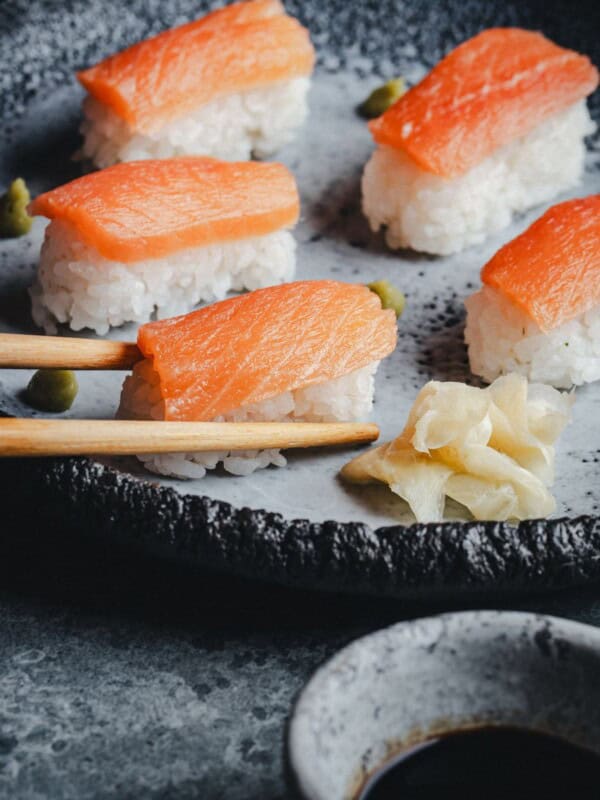
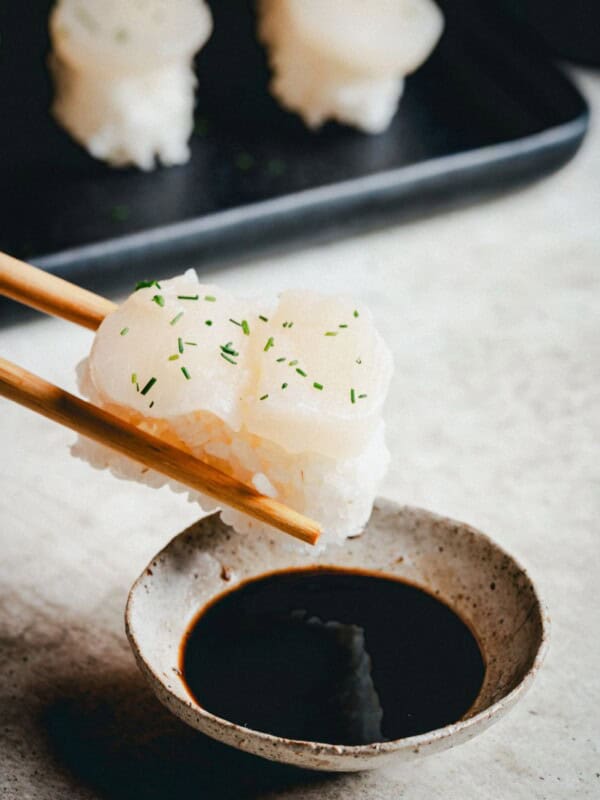
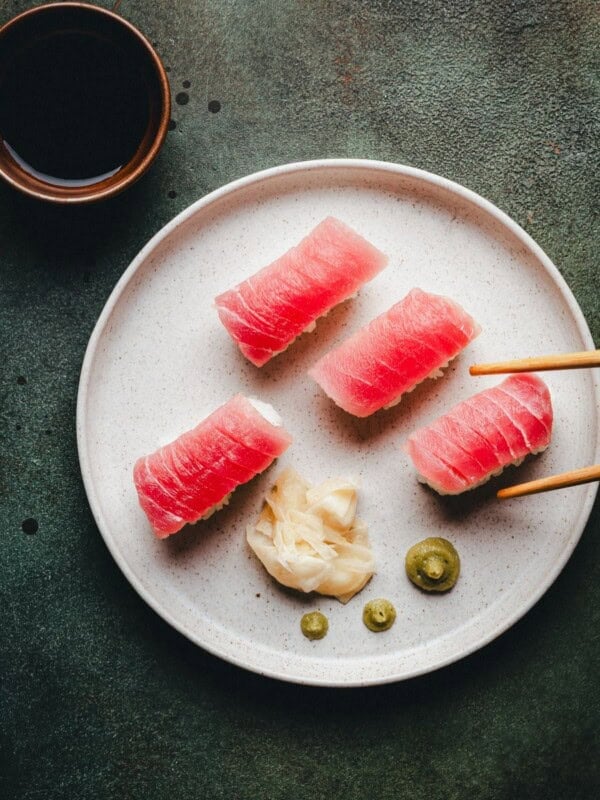
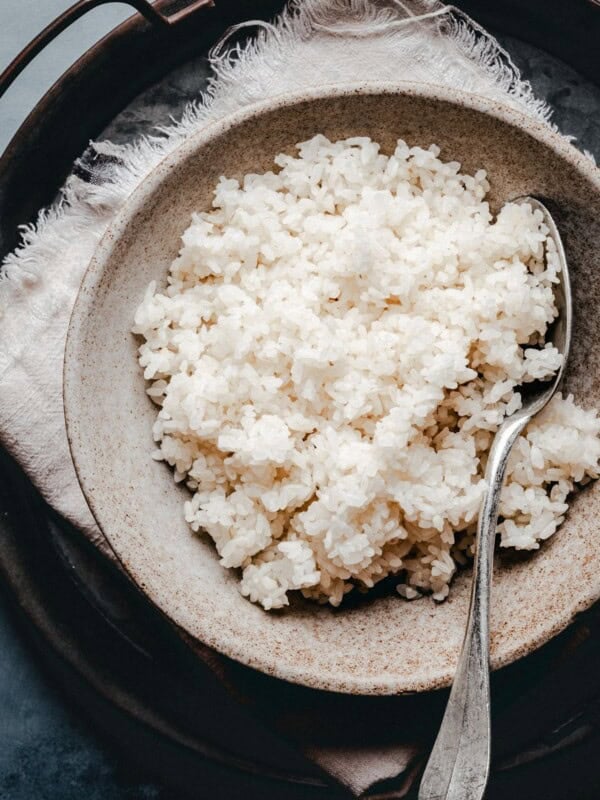
Sushi Rice in a Rice Cooker
Video
Ingredients
- 1 1/2 cups sushi rice (short-grain white rice)
- 1 2/3 cups water
- 3 tablespoons rice vinegar
- 4 teaspoons granulated sugar or 1 tablespoon honey
- 3/4 teaspoon fine sea salt
- 1 piece dried kombu 4-by-4-inch piece
Instructions
Rinse the rice until the water runs clear
- Place the rice in a fine mesh strainer set over a bowl. Rinse under cool running water, gently stirring the grains with your fingers. When the water in the bowl turns cloudy, lift the strainer, discard the water, and repeat. Do this several times until the water stays mostly clear.
Soak the rice and prep the vinegar
- Transfer the rinsed rice to a medium bowl and cover with the measured fresh water. Let it sit at room temperature for 15 minutes. Meanwhile, stir together the rice vinegar, sugar, and salt in a small bowl until dissolved; set aside.
Cook the rice with kombu
- Pour the soaked rice and its water into the rice cooker insert. Place the kombu on top and close the lid. Cook using the white rice setting (or sushi rice setting, if your cooker has one). When the cycle finishes, turn off the machine and let the rice steam undisturbed for 10 minutes.
Season and cool the rice
- Remove and discard the kombu. Gently transfer the hot rice to a wide bowl. Drizzle the vinegar mixture evenly over top. Using a rice paddle, fold the rice with light, slicing motions—don’t mash or stir too hard. Cover with a damp towel and let cool to room temperature before using.
Notes
- Rice type: Use short-grain Japanese rice (often labeled “sushi rice”). Medium-grain Calrose works in a pinch, but it won’t have quite the same stickiness.
- Rinsing matters: Don’t skip it. Rinsing removes excess starch so the rice cooks up fluffy, not gummy.
- Kombu tip: Adds subtle umami to the rice. If you don’t have any, it’s fine to leave it out.
- Mix gently: Folding in the vinegar with a light hand helps keep the grains intact and the texture airy.
- Timing: Sushi rice is best used at room temperature. Make it 1–2 hours before rolling or assembling.
Nutrition
Nutrition information is automatically calculated, so should only be used as an approximation.


