

You need just 4 everyday ingredients to make Pork Belly that’s crispy on the outside, juicy and flavorful inside, and oh so versatile. It’s the kind of thing you taste in a restaurant and think it would be impossible to make at home – but it’s just the opposite. Enjoy it on its own, simply pan-fried, or as the star of countless dishes.

This post may contain affiliate links. Please read our disclosure policy.
If you’ve had poorly cooked pork belly (chewy or otherwise unpleasant), you know that technique is important. After experiencing the melt-in-your-mouth version at David Chang’s Momofuku Noodle Bar in New York City, I was determined to recreate it at home. I turned to his Momofuku: A cookbook, and to my surprise, the recipe was ridiculously simple. This version is the result of that journey: a foolproof method that delivers unbelievably succulent, crisp-edged slices; truly restaurant-quality pork belly every time.
This is a fantastic, simple recipe. I have made it twice now then also used your P.L.T sandwich recipe. It’s sinful! Thank you for sharing!!!
LINDSEY L
Table of Contents
- Ingredients for this Pork Belly Recipe
- Skinless vs. Skin-On Pork Belly
- Pork Belly, Side Pork, and Bacon
- Why This Recipe Works
- How to Cook Pork Belly: Skin-On or Skinless
- Pro Tips
- Variations and Serving Suggestions
- Make-Ahead and Storage
- Your Questions, Answered
- More Amazing Pork Belly Recipes
- Oven Roasted Crispy Pork Belly Recipe
Ingredients for this Pork Belly Recipe

- Pork Belly: skin-on or skinless (more on that below)
- Fine Salt: or twice the amount of kosher salt (Diamond Crystal brand, or an equal amount of Morton brand)
- Sugar: plain granulated white sugar
- Freshly Ground Black Pepper
Skinless vs. Skin-On Pork Belly
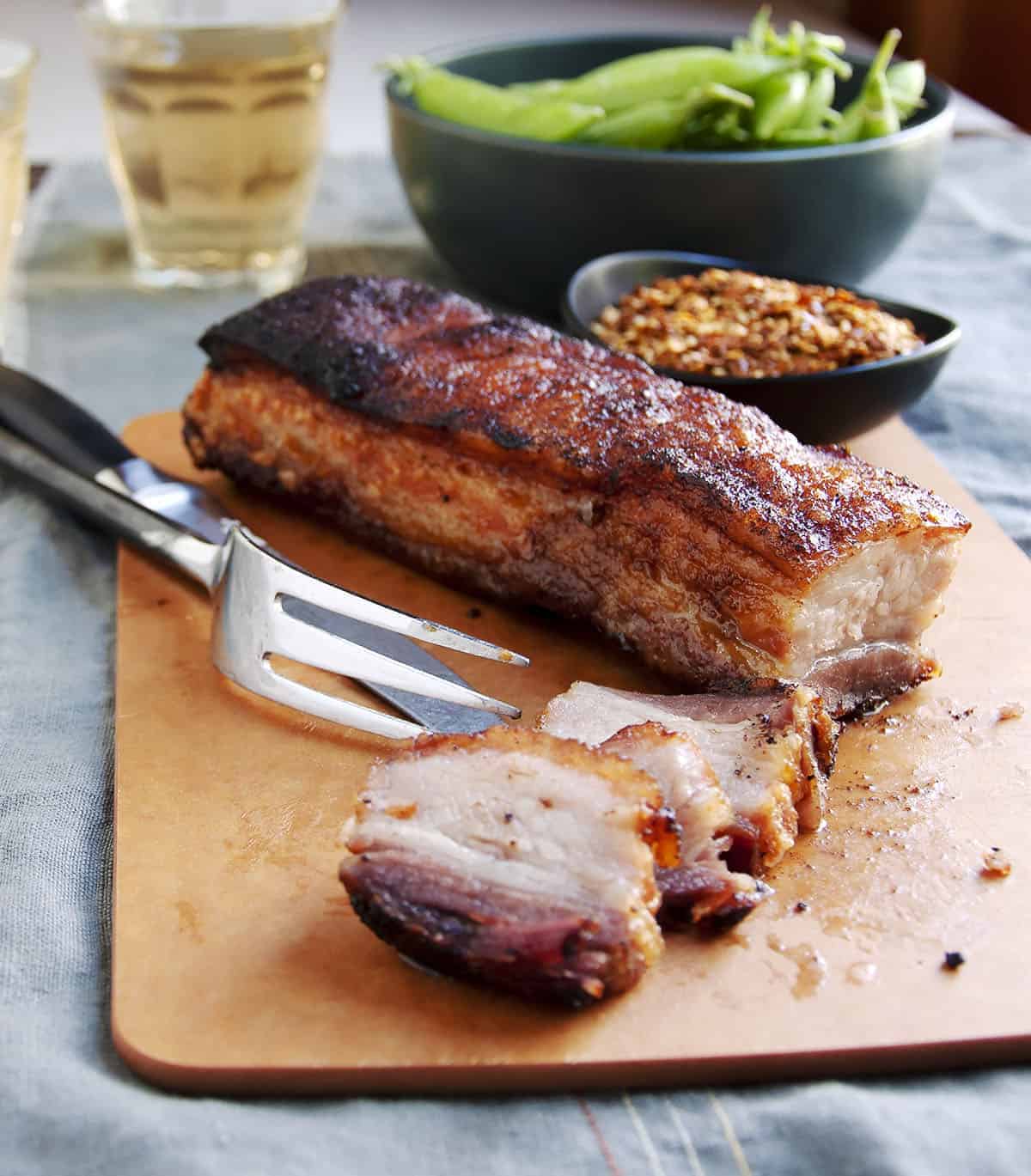

Chang’s original recipe calls for skinless pork belly, and that is the truest way to replicate the restaurant experience. However, this easy recipe also works beautifully with skin-on pork belly! The method of roasting, chilling, and pan-frying is the same for both.
With the skinless variety, you’ll skip the scoring and go straight to seasoning. With skin-on pork belly, you’ll need to score it before roasting. This helps the skin get a head start on crisping in the oven, a texture that becomes even more incredible after the final pan-fry.
A Quick Note on Serving Skin-On Pork Belly: While the chill-and-fry method is recommended for both, the 1-pound skin-on piece in this recipe can also be rested for 10-15 minutes after roasting and served immediately as a small roast for four.

Pork Belly, Side Pork, and Bacon
The terms pork belly and side pork mean the same thing. Look at the grocery store or ask your butcher for either and you’ll get the same cut of meat.
But don’t confuse pork belly with bacon. Pork belly is a fresh, thick slab of meat cut from the pig’s abdomen that hasn’t been cured or smoked. Bacon, though it’s usually made from pork belly, has been cured, smoked, and sliced. It can also come from less fatty back cuts. So while they start from a similar place, they end up as very different ingredients in your kitchen!

Why This Recipe Works
- Two-Stage Roasting: The recipe starts with a blast of high heat (450°F) to begin rendering the thick layer of fat and kickstart the crisping process. The temperature is then lowered to 275°F for a slow roast, which allows the tough connective tissues to break down, so the meat gets exceptionally tender.
- Overnight Dry Brine: Seasoning the pork belly and letting it rest overnight in the refrigerator adds flavor, but that’s not all. The salt draws moisture out of the belly, and that’s what you want for the crispiest edges.
- The Chilling Step is Key: Chilling the roasted pork belly completely is the step that gives you restaurant-quality results. It firms up the meat, so you can slice it into neat, thick pieces that won’t fall apart. This step also helps the slices crisp up beautifully in the pan without overcooking. (For the skin-on roast, this step is not required if serving immediately).
How to Cook Pork Belly: Skin-On or Skinless
Step 1: Score the Skin (if necessary): If you’re using skin-on pork belly, pat the skin very dry with a paper towel. Using a very sharp knife, make shallow diagonal cuts about 1/2-inch apart. Repeat in the opposite direction to create a diamond pattern. Cut through the skin and into the fat, but not so deep that you hit the meat. For skinless pork belly, you can skip this step.

Step 2: Season the pork belly all over with the dry rub of sugar, salt, and pepper, making sure to get it into all the nooks and crannies. Cover it and let it rest in the refrigerator overnight.


Step 3: The next day, preheat your oven to 450°F. Place the pork belly in a heavy, oven-safe pan or skillet (not a glass dish!) with the fat-side up. Roast on the middle rack for 30 minutes. Then, reduce the oven temperature to 275°F and continue to roast for another hour, or until the meat is tender but not mushy.


Step 4: Finish and Serve: Your final step depends on how you plan to serve the pork belly.
To Serve as Crispy Slices (Momofuku-Style): Remove the pan from the oven and let the pork belly cool to room temperature. Wrap it tightly in plastic and refrigerate it until completely chilled, at least a few hours or up to two days. Once chilled, slice into thick pieces and crisp up in a skillet to serve. (See serving suggestions below or use instead of bacon in recipes like Wedge Salad and Spinach Salad.)
To Serve as a Roast (for Skin-On Pork Belly): If serving right away, remove the pan from the oven and let the pork belly rest for about 10 minutes. Slice and serve to enjoy the freshly crispy crackling.


Pro Tips
- Plan Ahead: Despite the fact that you’ll only have a few moments of active time, you’ll want to start the process three days ahead. You’re essentially dry brining the meat and it needs an overnight stay in your refrigerator to take on all of that wonderful flavor. Then (ideally) you’ll refrigerate overnight again after roasting and before slicing and crisping.
- Dry Skin is a Must for Crispy Results: For skin-on pork belly, the skin must be completely dry before it goes into the oven. Pat it thoroughly with paper towels. The initial high-heat blast is also crucial for creating crispy bubbles.
- Don’t Undercook: The number one reason for tough pork belly is that it was undercooked. The low-and-slow portion of the cooking time is essential for breaking down tough connective tissues. If it’s still tough, it likely needs more time at the lower temperature.
- Use a Heavy Pan: A heavy, oven-safe skillet, such as cast iron, provides even, consistent heat, which helps the pork belly cook uniformly and the fat render properly.
Variations and Serving Suggestions
- Pork Belly Ramen: The ultimate ramen topping. A few crispy slices will make any bowl of ramen feel like it came from a specialty shop.
- Pork Belly Tacos: Add some pickled onions and cotija cheese for an incredible taco night.
- Pork Belly Sandwiches: A BLT becomes a PLT (Pork, Lettuce, Tomato) that is truly next-level. Also fantastic in Pork Belly Sliders.
- Pork Belly Fried Rice: Chop it into cubes for a rich and savory addition to your favorite fried rice recipe.
Make-Ahead and Storage
Store any leftover roasted pork belly wrapped tightly in an airtight container in the refrigerator for up to 4 days. You can also freeze it for up to 3 months.
The final step before serving is to sear the slices in a skillet to warm the pork belly and get those irresistible crispy edges. I recommend pan-frying because it’s fast and gives you total control so you can cook the slices up exactly as you like. Just slice the chilled pork belly and arrange the pieces in a cold, dry skillet in a single layer. Turn the heat to medium and let the fat slowly render out. Cook for a few minutes per side until the pork is heated through and gloriously crispy.
Your Questions, Answered
If your pork belly is still tough and/or chewy, it wasn’t cooked long enough. Because pork belly has a lot of connective tissue, it needs time to break down. At 275°F, it usually takes the full cooking time for that tissue to soften. If you pull it out too early or cook at too high a temperature at the beginning, it stays tough and hard to chew.
If you’re going for the Momofuku restaurant-style method, then yes, you need this step. Chilling the tender, rendered pork belly allows it to firm up, which is the only way to get clean, even slices. If you try to slice the warm meat, it won’t hold its shape and will fall apart in the skillet. This step is the key to the entire technique.
If you’re serving immediately as a roast: No. If you’re following the note to serve the skin-on pork belly as a small roast, simply let it rest for 10-15 minutes after it comes out of the oven, then slice and serve. If you’re following the Momofuku method, then yes. Searing the chilled slices renders the last bit of fat, deepens the flavor of the meat, and creates those irresistible crispy edges that are the hallmark of the Momofuku style.
Ask your butcher or grocery store meat counter for a center-cut piece of pork belly with even layers of fat and lean meat. You can buy it with the skin still attached or already removed; this recipe works either way.
I recommend roasting your pork belly in a standard oven, but the air fryer is a great way to reheat slices. To reheat the chilled slices in an air fryer, arrange them in a single layer and cook at 400°F for 3-5 minutes or until they’re as hot and crispy as you like.
More Amazing Pork Belly Recipes


Video
Ingredients
- 1 pound pork belly skin on or skinless
- 2 teaspoons fine salt or 4 teaspoons kosher salt
- 2 teaspoons sugar
- a few grinds of black pepper
Instructions
Prepare the Pork Belly
- For Skin-On Pork Belly: Pat skin dry with a paper towel. With a sharp knife, score through skin every 1/2-inch at a diagonal, cutting through skin and into fat, but not so deep that you hit meat. Repeat cutting in an opposite diagonal to create a diamond shape pattern. (See recipe note #1)
- For Skinless Pork Belly: Move on to the next step.
Season and Rest Overnight
- Season pork belly with salt sugar and a few grinds of black pepper. Cover and refrigerate overnight.
Roast Low and Slow
- Preheat oven to 450°F.
- Roast pork belly for 30 minutes on the middle rack in a heavy, oven-safe pan or skillet, skin side up / fat side up. Reduce heat to 275°F and roast for an hour or more, until tender but not mushy. (Larger pieces of pork belly will take longer. Our one-pound belly was done after an hour at 275°F.)
Finish and Serve
- To Serve as Crispy Slices (Momofuku-Style): Remove from oven and let cool to room temperature. Wrap tightly in plastic and refrigerate until chilled through – at least a few hours and up to 2 days. Once chilled, slice into thick pieces and brown in a skillet on the stovetop until crisp. Enjoy alone or in soups, salads, pasta sauces, ramen and more!
- To Serve as a Roast (Skin-On Alternative): Remove from oven and let rest 10-15 minutes before slicing. (See recipe note #2)
Notes
- Scoring: Scoring the pork belly skin allows it to crisp up and allows the seasoning to penetrate into the fat and meat below the skin.
- To Serve as a Roast: For the skin-on version, you can serve this immediately after roasting. Let the pork belly rest for 10-15 minutes before slicing and serving. This is ideal for a small roast for four.
- Storage: Store leftover chilled, roasted pork belly refrigerated in an airtight container for up to 4 days or freeze for up to 3 months.
- Serving Ideas: Be sure to check out my collection of Pork Belly Recipes for ways to use this delicious crispy pork belly!
Nutrition
Nutrition information is automatically calculated, so should only be used as an approximation.


Is there a desired internal temperature to determine if the belly is cooked enough (or to not exceed)?
Hi Juan! Since it cooks hot then low and slow, you’re really just looking for tenderness rather than a specific temperature. The meat should be fork-tender but still hold its shape – not falling apart or mushy. If you want to use a thermometer, 190-200°F is a good range, but honestly the fork-tender test is more reliable for this recipe. Hope it turns out great!
Made the mistake of buying skinless pork belly. Hope this turns out.
Hi Terry! It’s not a mistake – you can use this recipe for skinless or skin-on pork belly. The post and recipe have details for both!
Seasoned the pork belly with blackened seasoning and it was perfect!! Made carnivore blue cheese sauce to dip the pieces in! Chef’s kiss!!
Love your twist on this, Nita! Blackened seasoning with blue cheese sauce sounds amazing – what a great combination!
Made this recipe with 2 teaspoons of kosher salt and the rest stayed the same. Cooking instructions were just right. Thanks
Thanks for the feedback, Marc! Glad the cooking instructions worked well for you. Appreciate you trying the recipe!
Thank you for the recipe. I love how the pork belly turned out
You’re so welcome, Stacy! I’m thrilled you loved how the pork belly turned out. Thanks for trying the recipe!
Brilliant recipe! Came out super crispy! Decided to use a rack and tray to let the grease run off and made some adjustments to account for a gas oven;
– Put the pork at highest rack in oven for the first 30 minutes; opened the oven door for 30 seconds after the first 5 minutes to let moisture escape. Rotated the meat at minute 15
– Brought it down to middle rack for the last hour; rotated again with 30 minutes to go
Other than that followed recipe to a T. Unfortunately I bought a piece of meat that had ribs in it so had to contend with removing them, but otherwise all the same.
Only adjustment I’d make for next time is keep salt at 2 teaspoons even if kosher salt, because the crackling on its own did come out on the salty side.
Thanks for the detailed feedback, Ben! I love all the smart adjustments you made for your gas oven – using a rack, the strategic oven door opening, and rotating at key points. Those are exactly the kind of adaptations that help other readers! On the salt level, Pork belly can definitely handle less salt, especially when you’re getting that perfect crackling. Thanks for sharing what worked – this is so helpful for anyone else making it in a gas oven!
I really want to try this recipe but I wanted to use a pan with a rack to let the grease run off while roasting. Would that still work with the provided times/temperatures?
Hi Ben! I haven’t tested it on a rack, but it should work. I would roast 30 minutes at 450 °F, then drop to 275 °F until a skewer slips in easily (about an hour for a 1-lb piece; add a few minutes if it’s still firm). Peek in around the 20-minute mark during the high-heat phase—the extra airflow can brown the edges a bit faster, but otherwise the timing should stay the same.
Thank you!
This is the first time I’ve made pork belly having only had at restaurants. Who knew it could be this easy and so incredibly delicious? My husband and I are already planning when to make it again. Yum!
So wonderful to hear this was your first time making pork belly at home, Michelle! It really is surprisingly simple for such an impressive dish. I love that you and your husband are already planning the next round – that’s the best compliment this recipe can get. Thank you!