
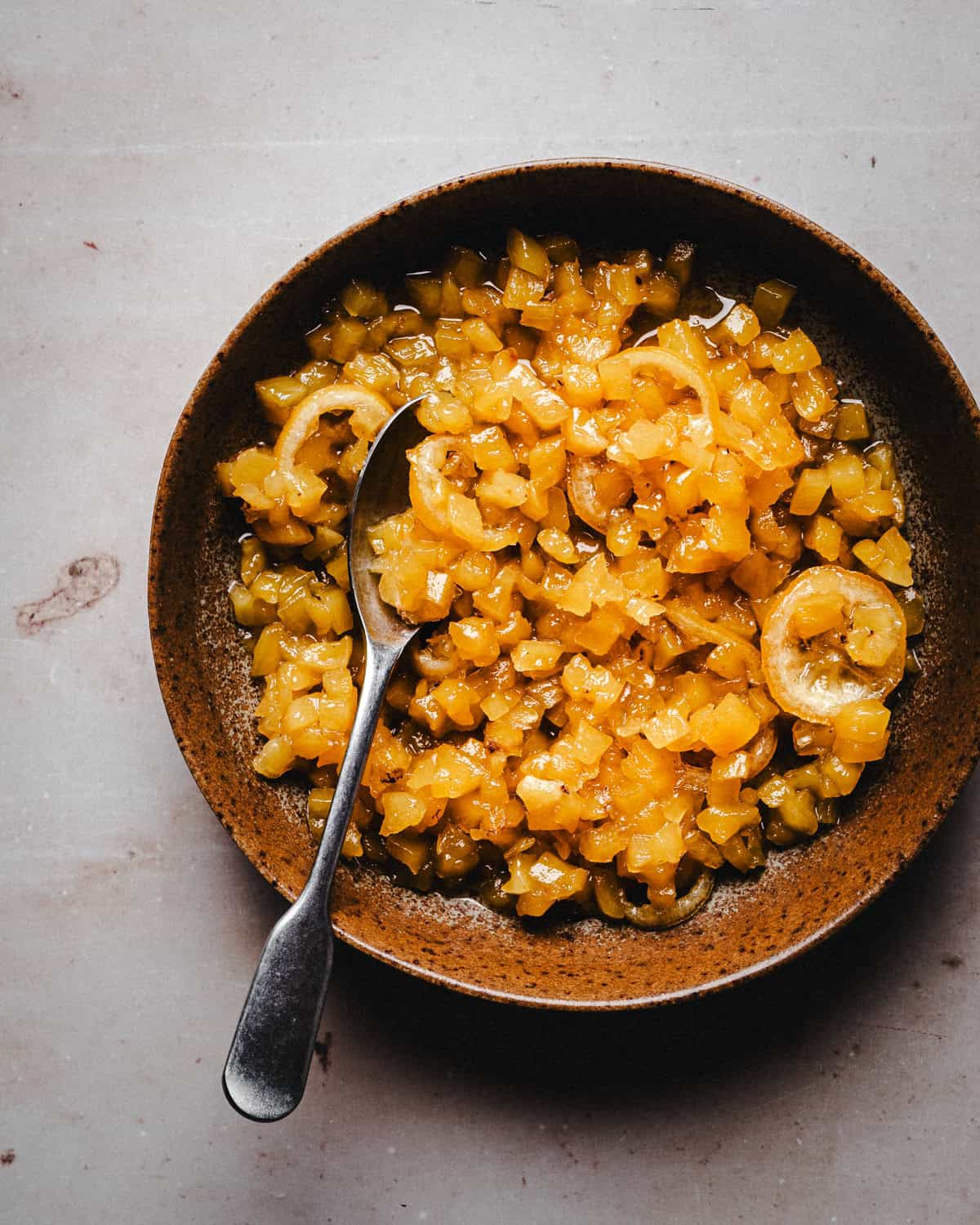
You can make a bright, not-too-sweet Pineapple Marmalade in under an hour with just 15 minutes of prep, three ingredients, and no boxed pectin.
This post may contain affiliate links. Please read our disclosure policy.
Making a fresh Pineapple Marmalade shouldn’t mean several cups of sugar or an afternoon spent over a boiling water bath. I like to keep things small and bright, using a quick simmer and just enough sugar for a tropical marmalade that beats any jar you’d buy at the store. It takes a few minutes to chop up a fresh pineapple, but it’s well worth the effort. The rest of the work is just letting the fruits and sugar simmer on the stove.
A lot of recipes and every commercial version of this I’ve tried are so sweet that the acidity of the pineapple gets lost entirely in the sugar. This version changes that. I first came across a similar method from Chef Ed Kenney and I loved how it stripped away almost all of the complication and a lot of the sugar (which I still reduced by half). By using thinly sliced lemon and fresh pineapple, you get a natural set without added pectin, and a balance of sweet and tart that works as well on a toasted slice of brioche bread as it does spooned onto crepes.
Table of Contents
Recipe at a Glance
- Prep time: 15 minutes
- Total time: 1 hour
- Yield: 2 cups
- Skill level: Easy
Pineapple Marmalade Ingredients
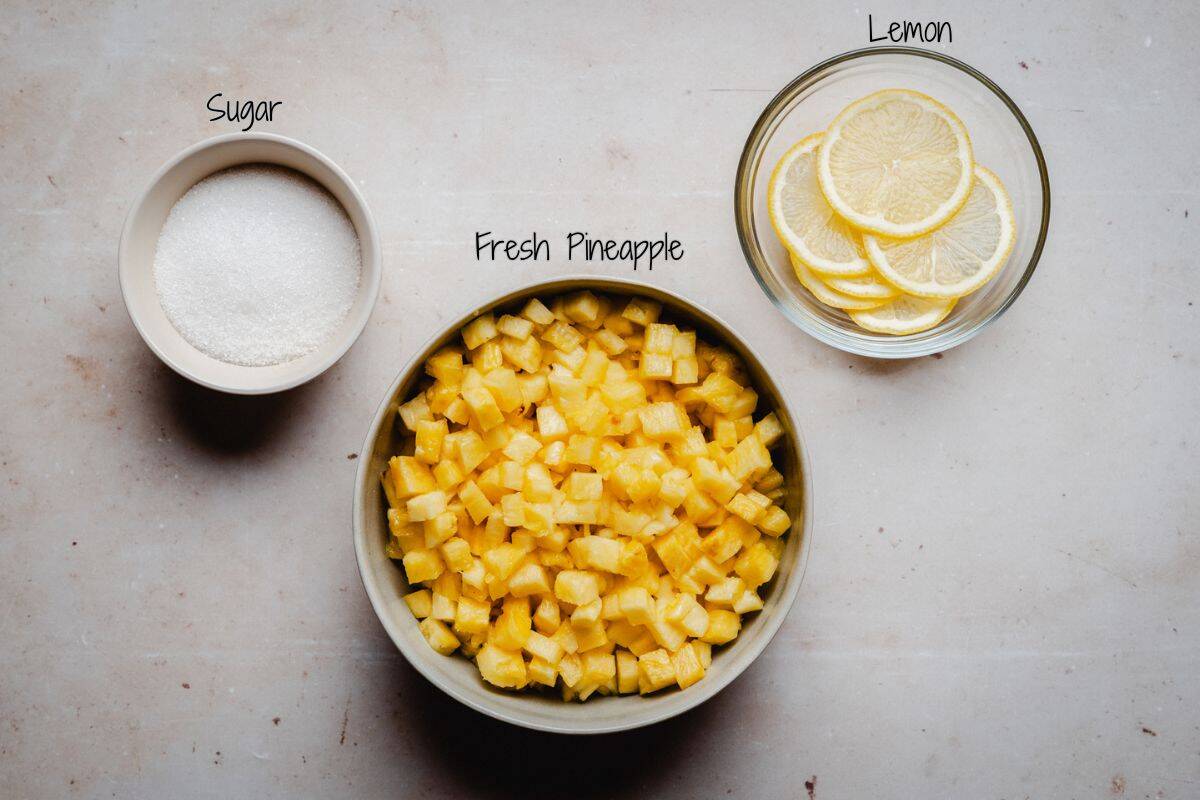
- Fresh Pineapple: You want one medium, ripe pineapple. Canned fruit won’t give you the same texture or bright flavor.
- Lemon: Use a thin-skinned lemon (Meyer lemon) if you can find one. Slicing it very thin will give you that classic marmalade bite without chewy chunks of rind. Be sure to discard any seeds.
- Sugar: A fraction of what most recipes call for, but plenty to balance acidity without making the jam too sweet.
Why This Recipe Works
- Natural Pectin: Lemons provide pectin naturally so you can skip boxed pectin or other thickeners.
- Small Batch: This recipe makes a manageable amount to enjoy within 2 weeks, since it’s not traditionally canned. Keep it refrigerated as it will not be shelf stable.
- Rapid Reduction: A steady simmer concentrates the fruit flavors quickly and gives the marmalade a translucent look in less than 45 minutes.
How to Make
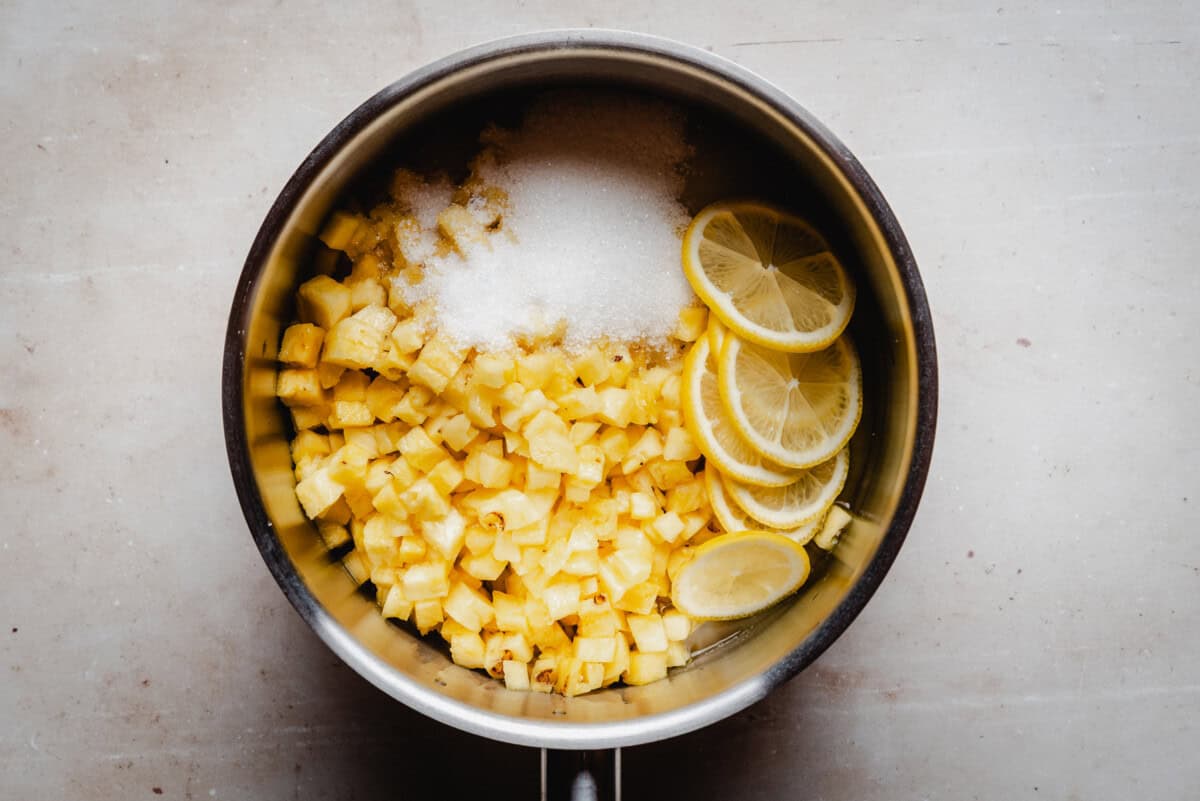
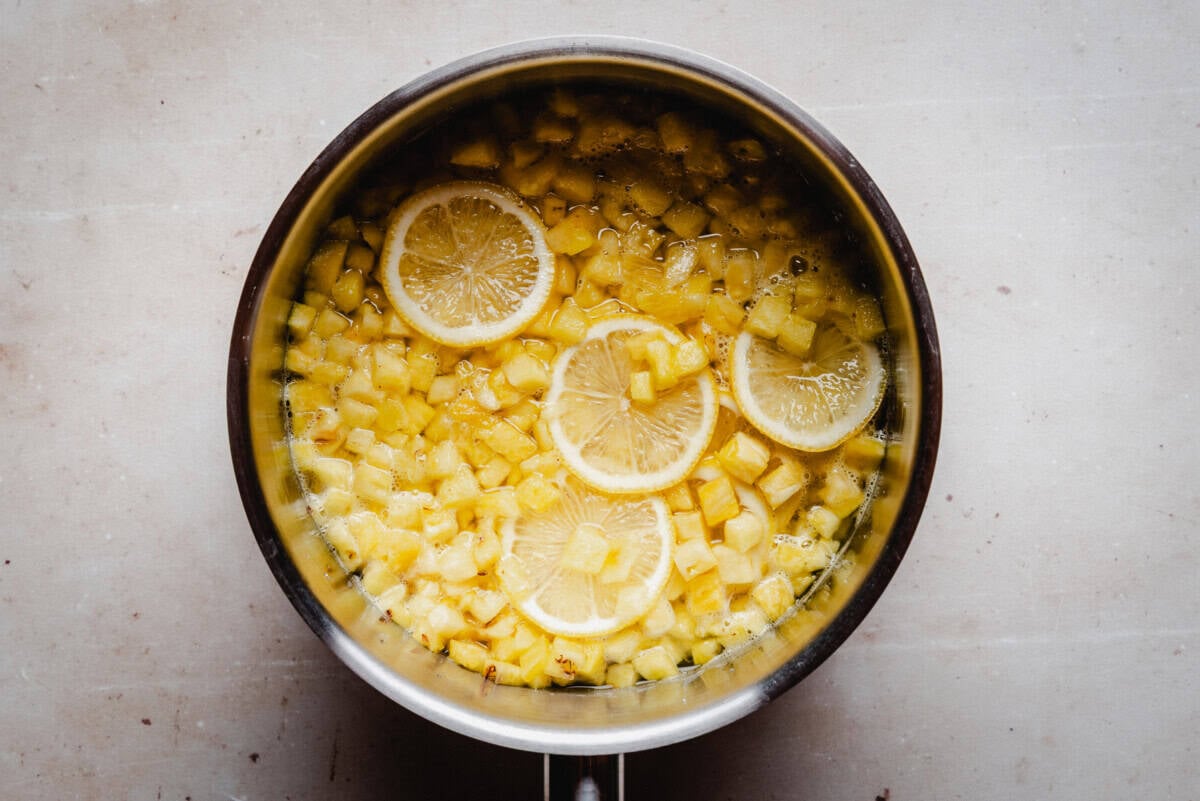
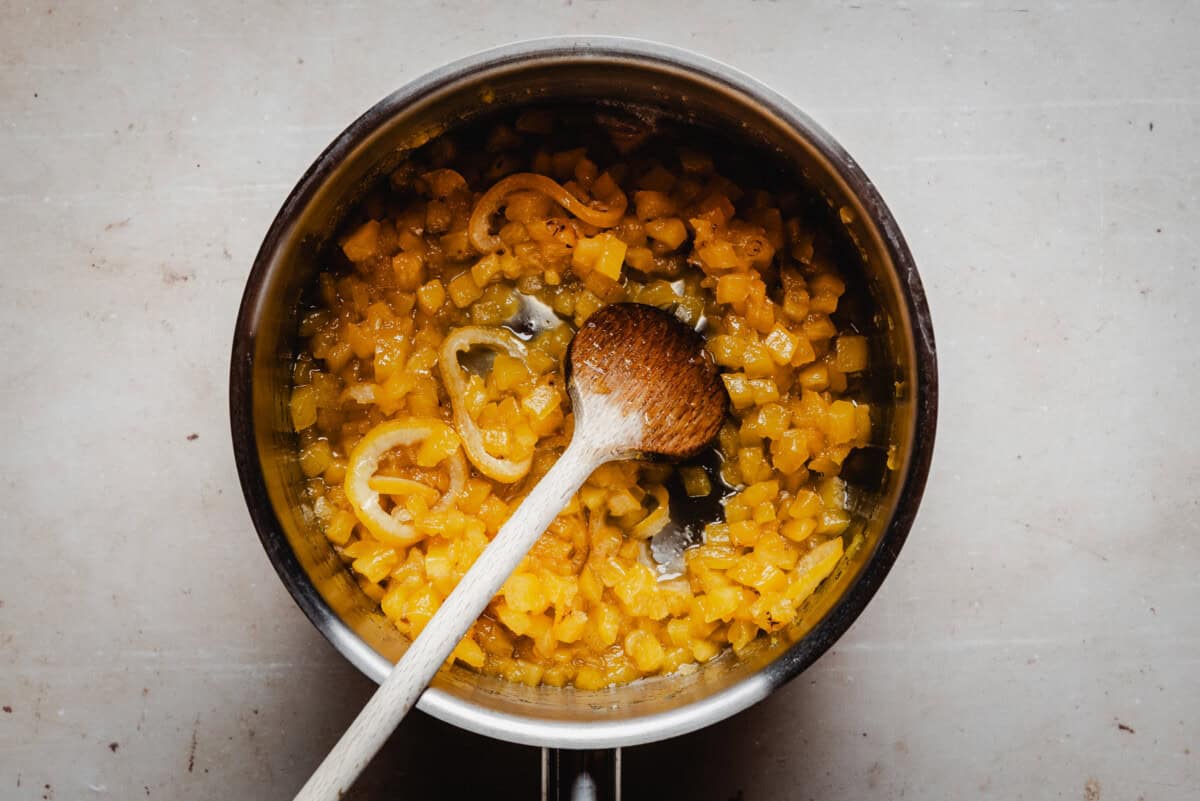
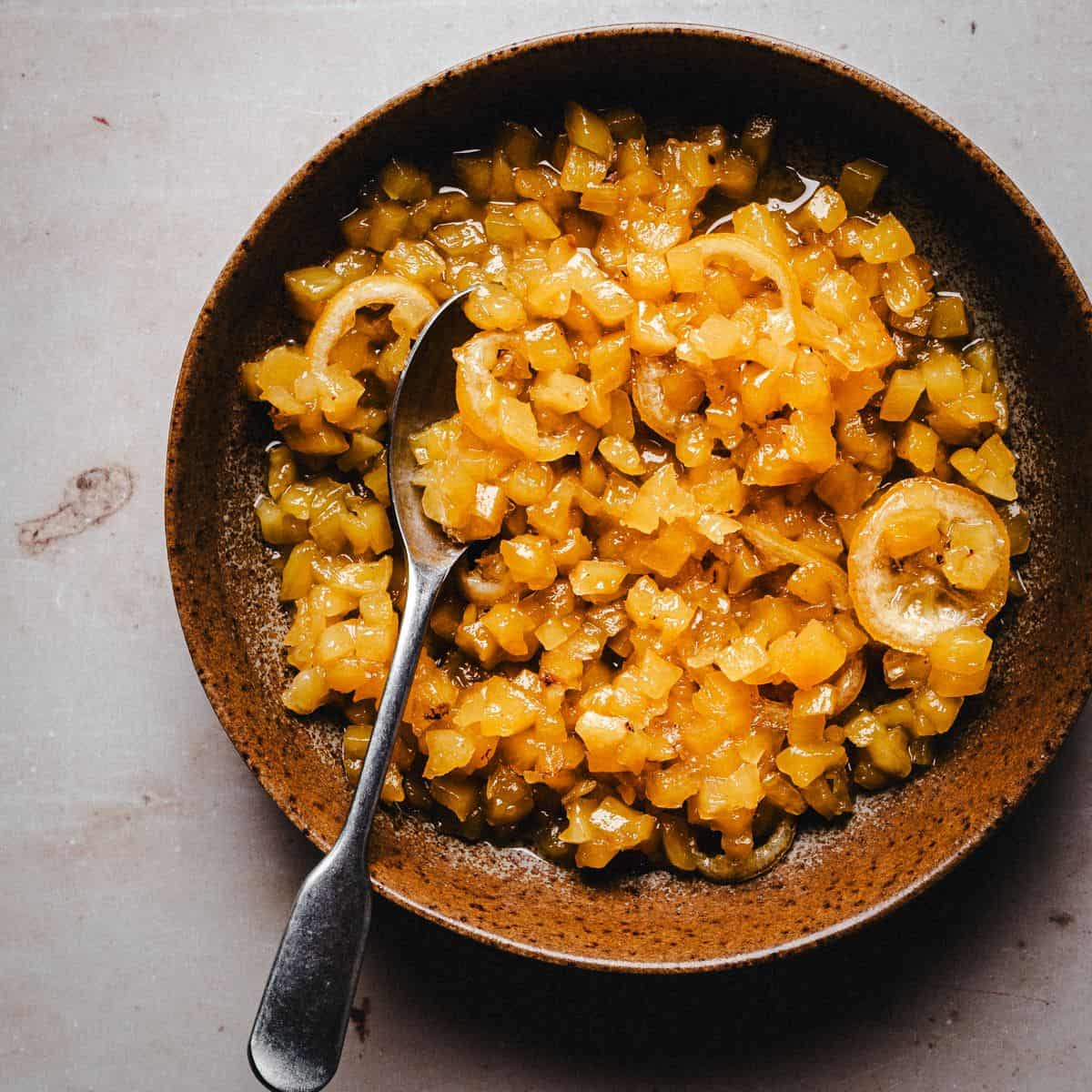
Combine the fruit and sugar in a medium saucepan with a half-cup of water. Bring the mixture to a full boil before dropping the heat to a steady simmer. Stir the pot occasionally to make sure nothing sticks to the bottom as the liquid reduces. You want the pineapple and lemon slices to get soft and translucent. Check the consistency after about 35 minutes; the marmalade is done when it looks glossy and holds its shape on a cold spoon.
Pro Tips
- Properly cut and finely chop the pineapple: Slice off the top and bottom of the pineapple and stand it upright. Slice off the peel in downward strips, following the curve of the fruit. Cut the peeled fruit into quarters lengthwise, cut the tough inner core out of each piece, then finely chop.
- Seed Removal: Check the lemon slices carefully for seed and remove any before they go in the pot. You don’t want to end up with bitter seeds in your marmalade.
- Cool Completely: Let the marmalade cool and thicken at room temperature before moving it to the refrigerator to help stabilize the texture.
Storage
Transfer the cooled marmalade to a clean glass pint jar and store for up to 2 weeks in the refrigerator. Since this is a small-batch refrigerator jam, it is not safe for long-term shelf storage at room temperature.
More Breakfast and Brunch Recipes


Pineapple Marmalade
Ingredients
- 1/2 Meyer lemon thinly sliced, seeds removed
- 3 cups finely chopped fresh pineapple about 1 medium pineapple
- 1/2 cup sugar
Instructions
- In a medium saucepan, bring lemon slices, pineapple, sugar, and 1/2 cup water to boil in a medium saucepan. Reduce heat and simmer for 35-45 minutes, stirring occasionally, until pineapple and lemon are soft and translucent.
- Let cool completely. Transfer to a pint jar and refrigerate for up to 2 weeks.
Notes
- Makes about 2 cups or 32 1-tablespoon servings.
Nutrition
Nutrition information is automatically calculated, so should only be used as an approximation.


This is a recipe that I will definitely be trying…it sounds terrific.