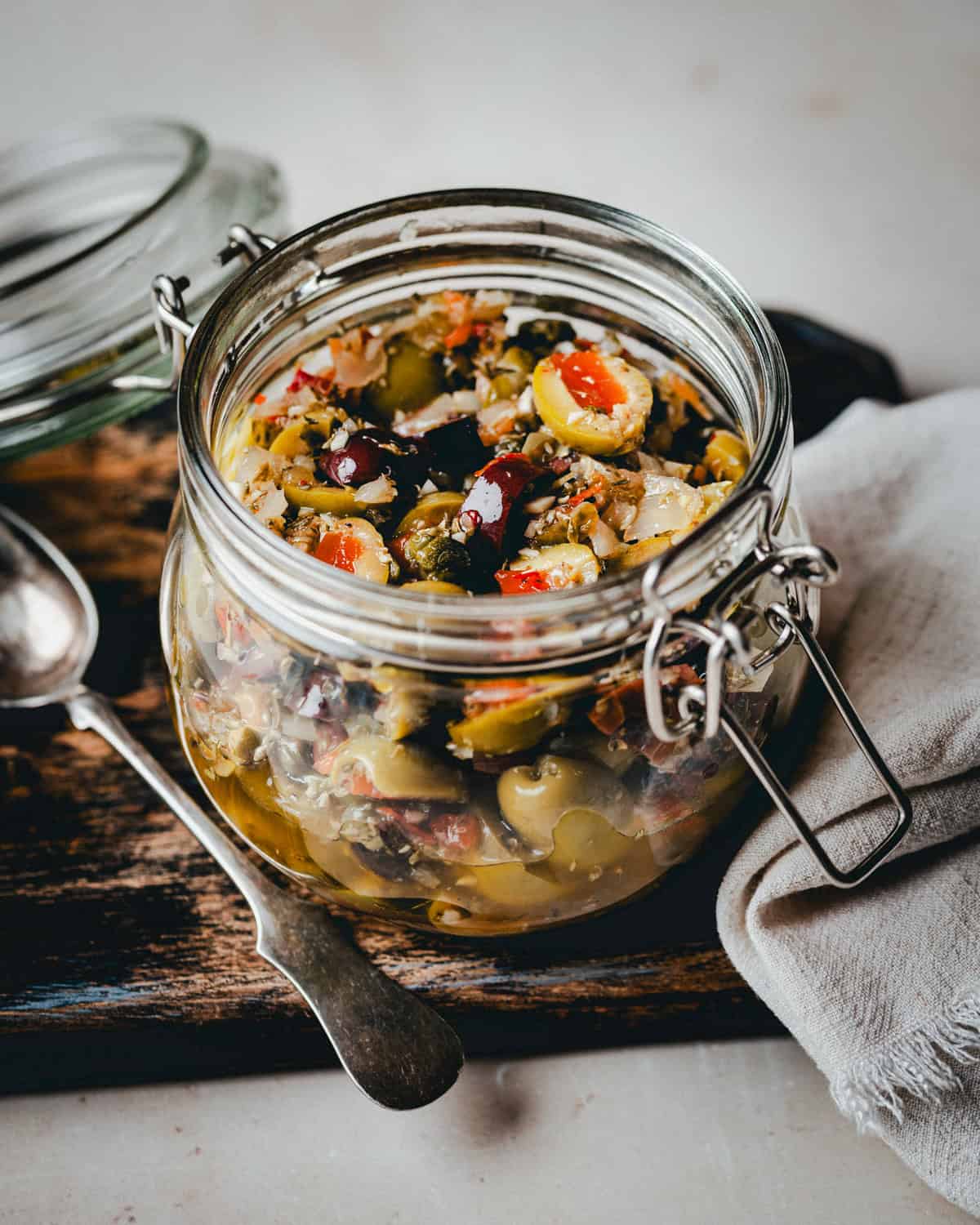
Made in just 20 minutes from grocery store ingredients, this Muffaletta Olive Salad tastes like the original at Central Grocery in New Orleans.
This post may contain affiliate links. Please read our disclosure policy.
The jarred version of Muffaletta Olive Salad can be hard to find outside New Orleans, and when you do, it’s often expensive. The good news is you can make it yourself with ingredients from any well-stocked grocery store. It keeps for weeks and only gets better as it sits, so you’re never far from a proper muffaletta.
After testing chop sizes, oil ratios, and marinating times, I found that crushing the olives by hand, keeping the oil in check, and letting the salad rest for at least 24 hours are what give it that coarse texture and deep, briny flavor that makes this version taste authentic.
Table of Contents
Recipe at a Glance
- Prep Time: 20 minutes
- Marinate Time: 24 hours minimum (best after several days)
- Yield: About 2 cups
- Skill Level: Easy
Ingredients for Muffaletta Olive Salad
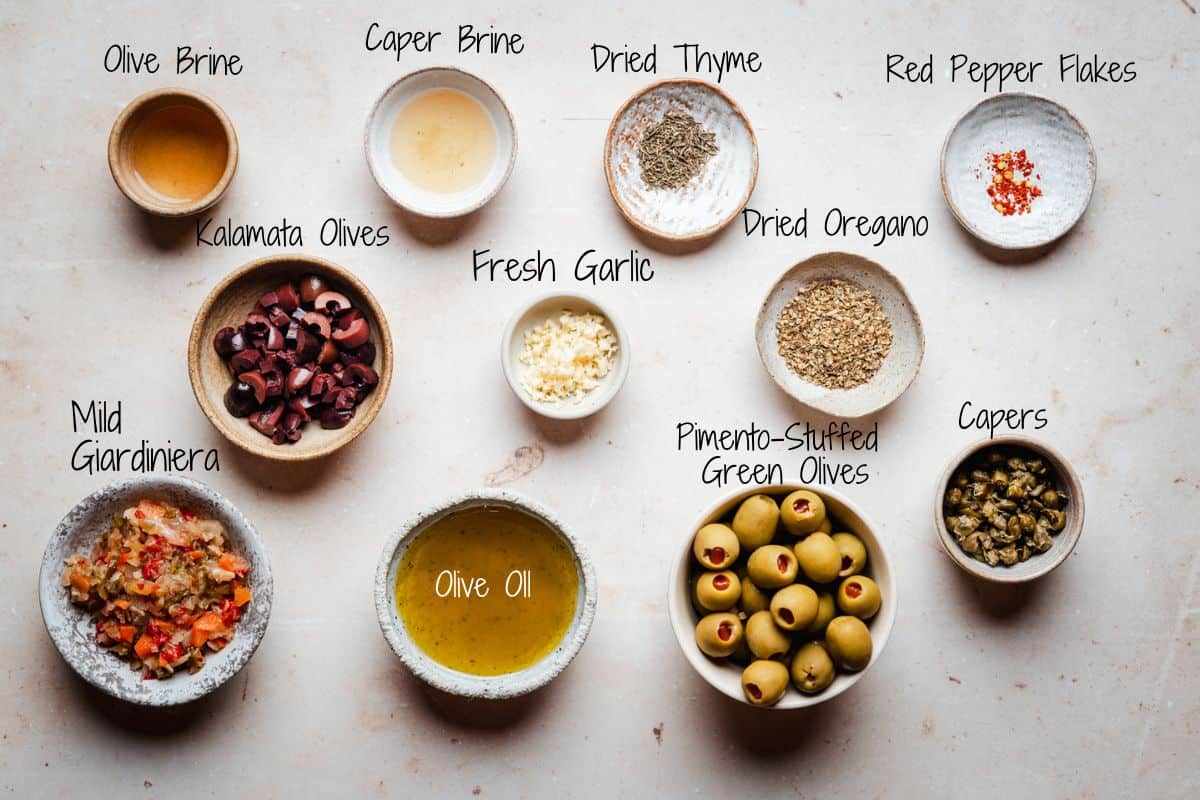
- Pimento-Stuffed Green Olives: Buy these from an olive bar if you can, or look for them packed in a clear glass jar so you can see what you’re getting. Choose firm olives packed in brine.
- Kalamata Olives: Jarred are fine, but olives from a good olive bar usually have better texture and flavor.
- Mild Giardiniera: Look for a mild blend so the heat doesn’t overpower the olives. Oil-packed or vinegar-based both work. Choose one you’d happily eat straight from the jar.
- Capers: Look for smaller non-pareil capers. They have a cleaner flavor and distribute more evenly throughout the salad.
- Olive and Caper Brine: Use the brine from the jars. It seasons the mixture naturally, so wait to adjust salt until after it has marinated.
- Olive Oil: Use a good-quality extra-virgin olive oil with a clean, grassy flavor. Avoid anything bitter.
- Dried Oregano and Thyme: This is one time when dried herbs really are better. They hold up well during extended marinating.
- Garlic and Red Pepper Flakes: Fresh garlic and a small amount of crushed red pepper add depth without turning the olive salad spicy.
Why This Recipe Works
- Crushing instead of finely chopping keeps the texture authentic. Hand-crushed olives create the coarse, rustic feel you get at Central Grocery instead of a tapenade-style spread.
- Brine balances the oil. Using olive and caper brine keeps the mixture savory and bright so the olive oil enhances flavor without making it heavy.
- Dried herbs soften as the salad rests. Oregano and thyme infuse the oil over time without wilting or discoloring.
- Time does the real work. After 24 hours the flavors meld enough to serve. After several days, they deepen and round out even more.
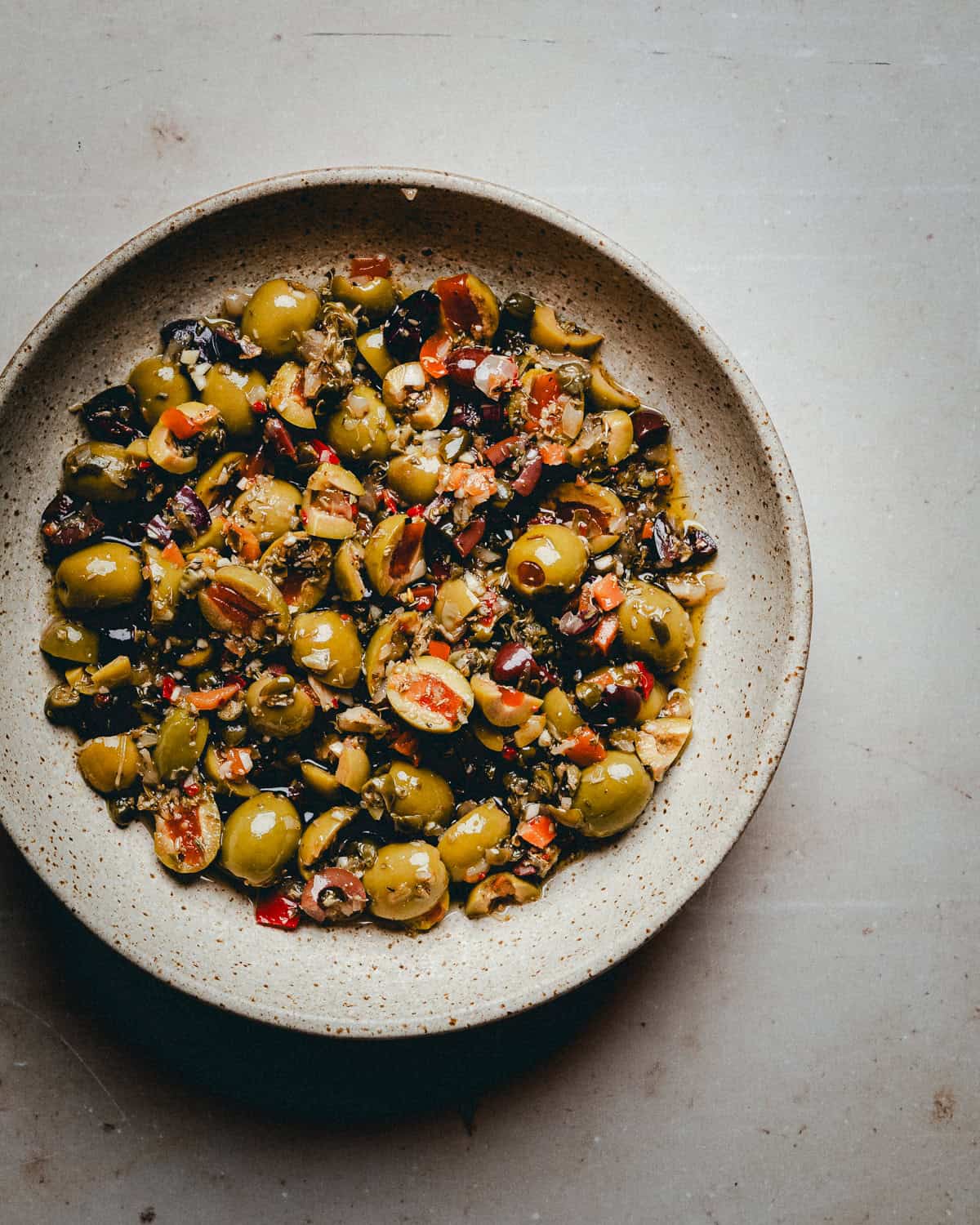
How to Make Muffaletta Olive Salad
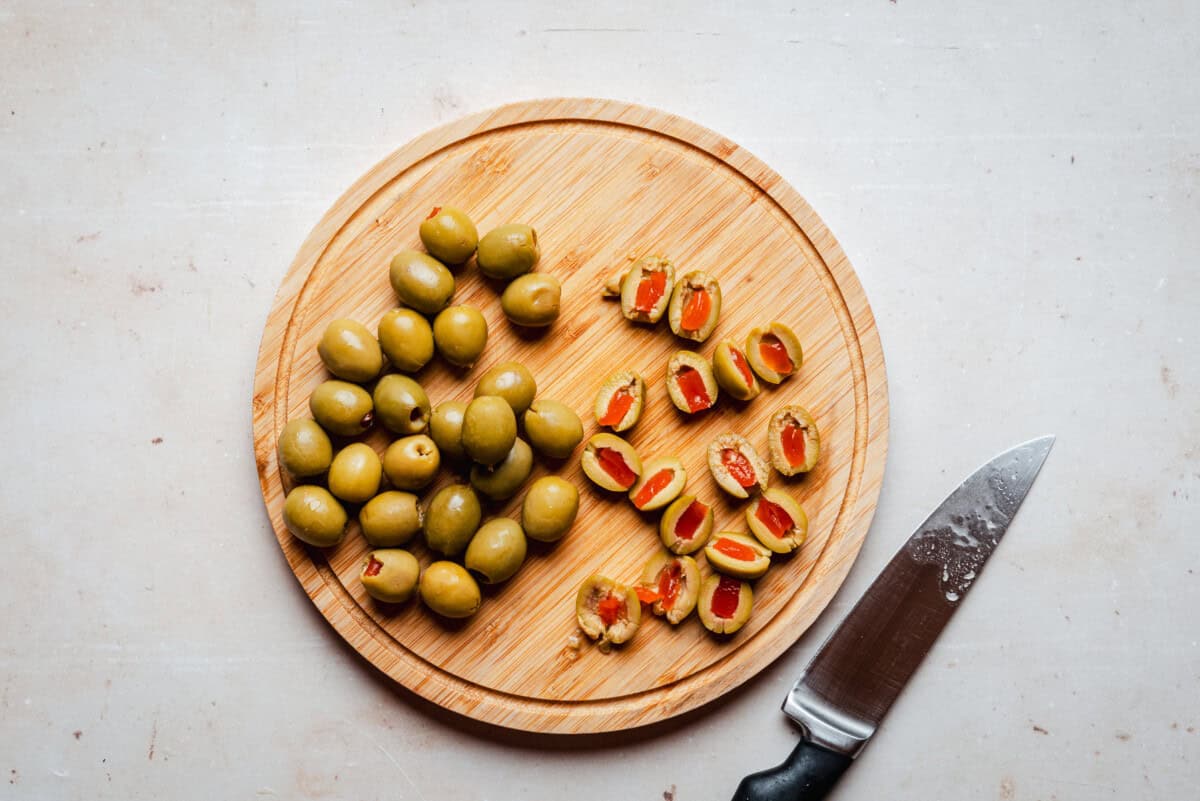
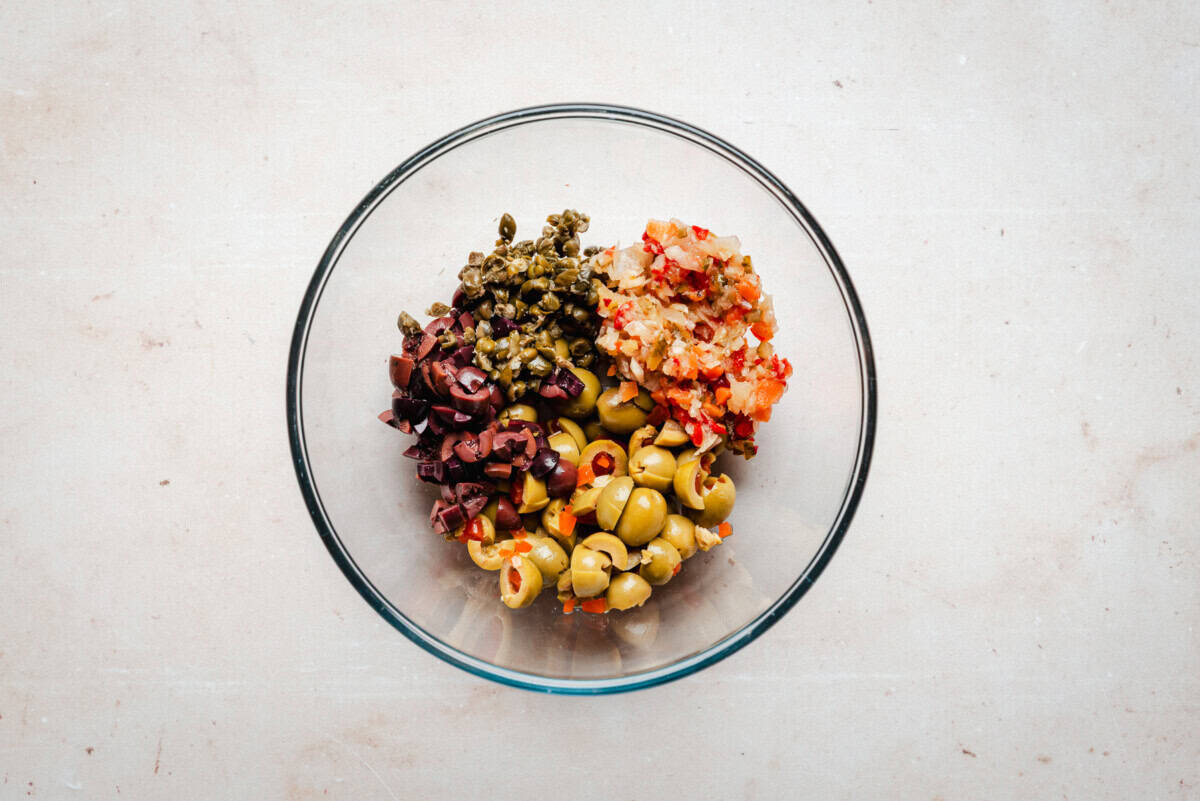
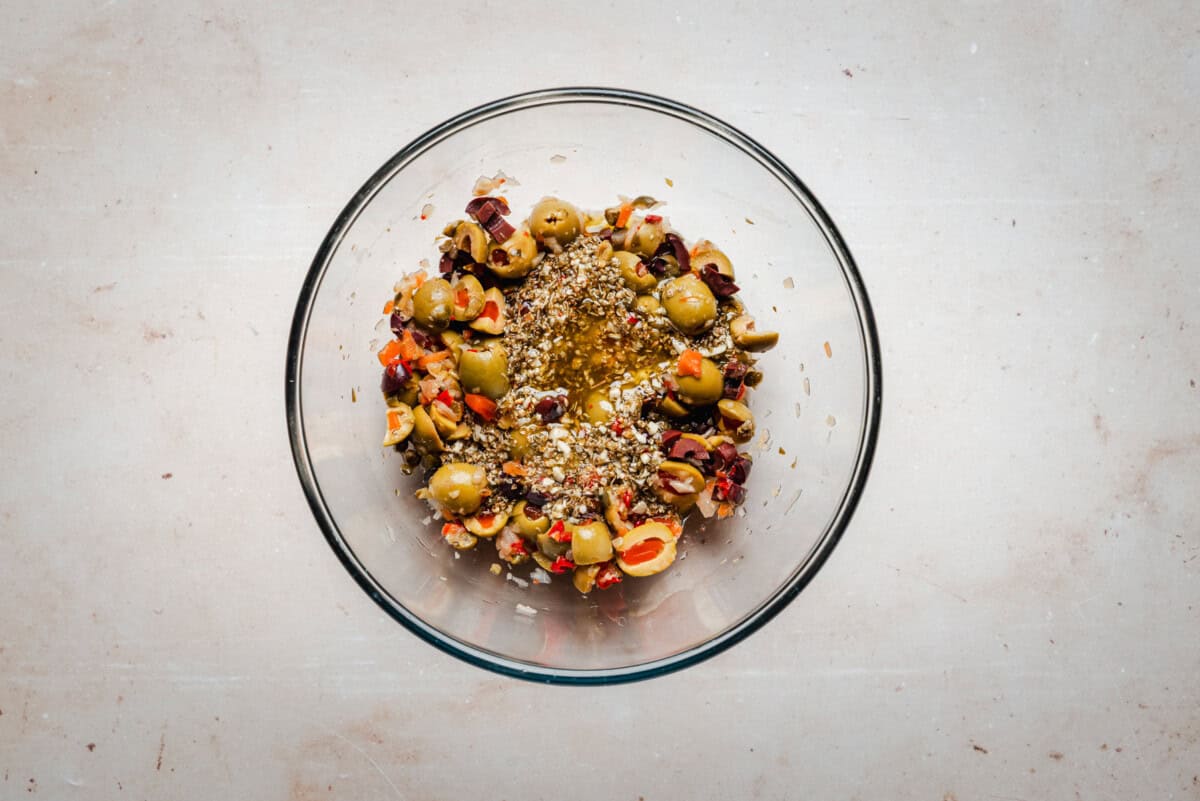
Prepare the olive mixture. Crush or halve most of the green olives by hand, leaving a few nearly whole for texture. Combine with the Kalamata olives, giardiniera, and capers in a medium bowl.
Whisk the dressing. Stir together the olive oil, olive brine, caper brine, oregano, thyme, garlic, and red pepper flakes until combined.
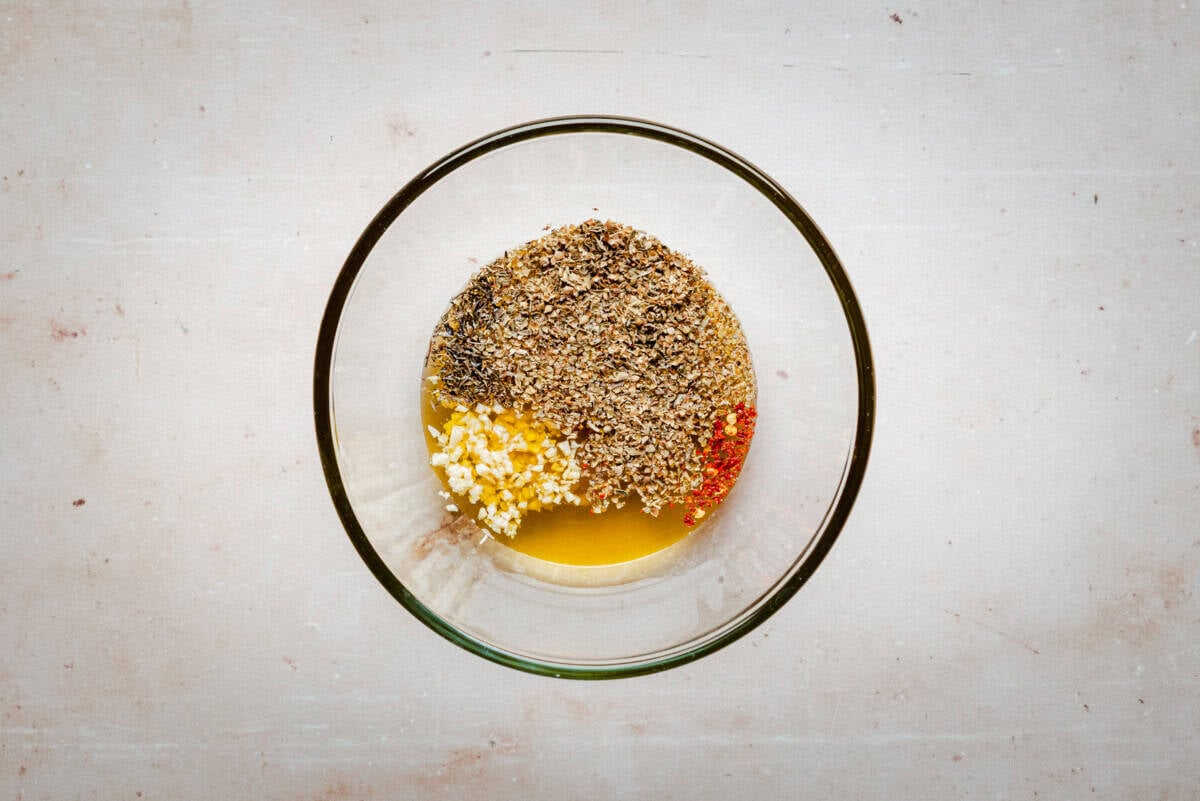
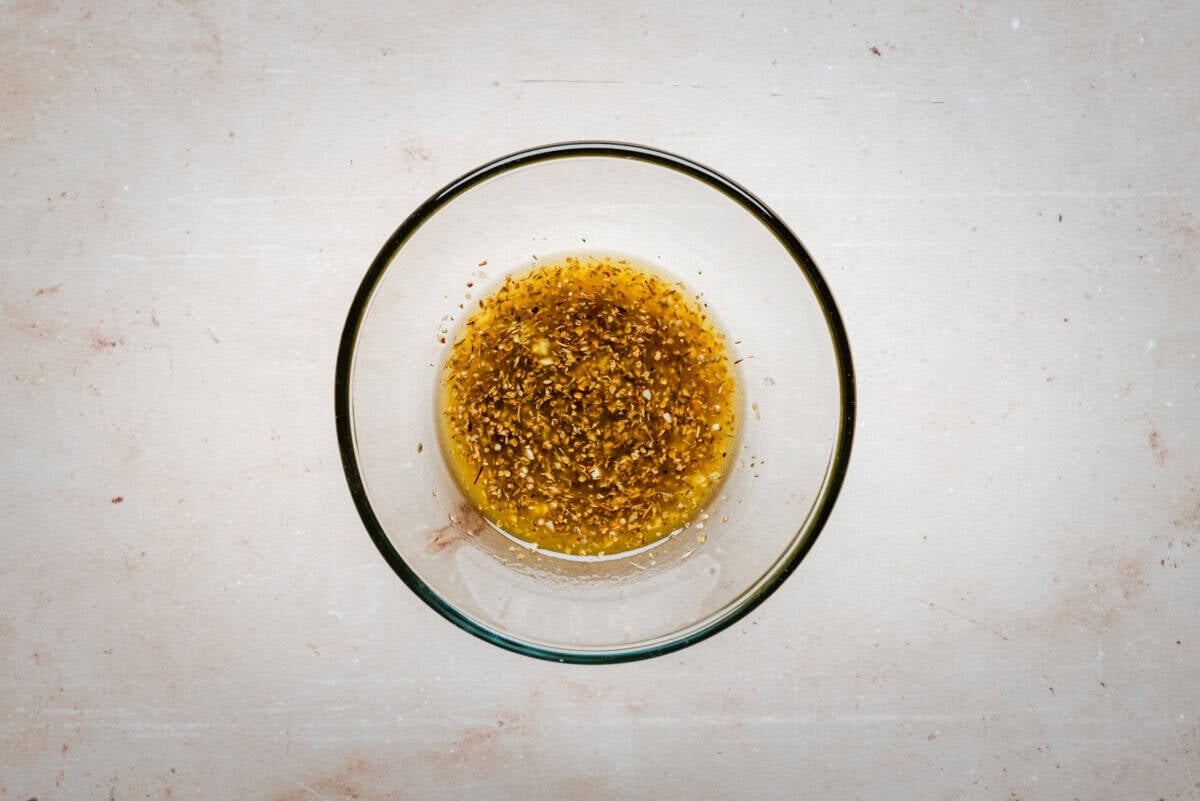
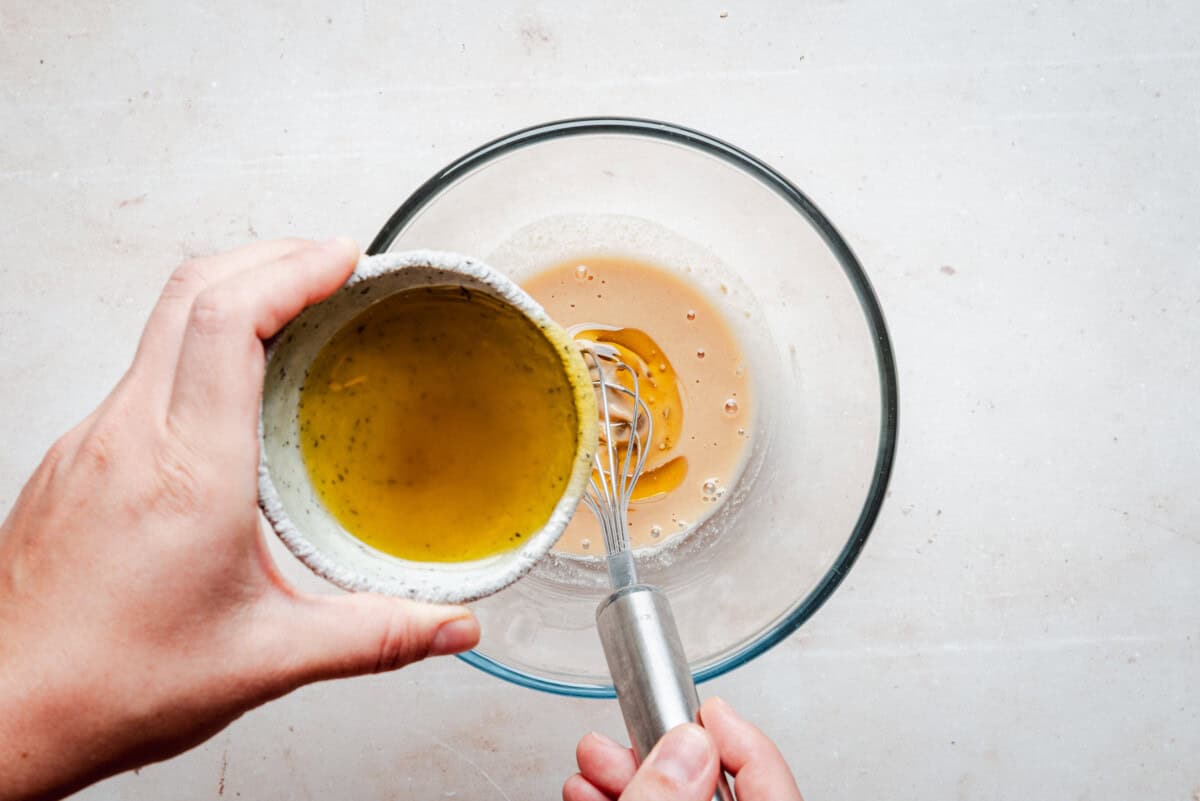
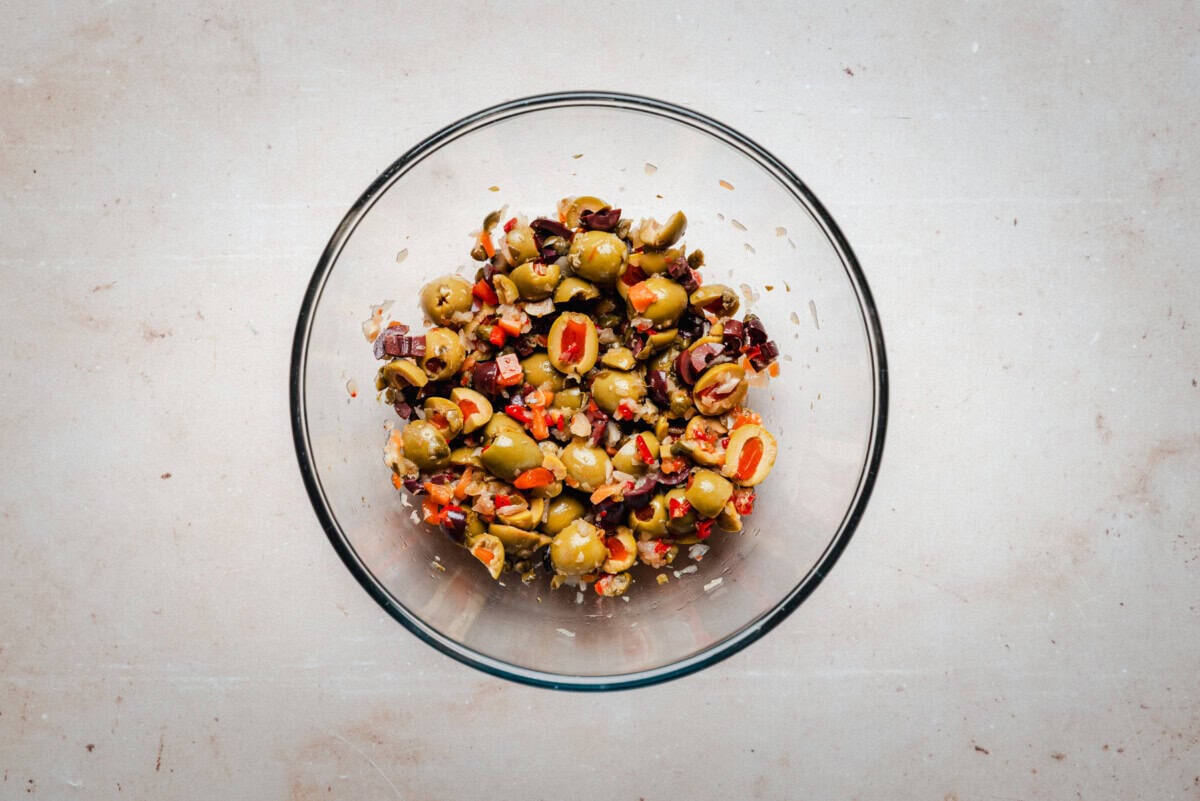
Combine and marinate. Pour the dressing over the olive mixture and stir to coat. Transfer to a jar, pressing gently so everything is submerged. Refrigerate at least 24 hours before serving. For the most authentic flavor, let it rest 5 to 7 days. Stir before serving.
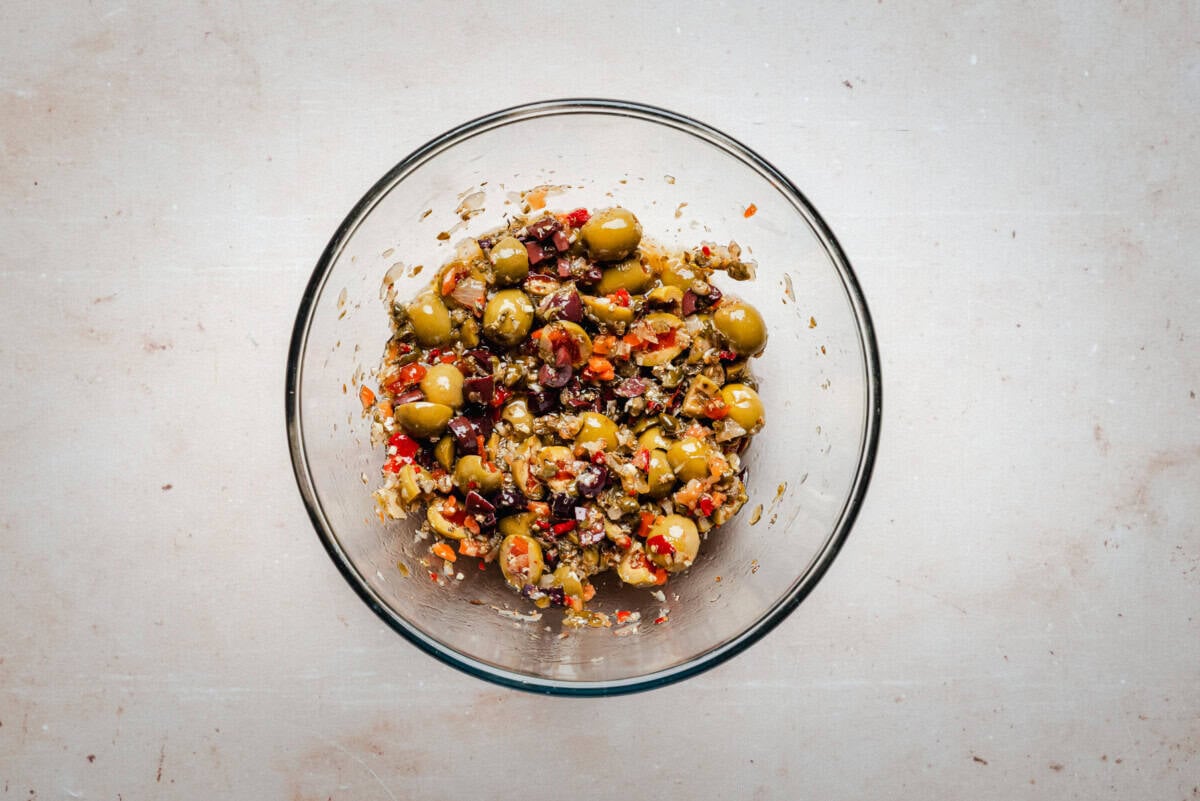
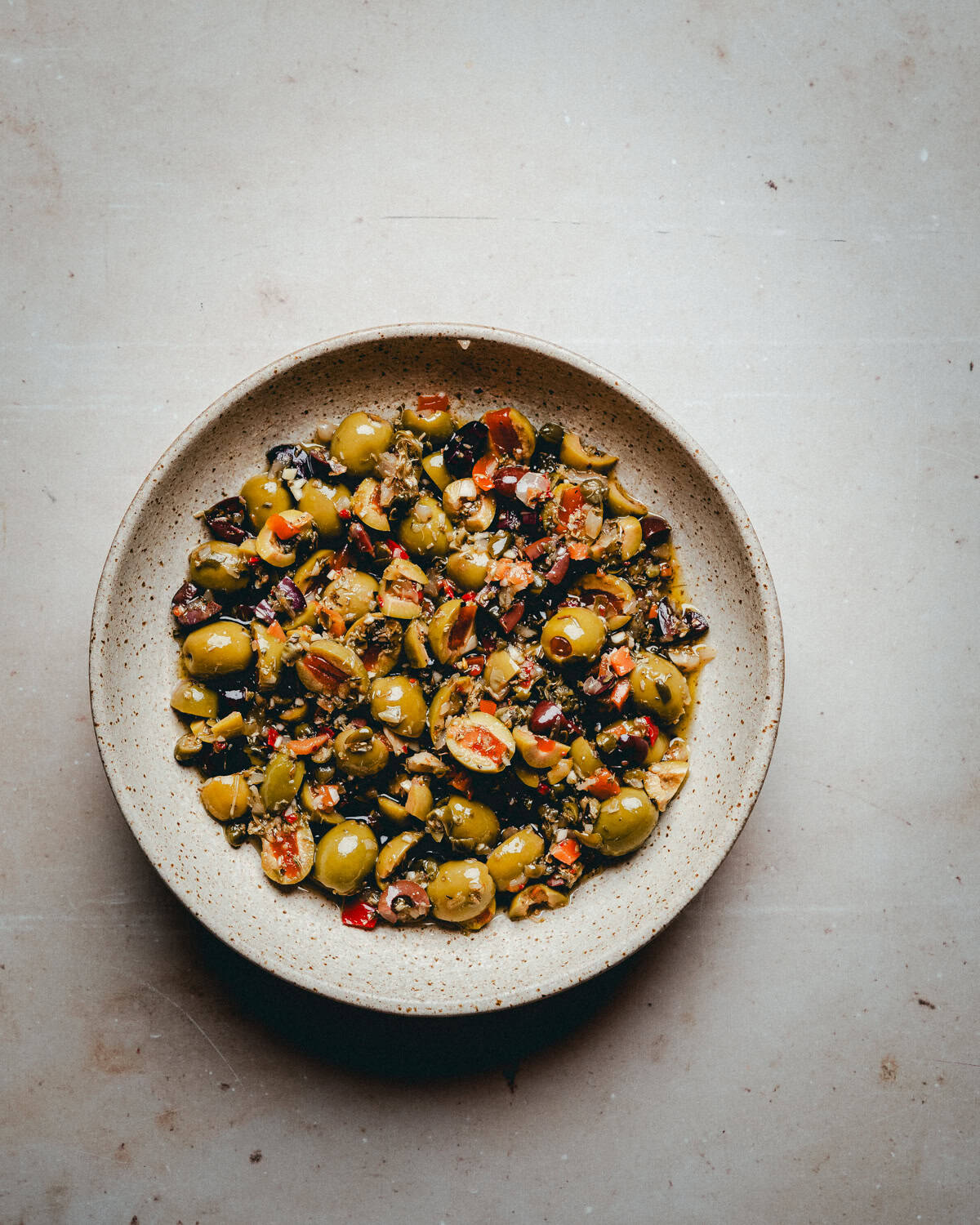
Pro Tips
- Keep salad submerged. Press the salad down in the jar so the oil rises to cover the surface. Air exposure dulls the flavor and shortens its refrigerator life.
- Resist adjusting salt too soon. The brines season the salad as it rests. Wait 24 hours and taste before adding more salt.
- Don’t over-chop. If you chop the olives too finely, you’ll end up with a tapenade. Roughly crushing the olives gives you the coarse texture of the original.
- Loosen and stir before serving. The oil settles and may firm up as it chills. Let the jar sit at room temperature for about 15 minutes if needed, then give it a quick stir to redistribute the herbs and brine evenly.
Storage
Store the salad in an airtight glass jar in the refrigerator. It keeps at its best for about 1 month and often longer if everything stays fully submerged in oil. If the oil firms up in the refrigerator, let the jar sit at room temperature for 10 to 15 minutes before stirring and serving.
How to Use Muffaletta Olive Salad
- Spoon generously onto a classic muffaletta sandwich.
- Add to antipasto boards for sharp, briny contrast.
- Stir into warm pasta with a splash of pasta water.
- Fold into tuna salad or chicken salad for depth.
- Spread over or serve along with grilled chicken or fish.
More Classic Louisiana Dishes


Muffaletta Olive Salad
Ingredients
- 1 cup pimento-stuffed green olives left mostly whole or halved
- 1/4 cup coarsely chopped Kalamata olives
- 1/3 cup finely chopped mild giardiniera store bought or homemade giardiniera
- 2 tablespoons roughly chopped capers
- 1 1/2 tablespoons olive brine (from the jar of green olives)
- 1 tablespoon caper brine (from the jar of capers)
- 1/3 cup extra-virgin olive oil
- 1 1/2 tablespoons dried oregano
- 1/4 teaspoon dried thyme
- 1 clove garlic thinly sliced
- 1/8 teaspoon crushed red pepper flakes
Instructions
- Use your hands or a knife to crush or halve most of the green olives, leaving a few nearly whole for texture. Combine them in a medium bowl with the chopped Kalamata olives, giardiniera, and capers.
- In a separate bowl or jar, whisk together the olive oil, reserved brines, oregano, thyme, garlic, and red pepper flakes. Pour the dressing over the olive mixture and stir until everything is evenly coated.
- Spoon the mixture into a glass jar or other airtight container, packing it in gently. Refrigerate for at least 1 day before serving, stirring occasionally. For the most authentic flavor, allow it to marinate for 5 to 7 days. Give it a good stir before serving to redistribute the oil and seasonings.
Notes
- Makes about 2 cups (15 two-tablespoon servings)
- Keeps well in the refrigerator for up to 1 month for best quality, and up to 2–3 months if stored in an airtight jar with all ingredients fully submerged in oil.
Nutrition
Nutrition information is automatically calculated, so should only be used as an approximation.