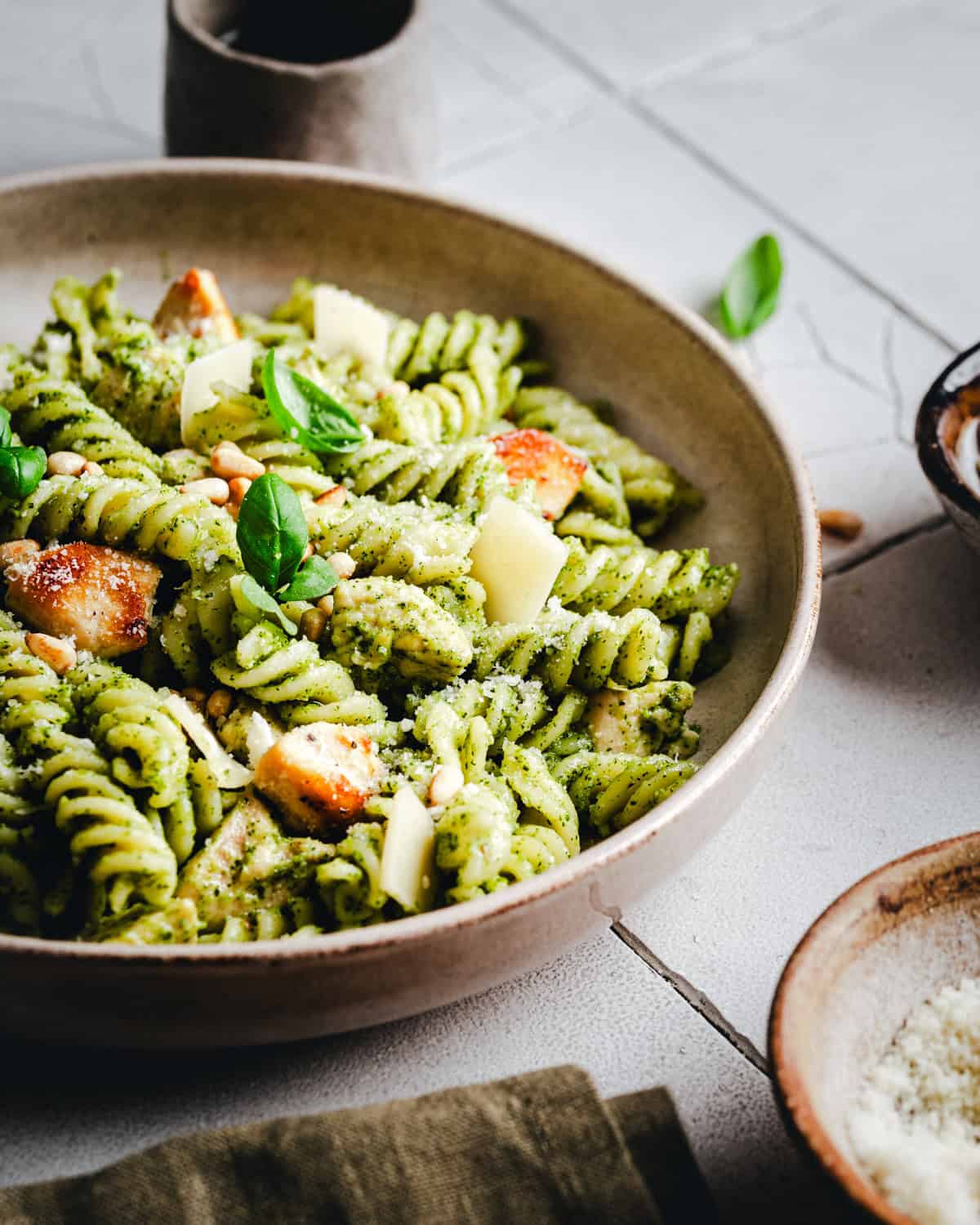
Chicken, pasta, and basil pesto are simmered with a splash of cream to create a rich, satisfying dinner. It comes together in about 35 minutes, feeds 8 and makes great leftovers.
This post may contain affiliate links. Please read our disclosure policy.
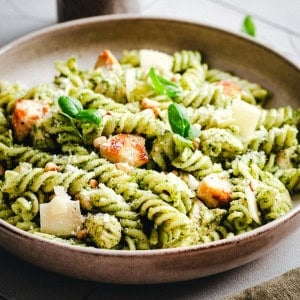
Chicken Pesto Pasta brings three things together that most people love: juicy chicken, tender pasta, and a creamy pesto sauce that has more body than typical pesto. Adding heavy cream to regular pesto changes the whole character of the dish, turning that concentrated basil and garlic into a creamy sauce that coats every bite without overwhelming it.
I’ve made this on weeknights and for last-minute dinners with friends, and it never lasts long. If you’ve got pasta, chicken, and a decent jar of pesto (or homemade if you’re up for it), you’re in business. It comes together in about 35 minutes, feeds a crowd, and somehow wins over both the “I don’t like pesto” crowd and the “this better be authentic” types. Add crusty bread and a green salad, and it looks planned even if it wasn’t.
Table of Contents
Dinner in 3 Simple Steps
- Cook pasta; reserve 1 cup pasta water.
- Make pesto (or use store-bought pesto) while chicken browns; whisk pesto with cream.
- Toss pasta, chicken, and creamy pesto sauce. Loosen with pasta water as needed and serve.
Chicken Pesto Pasta Ingredients
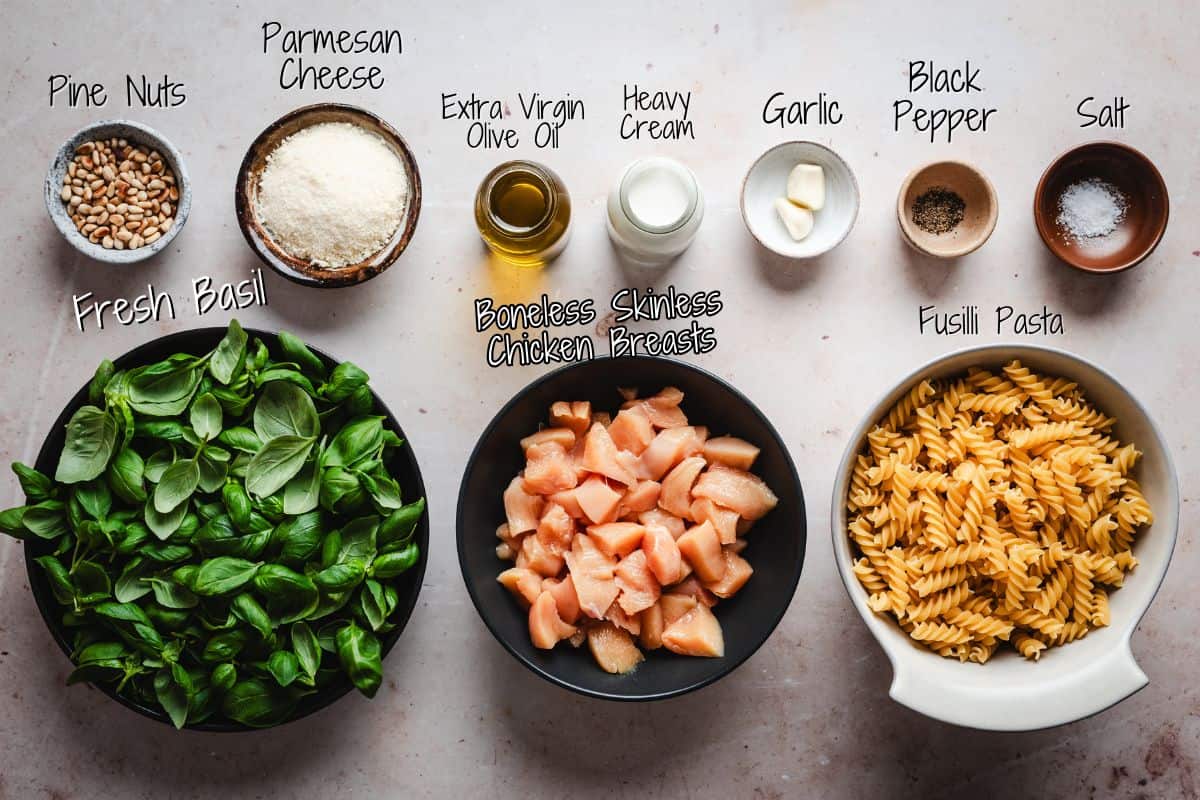
- Fresh Basil Leaves: Bright and fragrant with no dark spots or wilting. I pick through the bunch to remove any bruised or tough leaves before using.
- Garlic: Firm cloves with tight skin and no green shoots.
- Pine Nuts: Buttery and tender with a pale ivory color. I buy them in small quantities and store them in the freezer to keep them fresh longer.
- Parmesan Cheese: A wedge of Parmigiano Reggiano or Grana Padano, freshly grated. Pre-grated versions often have additives that affect both texture and flavor.
- Fine Sea Salt: Clean tasting and quick to dissolve.
- Extra Virgin Olive Oil: I like to use one that’s smooth and mildly fruity without bitterness. Use one you’d enjoy on a salad, though it doesn’t need to be your most expensive bottle.
- Heavy Cream: Full-fat and pourable with no added gums or stabilizers. A quick shake before using helps keep the texture consistent.
- Fusilli Pasta: Short pasta hold sauce well. Penne, rotini, or gemelli pasta also work.
- Boneless Skinless Chicken Breasts: Look for breasts that are pale pink and firm with minimal moisture. I trim and pat them dry before cutting so they sear more evenly.
- Ground Black Pepper: Freshly ground whole for the most aroma and flavor.
- Chopped Basil and Extra Parmesan: Optional, but I almost always finish with both. They give the dish a fresh, finished look.
How to Make Chicken Pesto Pasta
Here’s a quick visual guide for how this dish comes together. Full instructions are in the recipe card below.
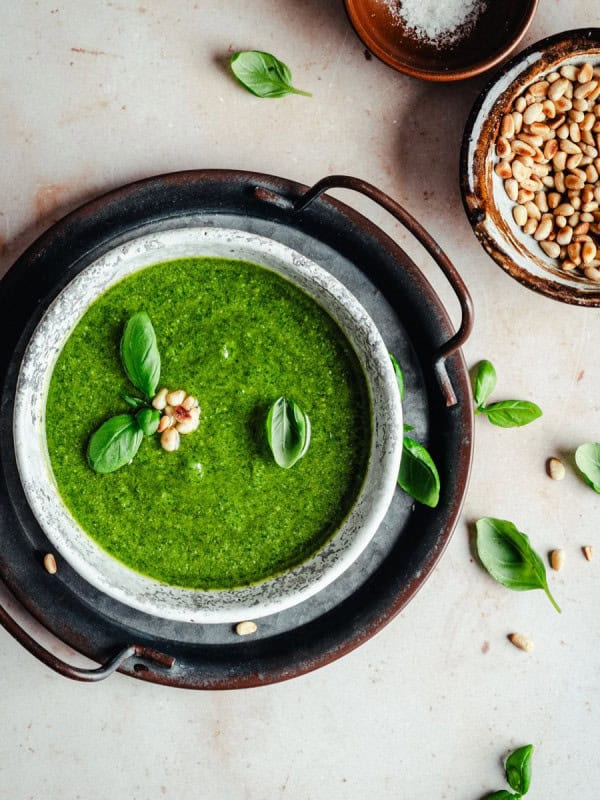
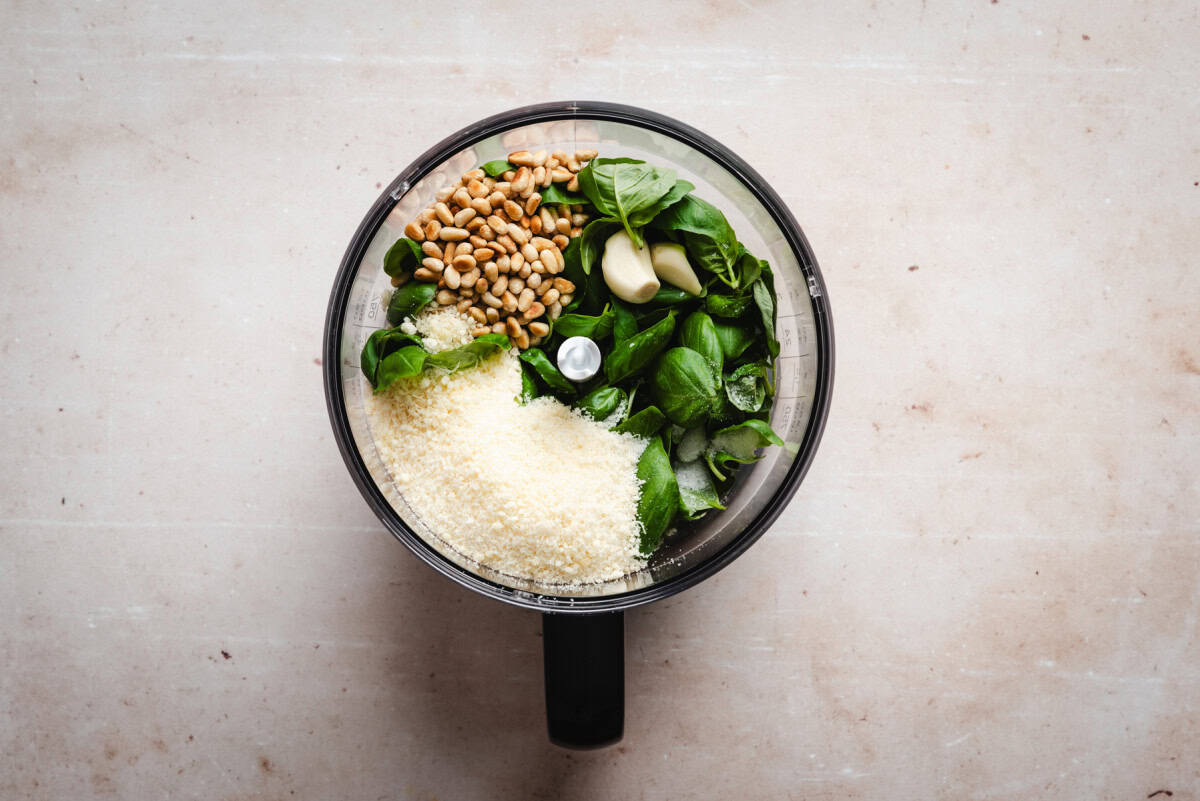
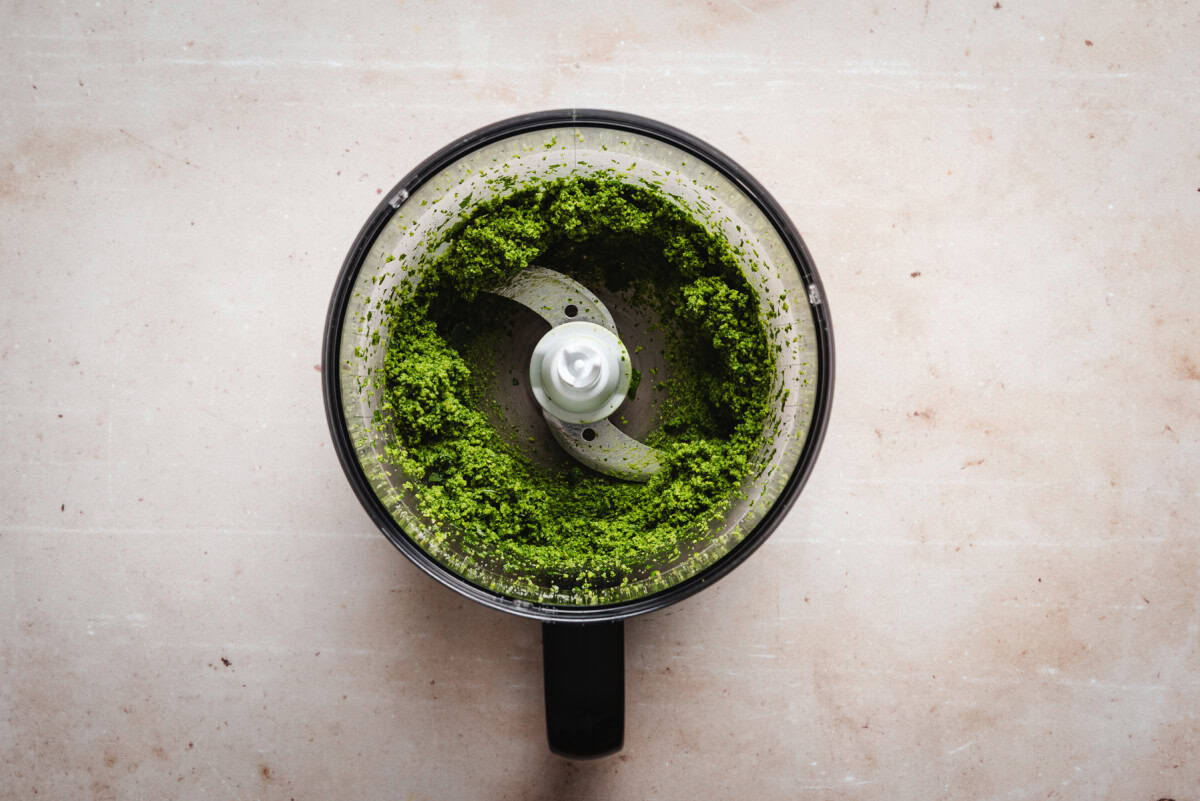
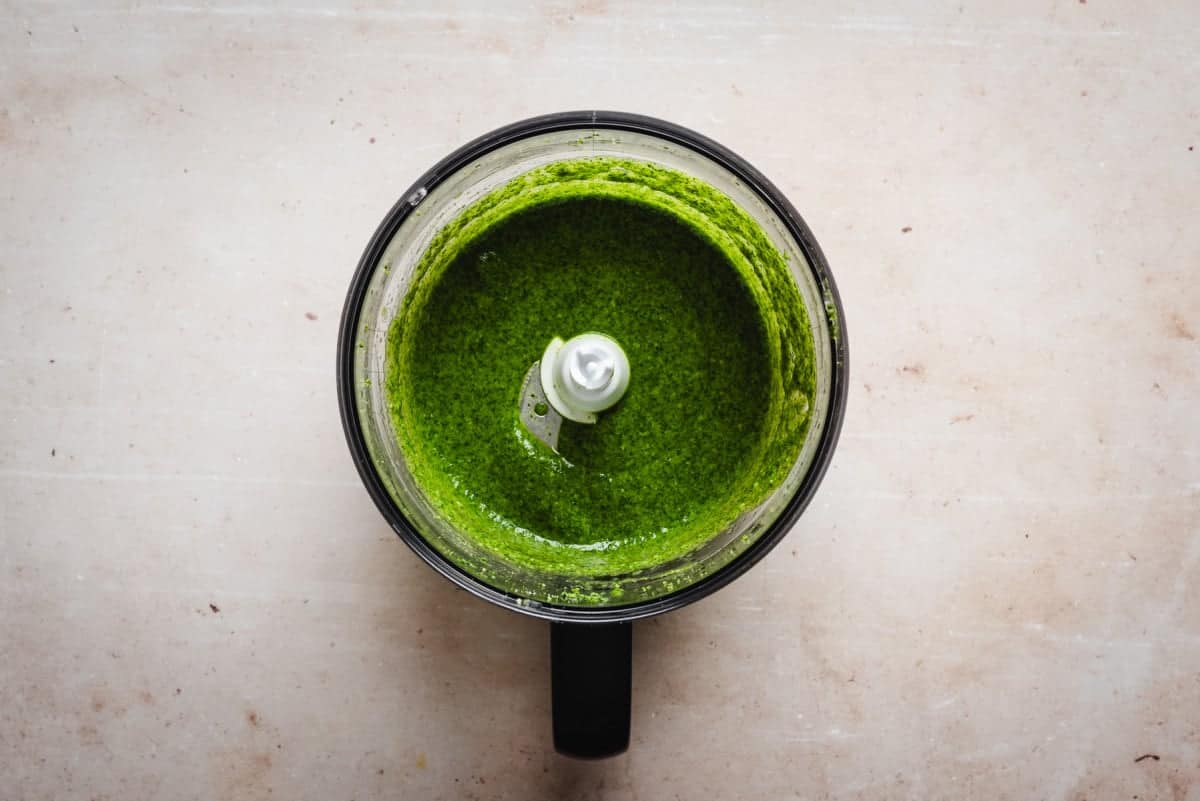
Make the pesto: Process basil, garlic, pine nuts, Parmesan, and salt. Blend in olive oil and stir in cream.
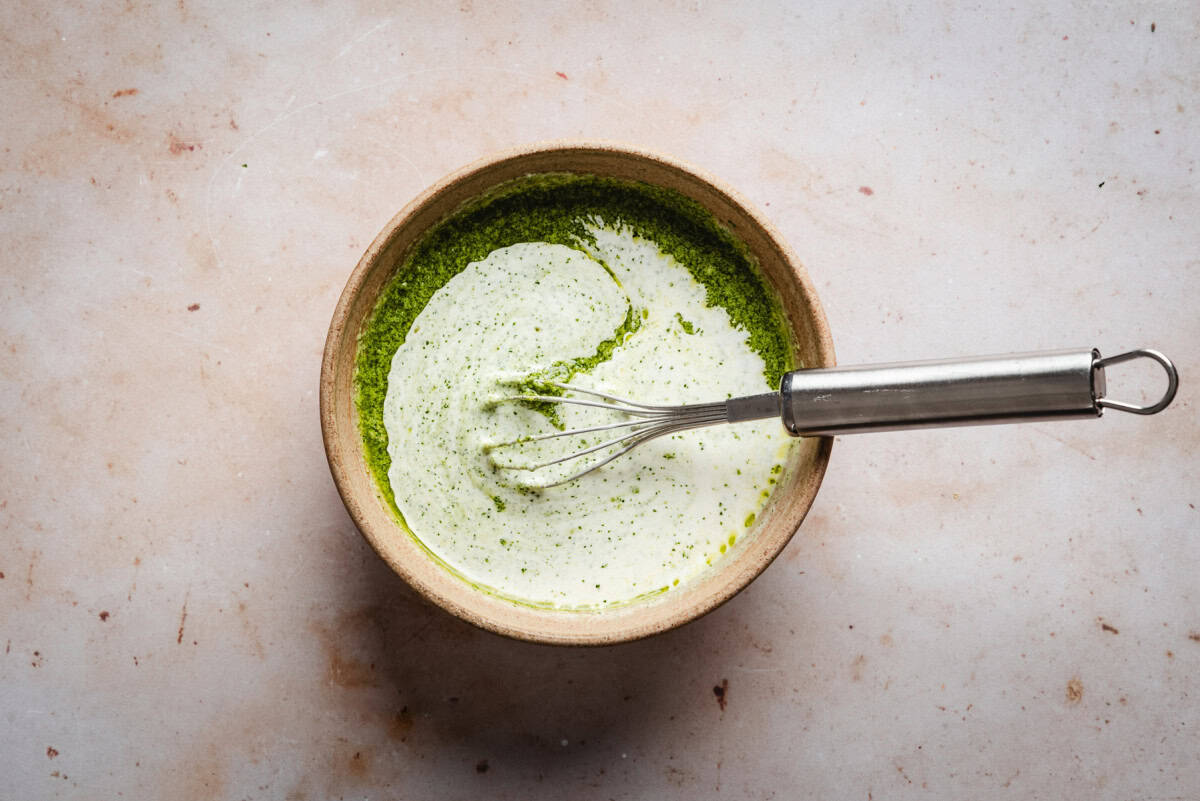
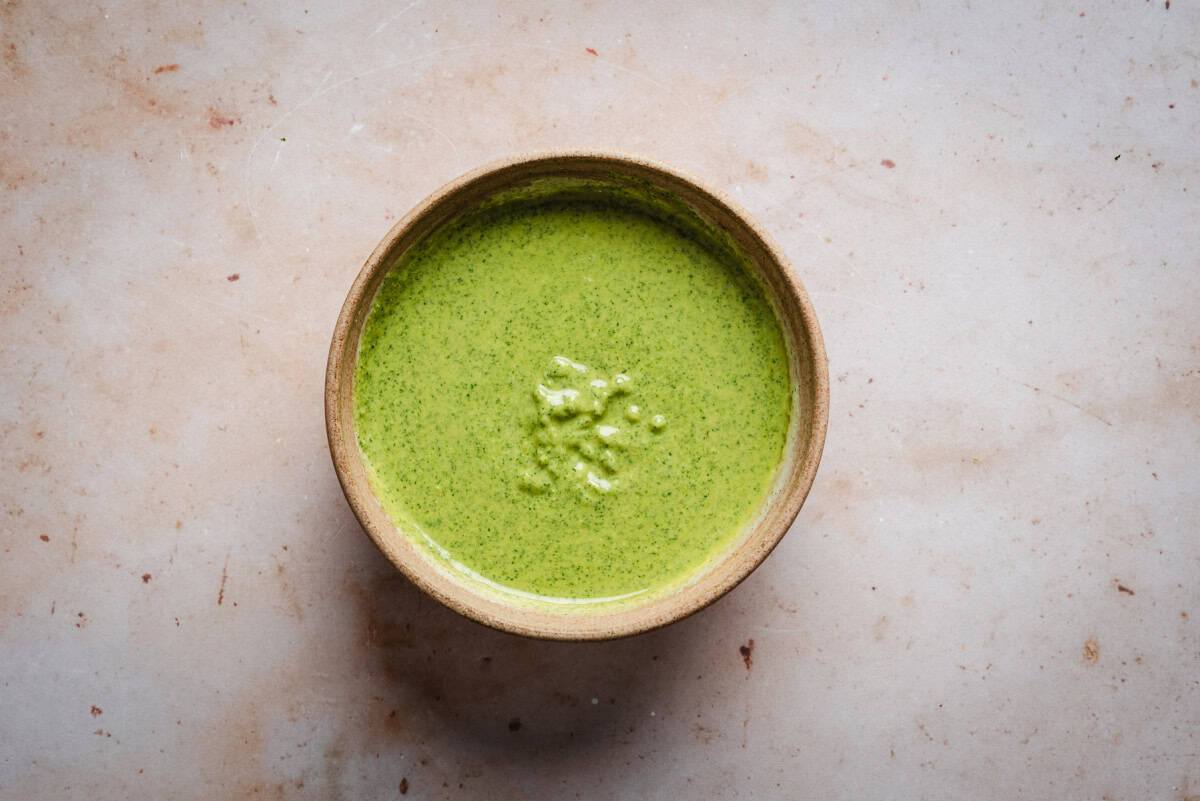
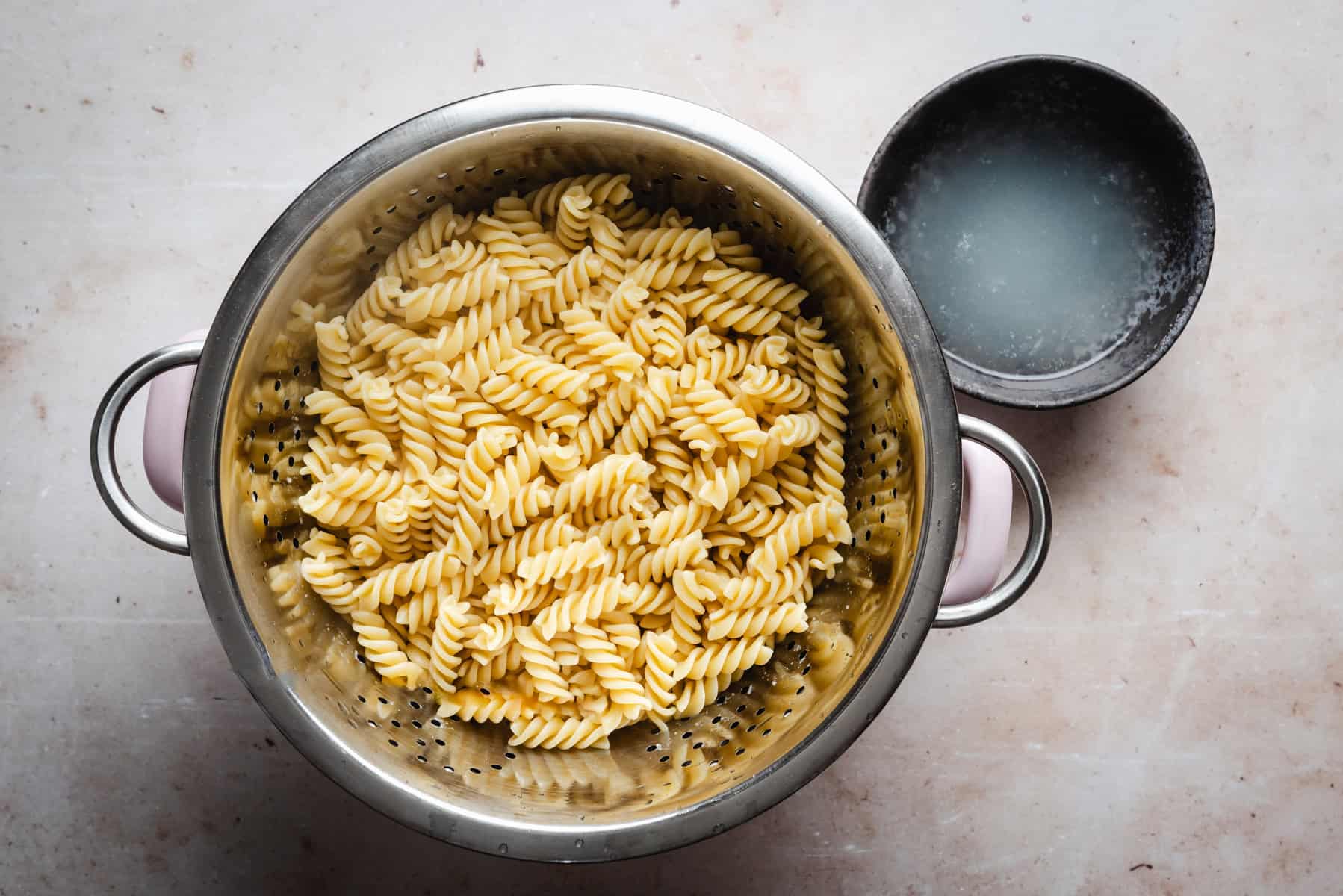
Boil pasta: Cook until al dente; reserve 1 cup of pasta water.
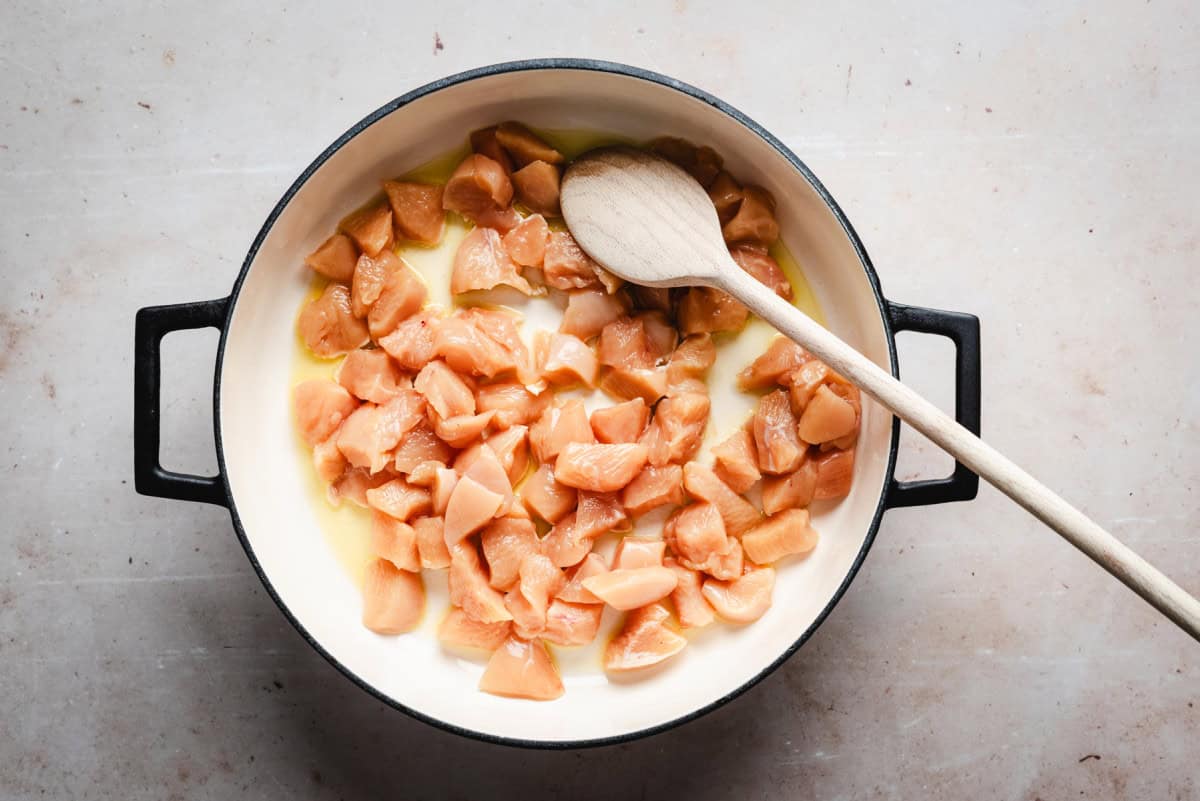
Brown the chicken: Sauté bite-size chicken in olive oil until just cooked through.
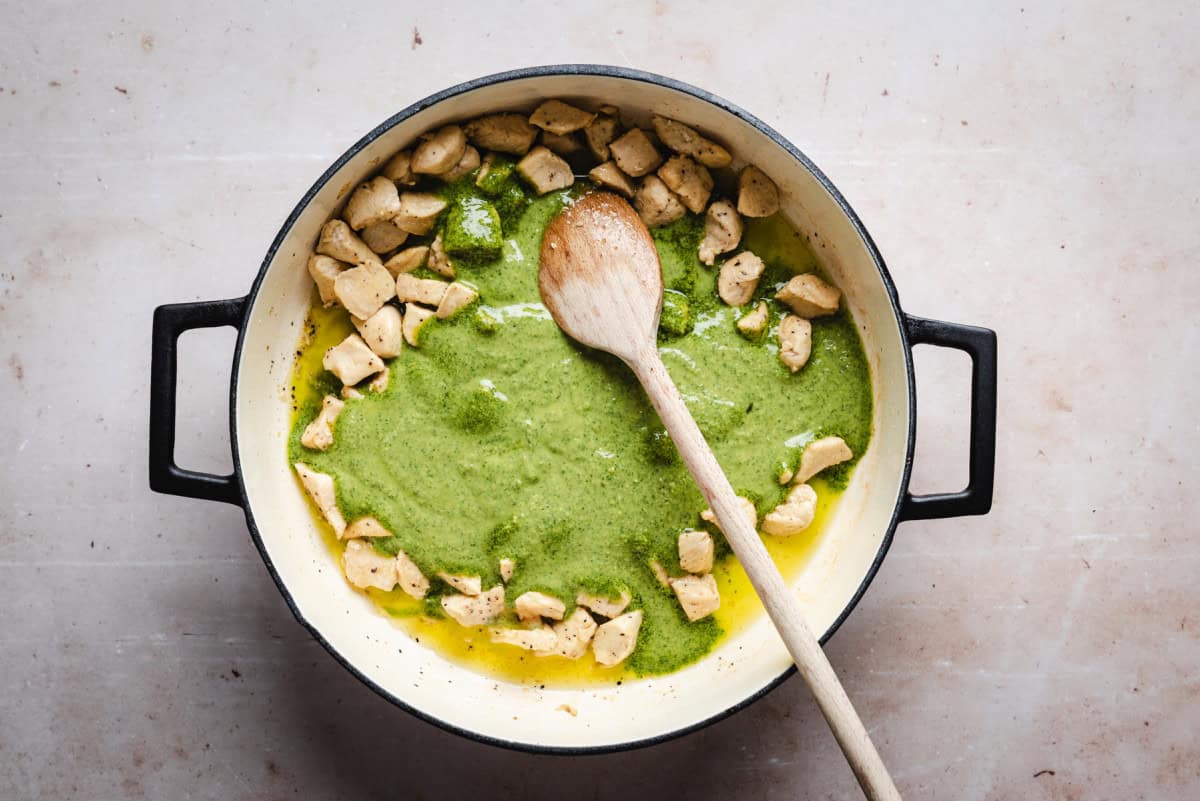
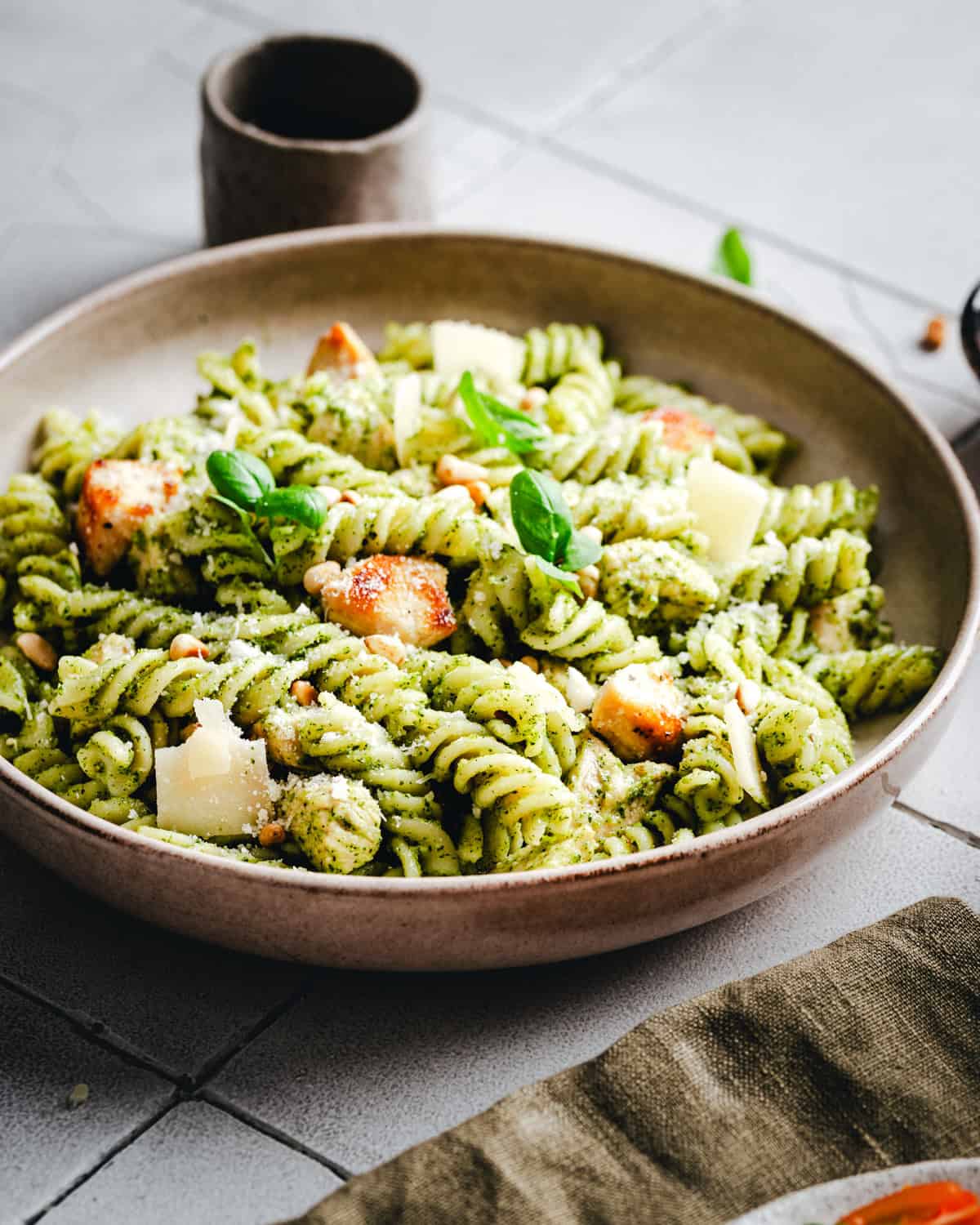
Finish the dish: Stir in creamy pesto and cooked pasta. Add pasta water as needed to loosen the sauce.
Why This Chicken Pesto Pasta Works
- Rotini, penne, and fusilli were tested; fusilli held the sauce best without turning gummy.
- A little cream rounds out the basil-garlic punch so even pesto skeptics love it.
- One pot plus one skillet keeps cleanup easy.
- Easy swaps make this a year-round recipe.
5 Recipe Tips
- Toast the Pine Nuts Carefully: If you choose to toast them, keep a close eye. They go from golden to burned in seconds.
- Let the Cream Sit Out While You Prep: Cold cream can cause the pesto to stiffen or separate slightly.
- Cook Pasta Just to Al Dente: Slightly firm pasta holds up better when tossed with the warm sauce and chicken. It also continues to soften as it sits.
- Don’t Overcook the Chicken: Small pieces cook fast. I keep the heat moderate and stir often to avoid drying them out.
- Thin Salty Jarred Pesto: Stir in pasta water or unsalted broth a tablespoon at a time before adding cream.
Cream vs. No-Cream
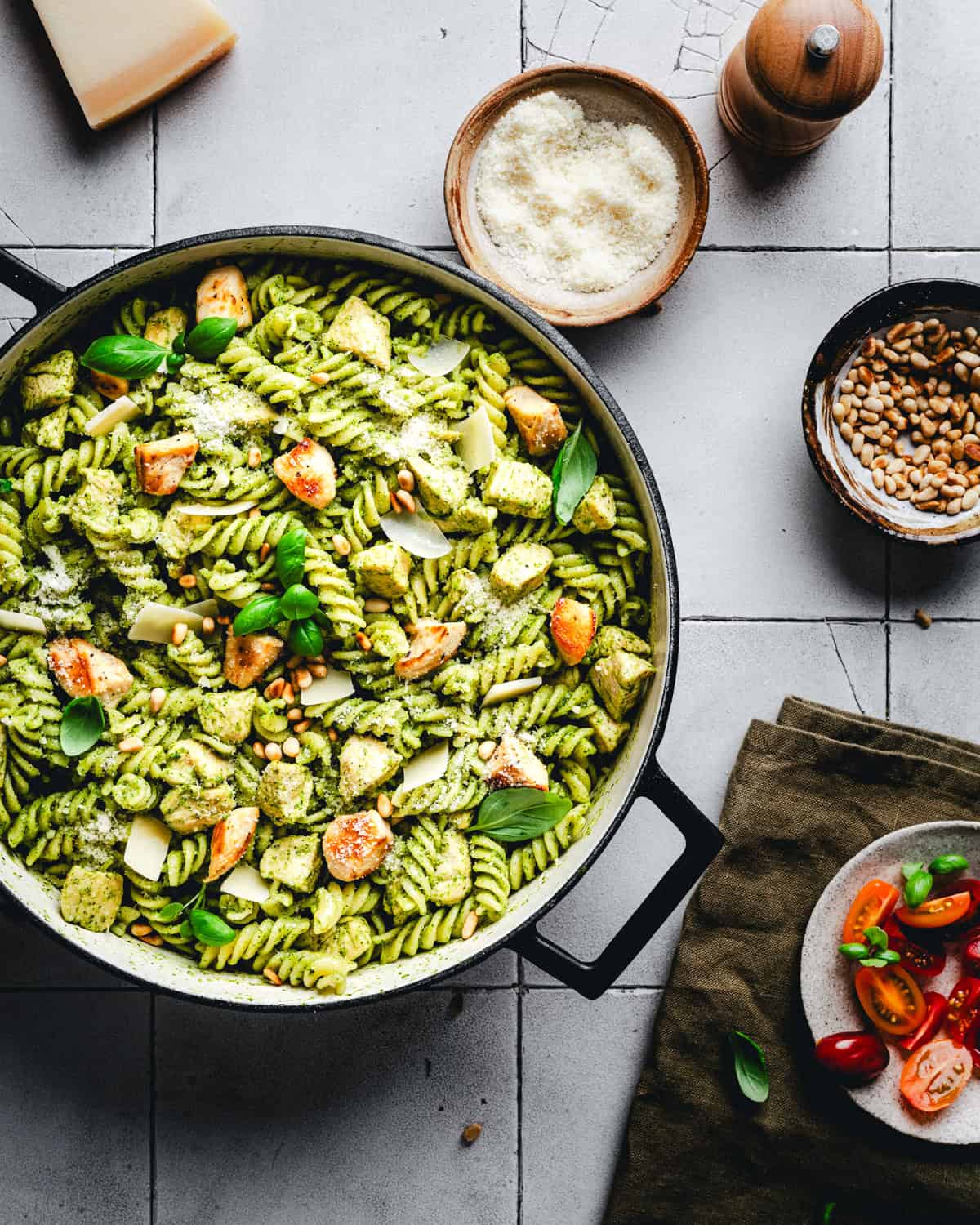
Silky: Add ½ cup cream for a restaurant-style sauce.
Fresh and light: Add ¼ cup pasta water for a brighter basil flavor.
Protein and Pasta Swaps
This recipe works just as well with shredded rotisserie chicken stirred in at the end, or with shrimp; just sear peeled shrimp for a few minutes before adding the sauce. For a vegetarian option, I’ve also used crispy roasted chickpeas for extra texture and protein. And if you need a gluten-free version, gluten-free penne or rotini hold their shape well and reheat nicely.
Additional Options
- Use Chicken Thighs: Boneless, skinless thighs are slightly richer and stay tender even if slightly overcooked. A good option if you prefer dark meat.
- Nut Alternatives: Walnuts, almonds, or pecans work in place of pine nuts in the pesto.
- Add Vegetables: To make this a meal on its own, I often stir in blanched green beans or baby spinach just before serving.
- Make-Ahead Friendly: The pesto can be made a few hours in advance. I like to press plastic wrap directly onto the surface to keep the color vibrant.
Make-Ahead and Storage
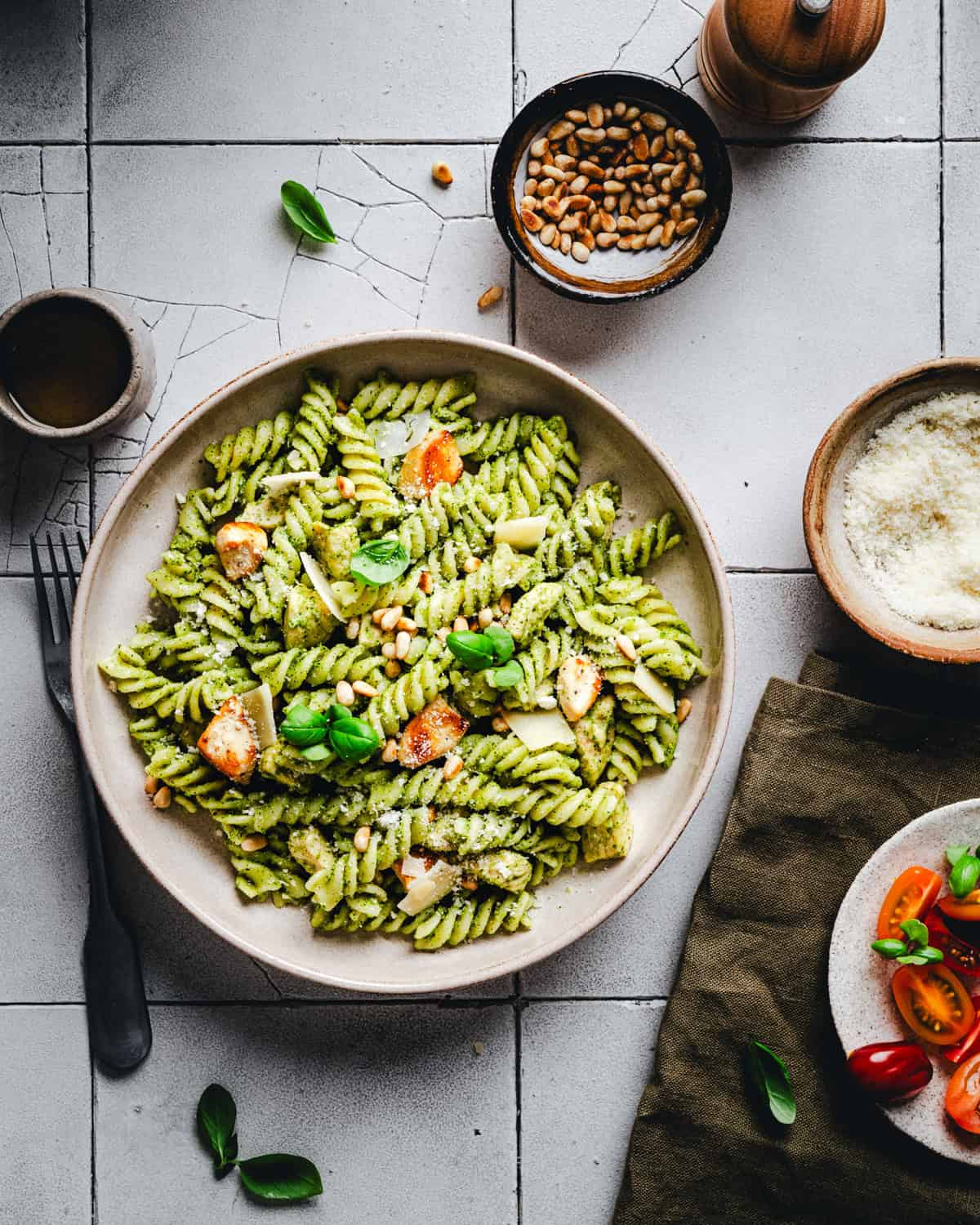
Leftovers keep well in an airtight container in the refrigerator for up to 3 days. The pesto sauce holds its flavor nicely, though the color may darken slightly. If reheated pasta tastes salty, stir in a splash of unsalted chicken broth with the pasta water before warming.
I prefer to store the pasta and sauce together since the flavors continue to blend, but if you plan to make it ahead, you can store the sauce separately to keep the texture a little looser. When reheating, warm gently in a skillet over medium-low heat. Add a splash of water (leftover pasta water if you have it) to loosen the sauce as it warms. Stir often and avoid high heat to keep the chicken from drying out.
FAQ
Yes. Choose a chilled Genovese-style jar. Use ¾ cup and thin with pasta water before adding cream.
Skip cream and Parmesan, add 1 tablespoon nutritional yeast, and swap coconut cream for body if desired.
I don’t recommend it. Basil darkens and cream can split. Refrigerate up to 3 days instead.
Chicken Pesto Pasta walks the line between rich comfort and fresh basil flavor. It works for weeknights or laid-back dinners with friends, and I still sneak a bite every time I make it.
More Easy Chicken Dinners


Chicken Pesto Pasta
Video
Equipment
Ingredients
For the Creamy Pesto
- 1 1/2 ounces fresh basil leaves no stems, about 2 cups, plus finely chopped basil for garnish (optional)
- 2 large cloves garlic
- 1/4 cup pine nuts toasted if desired, about 35grams
- 2 ounces grated Parmesan cheese about ½ cup, plus more for garnish
- 1/2 teaspoon fine sea salt plus more to taste
- 1/2 cup extra virgin olive oil
- 1/2 cup heavy cream
Instructions
To Make Pesto
- Make pesto by adding basil, garlic, pine nuts, Parmesan cheese and salt into the bowl of a food processor. Pulse until finely chopped; scrape down sides. With food processor running, add olive oil through the shoot in a steady stream; process until smooth. Transfer pesto to a medium bowl and stir in heavy cream; taste and season with more salt if needed. (recipe note #1)
For the Pasta
- Cook pasta until firm to the bite (al dente) according to package directions, in a large pot of boiling, salted water. Drain, reserving 1 cup of pasta water. (recipe note #2)
For the Chicken
- Meanwhile, in a large skillet, heat the olive oil over medium heat until it starts to shimmer. Add chicken and season with salt and pepper; cook and stir until chicken is just cooked through, about 4 minutes. Add pesto mixture; cook and stir until bubbly, about 2 minutes.
- Add drained pasta to chicken and pesto mixture and stir until well combined and heated through, adding pasta water a tablespoon at a time if needed to loosen the sauce; season to taste with salt and pepper. Transfer to serving bowl or platter and sprinkle with more parmesan cheese and chopped basil if desired; serve.
Notes
- Transfer pesto to bowl and refrigerate if making more than a few minutes in advance. Cover with plastic wrap touching the surface to preserve the vibrant green color.
- If you have leftover pasta, cover and refrigerate the reserved pasta water as well for an excellent way to moisten pasta when reheating.
Nutrition
Nutrition information is automatically calculated, so should only be used as an approximation.