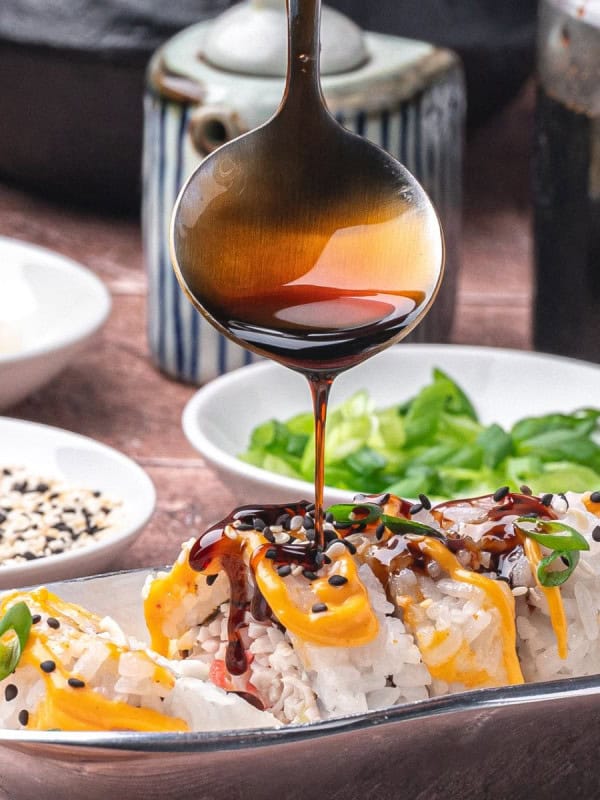
With just 10 minutes of prep and everyday ingredients, Kung Pao Sauce delivers bold, spicy-sweet flavor you can use with any protein, noodles, or vegetables you like.
This post may contain affiliate links. Please read our disclosure policy.
Sometimes you don’t need the whole dish, just the sauce. Whether you’re working with tofu, roasted vegetables, or leftover chicken, having a reliable Kung Pao Sauce recipe makes it easy to bring bold, takeout-style flavor to whatever’s on hand.
This version comes together in minutes with pantry ingredients and just enough heat. I tested the ratios until the balance of salty, sweet, tangy, and numbing spice felt right: bold but not overpowering, and versatile enough to use however you like.
Table of Contents
Recipe at a Glance
- Hands-on Time: 10 minutes
- Total Time: 18 minutes
- Yield: About 1 1/2 cups (enough for 4 servings)
- Serving Size: About 6 tablespoons of sauce per person
- Good For: Weeknight stir-fries, meal prep, freezer-friendly sauces
Kung Pao Sauce Ingredients
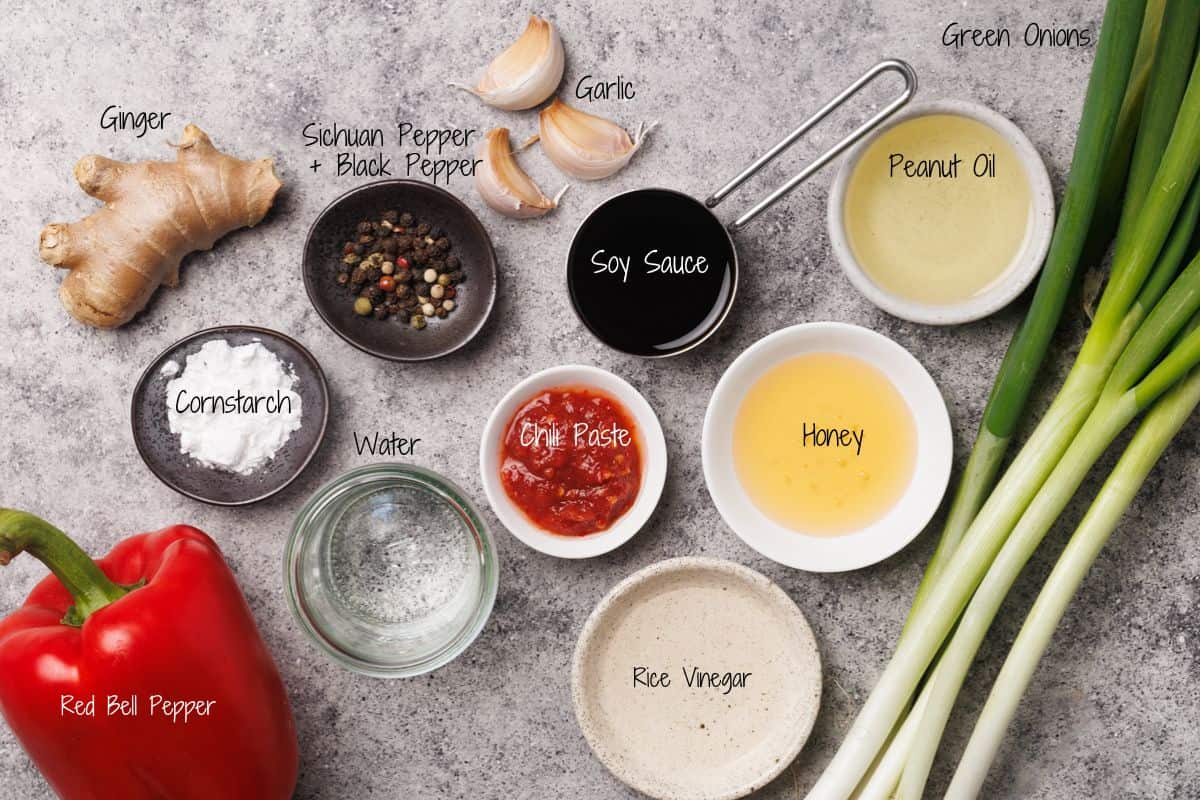
- Soy Sauce: Use reduced sodium if you prefer. I use standard soy sauce and balance saltiness with honey and vinegar.
- Rice Vinegar: Adds a clean, sharp acidity. Avoid seasoned rice vinegar (which contains sugar and salt).
- Hot Chili Paste (Sambal Oelek): Delivers heat and texture. Sriracha works too, but for my taste, sambal has better depth.
- Honey: Balances the heat and vinegar. For a vegan version, swap in maple syrup or agave.
- Sichuan Peppercorns: I coarsely grind them with a spice grinder or crush them with a rolling pin—they give that signature numbing heat.
- Cornstarch + Water: Thickens the sauce just slightly so it clings. Stir into a smooth slurry before adding.
- Peanut Oil: Adds flavor and stands up to high heat. You could use avocado or vegetable oil in a pinch.
- Red Bell Pepper: Diced small so it softens quickly. Adds color and sweetness.
- Green Onions: Use both white and green parts for flavor and texture.
- Garlic and Fresh Ginger: Minced fine so they toast quickly without burning. I don’t recommend using dried here.
Why this Recipe Works
- The sauce builds in layers: Aromatics are sautéed first, followed by simmering the sauce and finishing with a slurry for just the right thickness.
- Sichuan peppercorns are toasted and crushed: This method pulls out their citrusy, numbing flavor without overpowering the sauce.
- The ratio stays consistent: I’ve made this dozens of times—1:1 soy sauce to water creates balance without oversalting.
- It’s make-ahead and freezer-friendly: You can double or triple this recipe and freeze it in small jars or large cavity ice cube trays (trays with 1/2-cup cavities are perfect).
- Customizable heat: Sambal oelek is medium-spicy and you can add or reduce the amount to taste.
How to Make Kung Pao Sauce
1. Whisk the sauce base
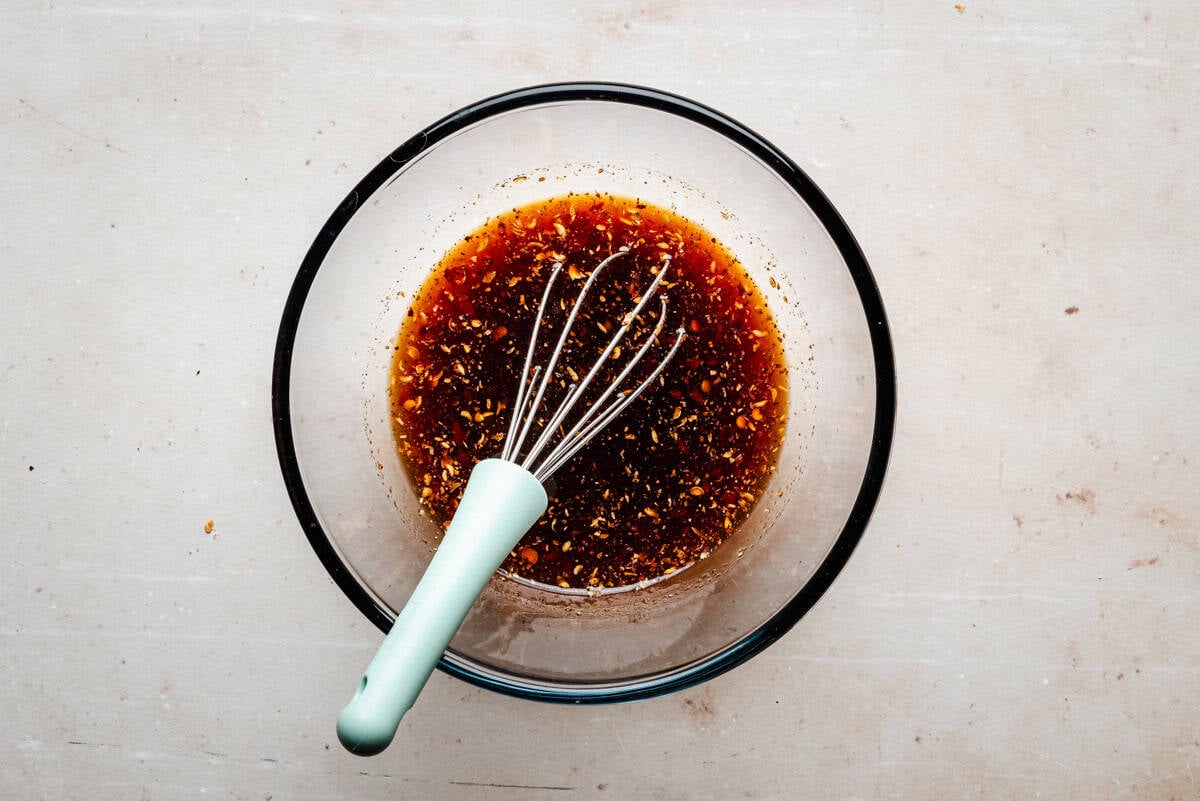
In a medium bowl, combine soy sauce, water, rice vinegar, chili paste, honey, and crushed Sichuan peppercorns. Whisk until smooth.
2. Make the cornstarch slurry
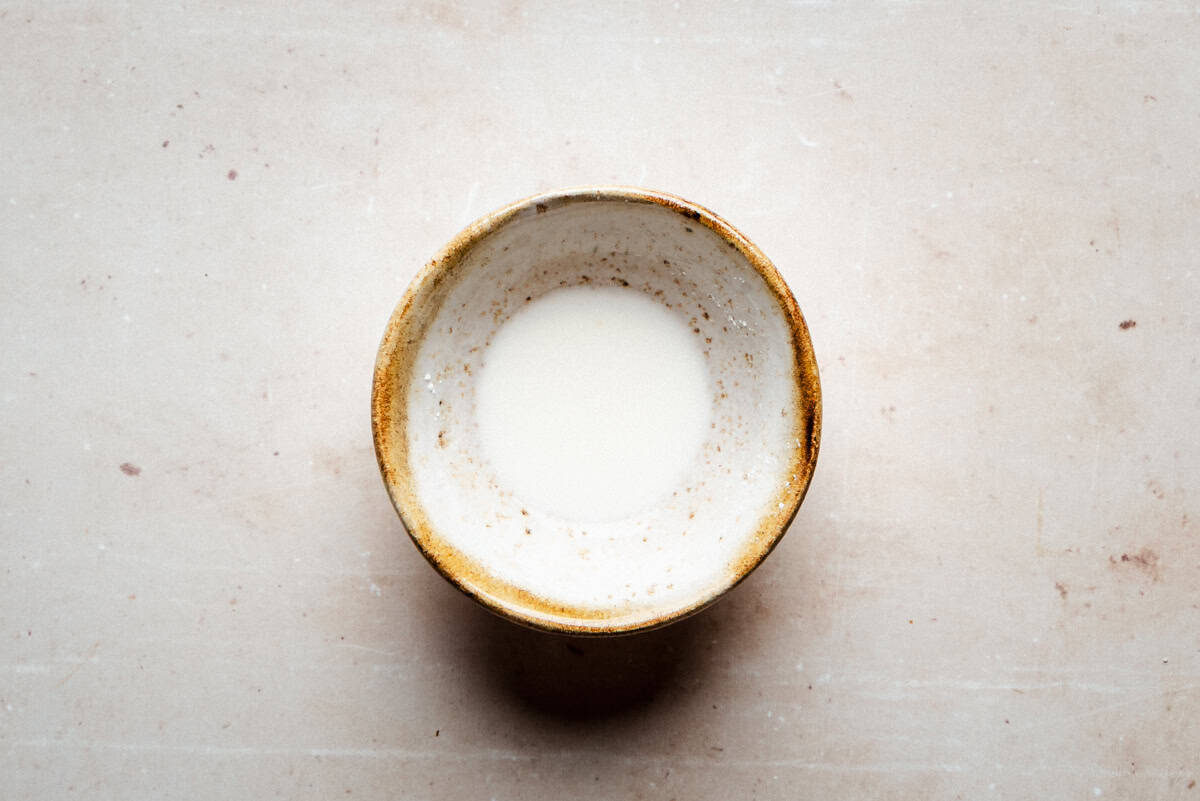
Stir cornstarch and water together in a small bowl until no lumps remain. Set aside.
3. Sauté aromatics and vegetables
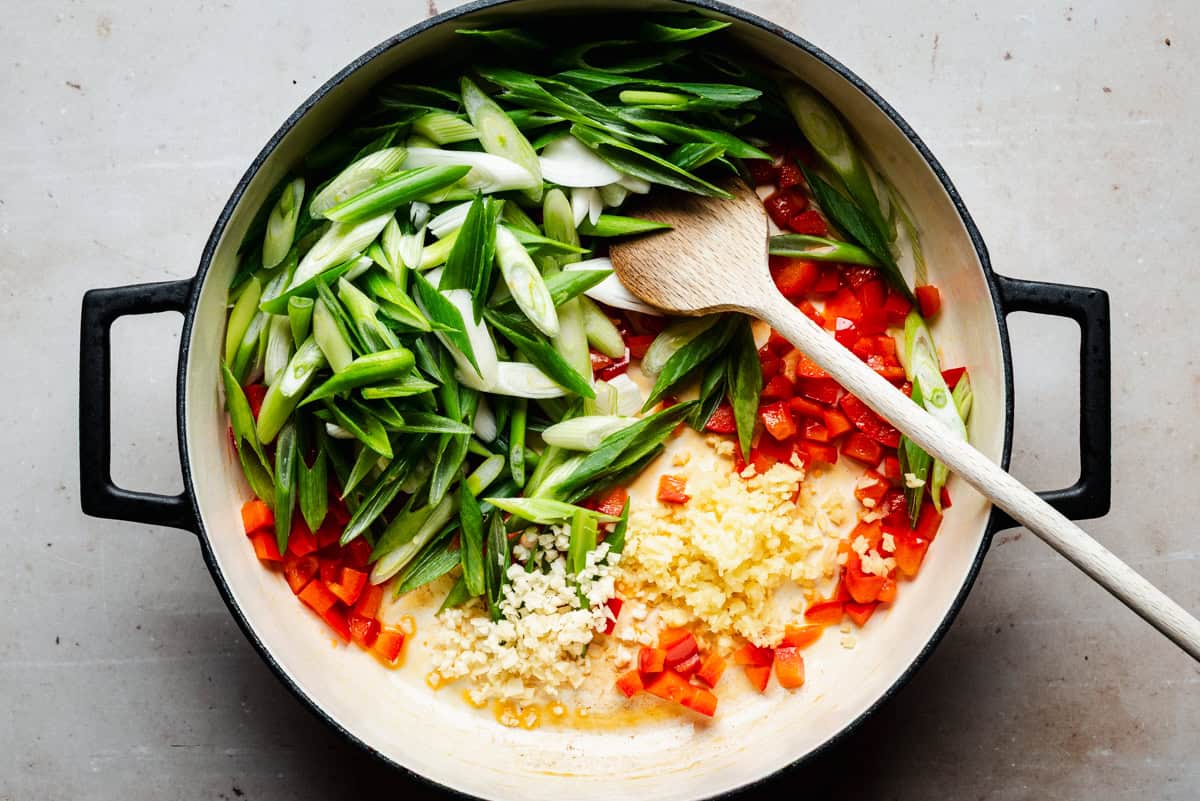
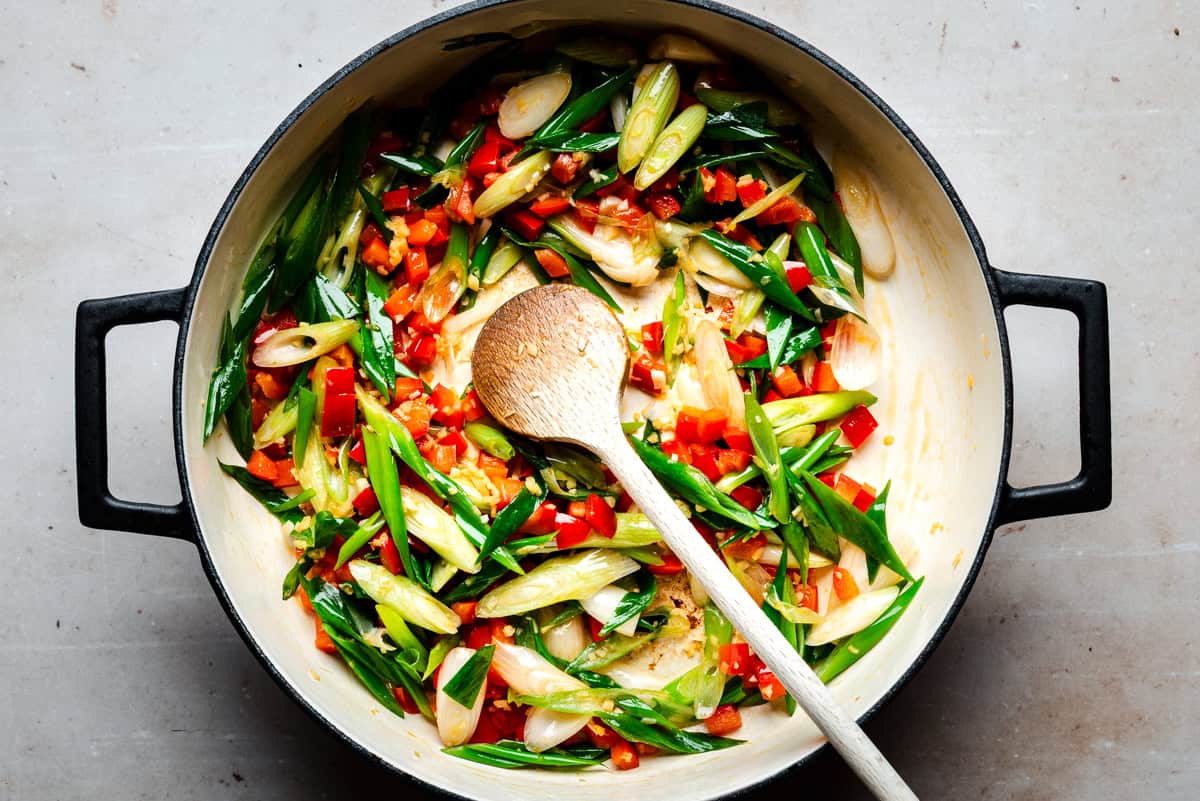
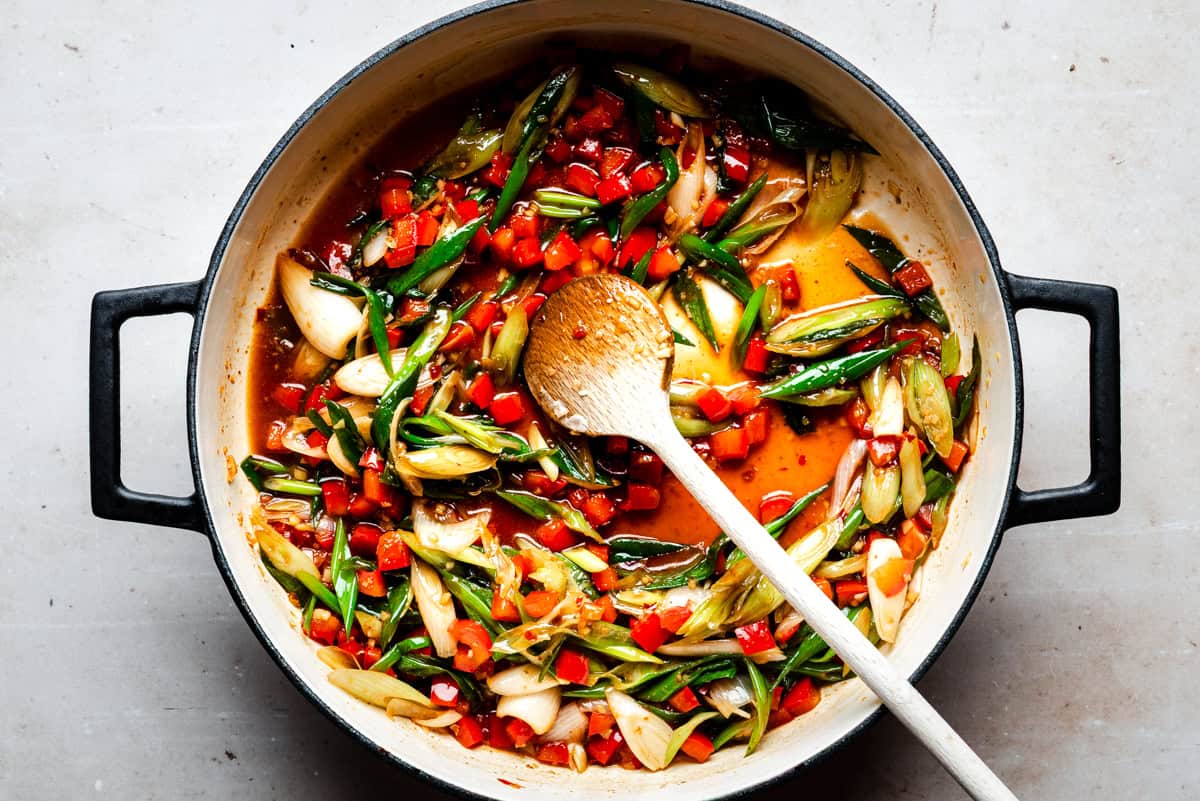
Heat half of the peanut oil in a large skillet over medium-high heat. Add diced bell pepper and stir until it begins to soften. Add green onions, garlic, and ginger and cook, stirring often, until fragrant.
4. Simmer and thicken the sauce
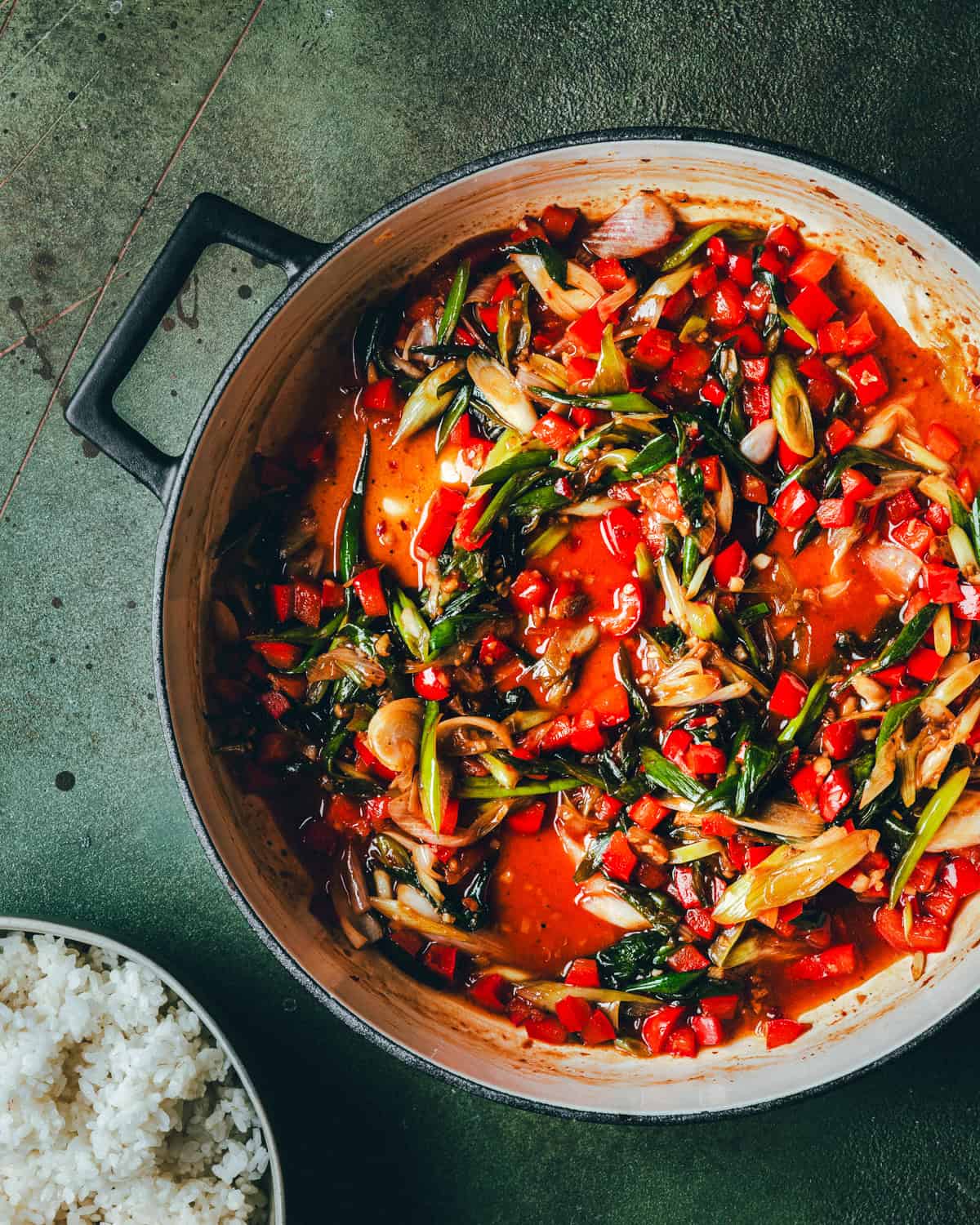
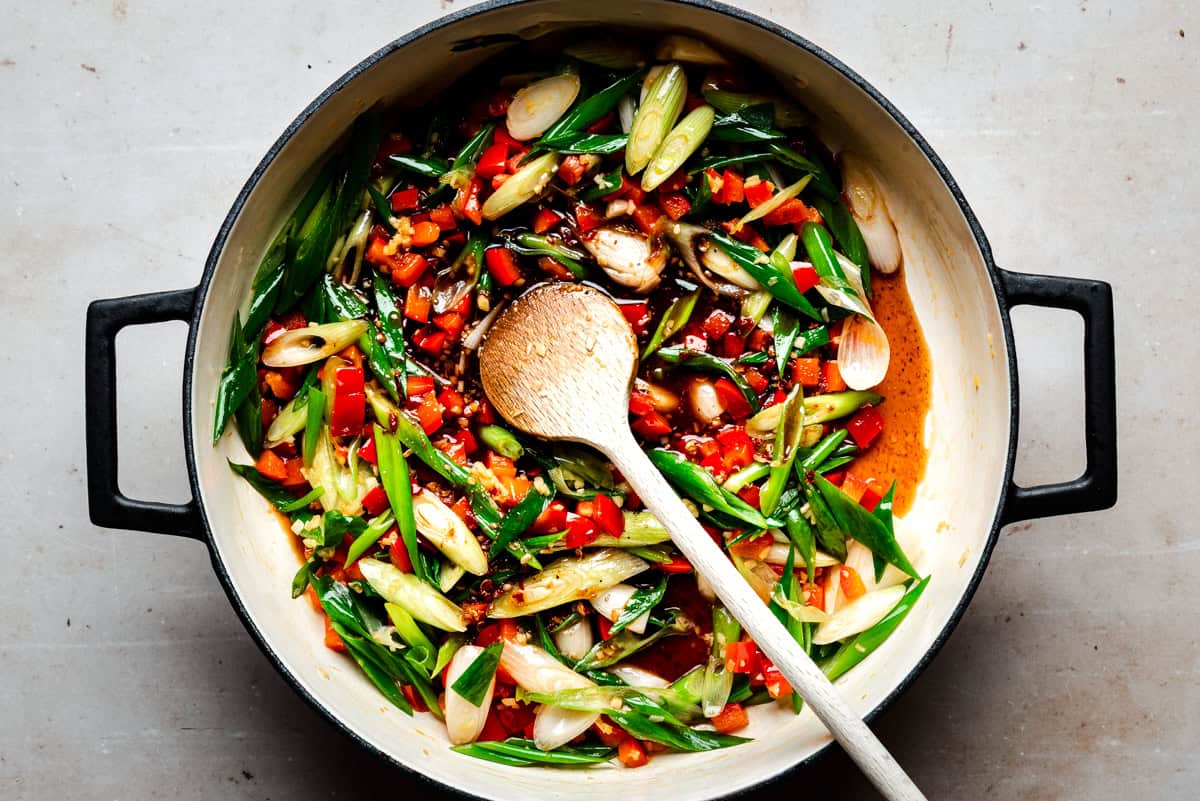
Add the soy sauce mixture to the skillet and, while stirring, bring to a boil. Stir in the cornstarch slurry and reduce heat; simmer until the sauce thickens just a bit.
5. Serve or cool and store for later
Remove from heat. Use immediately or cool and store (see below). Garnish with additional green onions if desired.
Pro Tips
- I always add the garlic and ginger after the bell pepper so they don’t scorch.
- Taste before serving; if it needs more heat, add chili oil or more sambal.
- To use the sauce solo (without the vegetables), just skip the sautéing step and simmer the sauce with aromatics in oil.
Recipe Variations
- Vegan Version: Just use maple syrup or agave syrup instead of honey.
- Extra Heat: Add chili oil, crushed red pepper, or diced fresh chiles to add a little extra kick.
- No Sichuan Peppercorns? Use a pinch of ground white pepper and extra chili paste—it won’t be the same, but still good.
- Add Protein: Stir in cubed tofu, cooked chicken, shrimp, or beef when you add the sauce.
- No Peanut Oil? Avocado or canola oil work well without adding strong flavor.
Make-Ahead and Storage
- Refrigerator: Store cooled sauce in an airtight jar for up to 1 week.
- Freezer: I freeze this sauce in 1/2-cup portions in a silicone cube tray; it’s great for quick lunches.
- Reheating: Warm leftover sauce gently in a skillet or saucepan over low heat until glossy and bubbling.
FAQ
Yes, it’s great with stir-fried tofu, steamed broccoli, or roasted cauliflower. It also works over rice or noodles.
It’s moderately spicy. You can dial up or down the heat by adjusting the amount of chili paste or adding chili oil.
There’s no exact replacement, but white pepper or a combo of black pepper and chili flakes gives some warmth. Or skip them, the sauce still works.
No. A large skillet or sauté pan works well. Just make sure it’s wide enough to stir ingredients easily without steaming.
Absolutely. It scales up well; just keep the same ratio and adjust your pan size to prevent crowding.
Kung Pao Sauce is quick, bold, and you’ll find endless ways to enjoy it. It’s just spicy enough and simple to batch cook. If you give it a try, I’d love to hear how you used it in the comments below!
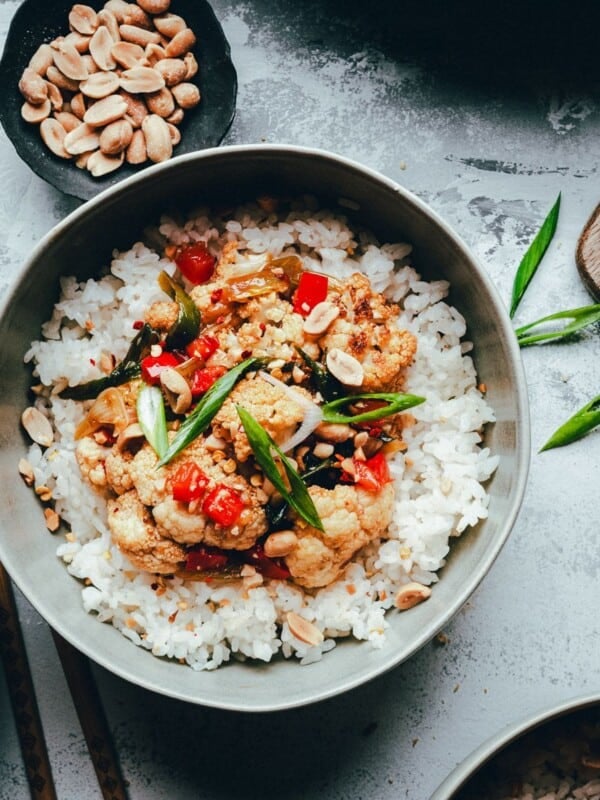
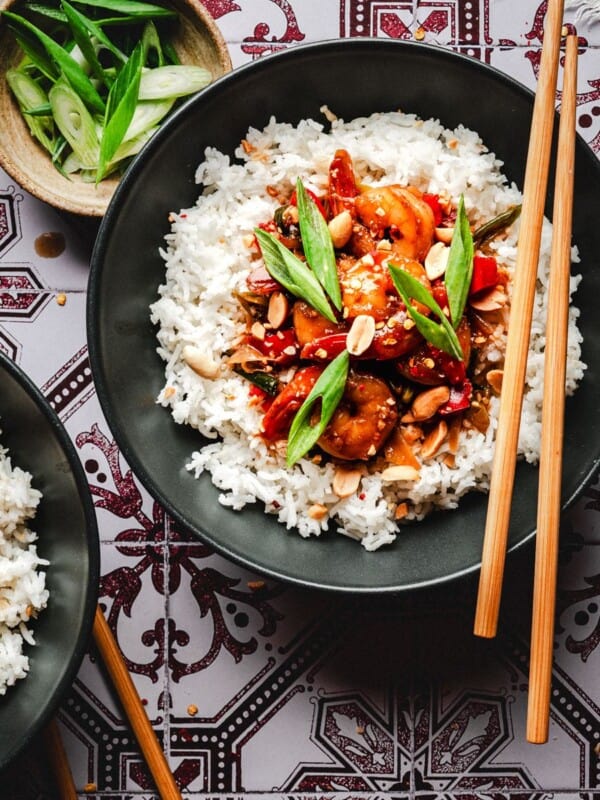
More Must-Try Kung Pao Recipes


Kung Pao Sauce
Video
Ingredients
- 1/4 cup soy sauce or reduced sodium soy sauce
- 1/4 cup water
- 1 tablespoon rice vinegar
- 1 tablespoon hot chili paste such as sambal oelek
- 1 tablespoon honey
- 1 teaspoon Sichuan peppercorns (also called Szechuan peppercorns) coarsely ground in a spice grinder or well crushed with a mortar and pestle or a rolling pin
- 1 teaspoon cornstarch
- 1 teaspoon water
- 1 tablespoon peanut oil
- 1 red bell pepper seeds and membrane removed, diced
- 6 green onions white and green parts, cut diagonally into 2-inch pieces, plus more, sliced for garnish (optional)
- 3 cloves garlic minced
- 2 tablespoons minced peeled fresh ginger
Instructions
- In a medium bowl, whisk soy sauce, water, vinegar, chili paste, honey, and crushed peppercorns.
- In a small bowl, stir cornstarch and water until smooth.
- Heat peanut oil in a large skillet over medium-high heat. Add bell pepper; cook and stir 2 minutes, or until starting to soften. Add green onions, garlic and ginger; cook and stir until garlic and ginger are fragrant and lightly toasted, about 2 minutes.
- Add soy sauce mixture and stir; bring to a boil. Stir in cornstarch mixture. Reduce heat and simmer, stirring constantly until sauce has thickened slightly, about 1-2 minutes. Remove from heat; serve immediately or cool and store for later use.
Notes
- I coarsely grind Sichuan peppercorns in a spice grinder, but a rolling pin works too.
- Store in the refrigerator for up to 1 week or freeze in portions for up to 3 months.
- Double or triple the recipe for batch cooking—it scales well.
- The sauce will thicken more as it cools. Add a splash of water when reheating if needed.
- This is enough sauce for about 1 pound of protein or vegetables.
Nutrition
Nutrition information is automatically calculated, so should only be used as an approximation.