

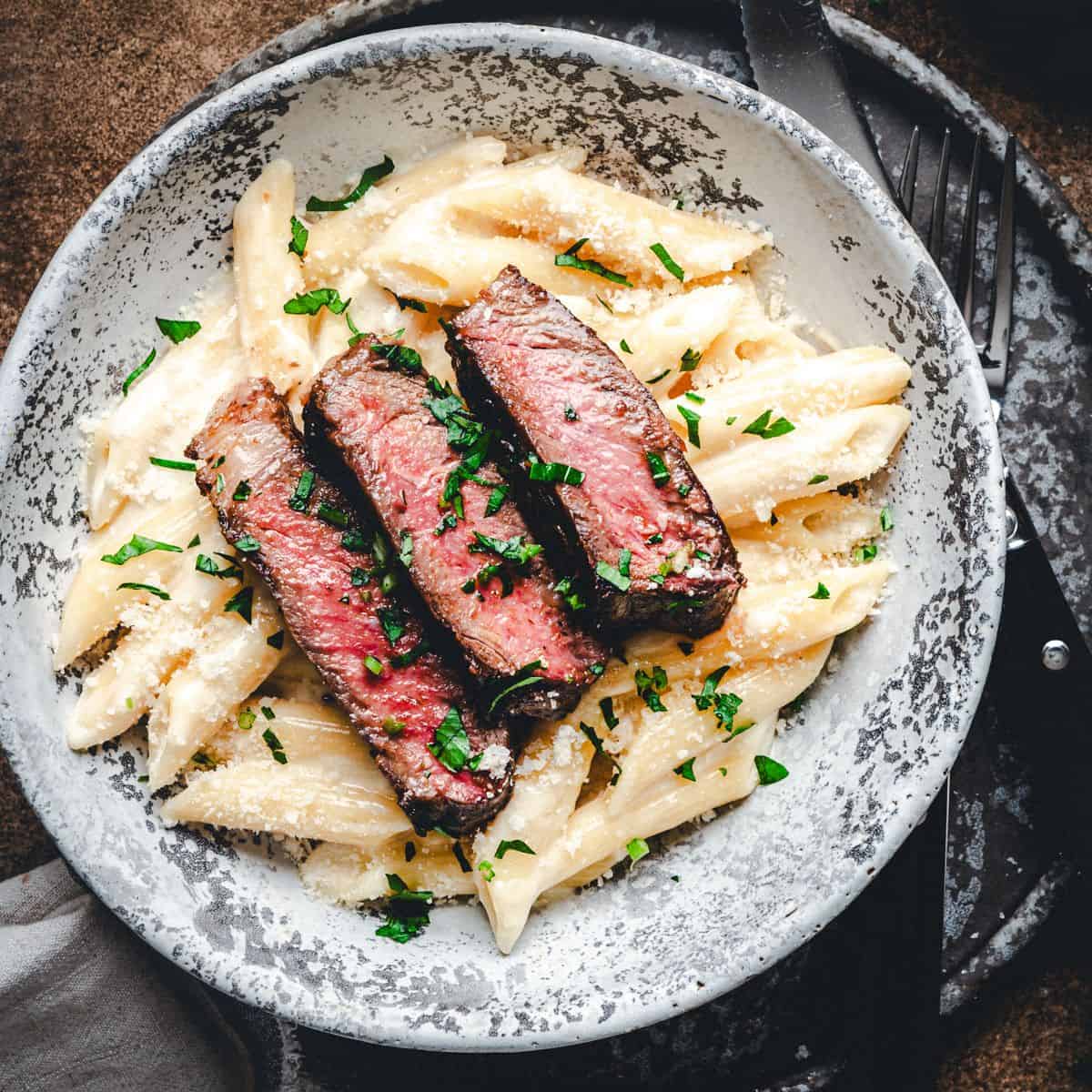
Make this restaurant-worthy Steak Pasta in just 30 minutes. Juicy steak and tender pasta in a decadently rich, one-pan parmesan cream sauce.

This post may contain affiliate links. Please read our disclosure policy.
With Steak Pasta, you don’t have to choose between a perfectly seared ribeye steak and creamy pasta, you get them both in one decadent dish. It’s the ideal main course for cozy dinner parties and romantic date nights. Ready in just 30 minutes, it’s a great option any time you’re looking to wow everyone at the table with minimal effort.
Striking the right balance of flavors and textures in this dish relies on a few steps that are simple, but precise: searing the ribeye steak so it develops a rich, golden-brown crust without overcooking in the center, cooking the pasta just to al dente in salted water, and getting the silky parmesan-infused sauce just right. It takes some concentration, but it’s fast and the finished dish is always worth it.
“This is a great and easy-to-follow recipe, it is also a delicious meal. Thank you very much. We LOVED it!”
Adriaan Veldhuisen
Table of Contents
Why This Recipe Works
- One-Pan Flavor: After testing a few methods, I found that the secret here is to build the sauce in the same pan you cooked the steak in. All those little browned bits (“fond”) on the bottom of the skillet are pure flavor and create a rich, savory base that won’t get from a clean pan.
- Perfectly Tender Steak: We’ll cook the steak first here, then let it rest while making the sauce. This way, the steak stays medium-rare and juicy instead of overcooking in the sauce.
- The Right Pasta Shape: I really prefer short pasta shapes like penne or fusilli for this dish. Their craggy surfaces and hollows are great at capturing every single bit of that creamy, flavorful sauce.
- A Silky, Smooth Sauce: Using that reserved “starchy gold” (the pasta water) is the ideal way to adjust the sauce consistency. It helps the parmesan and cream blend and stick to the pasta without breaking or turning grainy.
Ingredients You Need to Make Steak Pasta

- Short Pasta: The best short pasta shapes for this dish scoop up and hold the sauce; penne or fusilli are two shapes I use the most.
- Ribeye Steak: Look for well marbled steaks that are 1¼ to 1 ½ inches thick for the best.
- Avocado Oil: I like to use avocado oil, but use any neutrally flavored, high smoke point oil you have on hand.
- Butter: Ideally a high-fat butter (European style), that splatters less when basting. Feel free to use whatever butter you have though and know that there will be some spatter to wipe up no matter what (worth it!).
- Garlic: Fresh garlic is best for the sauce, but granulated garlic works in a pinch. For fresh, choose cloves that are plump and have tight, unbroken skins.
- Heavy Cream: For the creamiest sauce use heavy cream instead of half and half or milk.
- Parmesan Cheese: Use a good quality Parmesan and grate it fresh from a block for the best flavor and melt.
- Parsley: Fresh parsley should be vibrant green without any yellowing or wilting.
- Kosher Salt: The coarser grains of kosher salt are easier to pinch and sprinkle for better control over seasoning.
- Black Pepper: As always, freshly ground black pepper adds a more pronounced flavor than pre-ground.
How to Make Steak Pasta
Cook Pasta & Steak: Cook the pasta in salted water according to package directions, then drain, saving some pasta water. As the pasta cooks, season the steaks with salt and pepper and sear in a hot, oiled cast iron skillet until a golden-brown crust forms on both sides. Then lower the heat and baste with butter until they’re cooked to medium rare (130-135°F on an instant read thermometer). Transfer the steaks to a plate to rest off heat before slicing them against the grain.


Build the Cream Sauce: In the same skillet, melt more butter; add garlic and stir until fragrant, then mix in heavy cream and simmer until slightly thickened. Add parmesan cheese and stir until melted.


Combine and Serve: Combine the sauce with the pasta, adjusting the consistency with the reserved pasta water if you need to, and season with salt and pepper. Serve the pasta topped with steak slices, additional parmesan, and parsley if you like.


Pro Tips
- Prep the Steak Early: Let the steak come to room temperature (20-30 minutes) before cooking. This helps the steak cook evenly while the outside develops a great sear.
- Reserve Pasta Water: Scoop out some of the pasta cooking water before draining. It’s the best way to thin the sauce while helping it stick to the pasta. I like to save extra and refrigerate for reheating any leftovers.
- Sear Steak Undisturbed: When searing the steak, before basting with butter, resist the urge to move it around. Letting it cook undisturbed helps to create a beautiful, flavorful crust.
- Let the Steak Rest: After cooking, let the steak rest for 5-10 minutes before slicing. This allows the juices to redistribute, so that every slice stays juicy.
- Learn the Butter Baste: Basting your steak in sizzling butter is one of those kitchen tricks that feels a bit like alchemy. As you spoon that golden liquid over the steak, it not only bastes it with flavor but also helps to cook it more evenly. You’ll see the butter sizzle as it glides across the tip. And the butter browns right along with the meat, for extra nutty richness.

Recipe Variations
- Pasta Alternatives: Any short pasta you have on hand works great. I’ve used lots of shapes from penne and fusilli to rigatoni and farfalle (bowtie pasta).
- Steak Choices: New York strip steak or even Filet Mignon work well as alternatives to ribeye. Use any cut of steak you’d happily enjoy on its own.
- Butter Substitute: Try using ghee instead of butter for basting if you wnat the butter flavor and a higher smoke point.
- Garlic Alternative: Substitute minced shallots for garlic for a milder, slightly sweeter sauce.
- Cheese Varieties: Use Pecorino Romano or Asiago cheese instead of Parmesan for a slightly different but equally delicious flavor. Or for a tangy “steakhouse” version, stir 2-3 oz of crumbled gorgonzola or blue cheese to the sauce as soon as the parmesan melts.
- Herb Choices: Add fresh herbs like basil or thyme instead of parsley for a stronger herbaceous note to finish the dish.
- Spice It Up: Add a big pinch of red pepper flakes or coarsely ground black pepper to add heat to the sauce.

Your Questions, Answered
I prefer ribeye for its marbling (which means flavor and tenderness), but New-York strip or Filet Mignon are great alternatives and a touch leaner.
Yes, through a lot of trial and error, I’ve found this is the best method. Cook the steak first, then remove it to rest on a cutting board. You build the sauce in the same pan, and then add the sliced steak at the very end. This keeps the steak perfectly medium-rare and tender.
The three most important rules are: 1) Don’t overcook it (pull it at 130-135°F for medium-rare), 2) Let it rest for 5-10 minutes before slicing, and 3) Always slice it against the grain. This cuts through the muscle fibers and makes every bite tender.
Absolutely. This is a great way to use it. Just make the sauce as written, and toss the thinly sliced cold steak in with the pasta at the very end, just long enough to heat it through without overcooking it.
How to Store and Reheat
Store any leftovers in an airtight container in the refrigerator for up to 3 days. To reheat, gently warm it on the stove over low heat, adding a splash of water or milk to loosen the sauce if needed. Avoid freezing as it can change the pasta and sauce’s texture.
Serve With
More Delicious Pasta Recipes

Video
Ingredients
- 8 ounces penne pasta or other short pasta, like fusilli
- 16 ounces ribeye steak 2 8-ounce steaks, 1 1/4 to 1 1/2-inches thick
- kosher salt and freshly ground black pepper to taste
- 1 tablespoon avocado oil or other high heat oil
- 3 tablespoons butter divided
- 2 large garlic cloves minced
- 1 cup heavy cream
- 2 ounces grated parmesan cheese plus more for serving
- chopped fresh parsley for garnish, optional
Instructions
- Cook Pasta: Cook pasta in a large pot of boiling, salted water until firm to the bite (al dente). Drain, reserving 1 cup of pasta water.
- Prep Steak: Meanwhile, thoroughly pat steaks dry and season on both sides with salt and pepper.
- Sear & Baste Steak: Heat oil in a large cast iron skillet over medium-high heat until very hot and swirl to coat; add steaks in a single layer and sear on first side until golden-brown crust forms, 3 to 5 minutes. Flip and cook until crust has formed on other side, 3 to 4 minutes more. Reduce heat to medium and add 1 tablespoon of the butter; tilt pan and spoon sizzling butter over steaks until the internal temperature reads 130-135°F on an instant read thermometer for medium rare (Recipe Note #1). Transfer steaks to cutting board and tent with foil; let stand 5-10 minutes until it reaches your desired doneness. Slice across the grain in 1/2 to 1-inch slices.
- Make Pan Sauce: In the same skillet, heat remaining 2 tablespoons butter over medium heat and stir until sizzling. Add garlic and stir until fragrant, about 30 seconds. Add heavy cream and bring to simmer, scraping up any browned bits from the pan; cook and stir until thickened slightly, about 3 minutes. Add parmesan cheese; cook and stir until cheese has melted.
- Combine & Serve: Add drained pasta to cream mixture in skillet; cook and stir until heated through, adding reserved pasta water a tablespoon at a time as needed to loosen the sauce. Season to taste with salt and pepper. Transfer to individual pasta bowls or to platter and top with steak slices. Garnish with more parmesan cheese and parsley if desired and serve.
Notes
- On Steak Temp: I like to pull my steaks at 130-135°F for a perfect medium-rare. They’ll continue to cook as they rest, landing at a perfect 145°F. For medium, I pull them at 140°F.
- The One-Pan Secret: My number one tip is to make the sauce in the same skillet you cooked the steak in. All those browned-on bits (the “fond”) are pure flavor and the secret to a restaurant-quality sauce.
- For a Smooth Sauce: The secret to a perfectly smooth, non-grainy sauce is using fresh-grated parmesan from a block. The pre-shredded kind in a bag has anti-caking powders that can ruin the texture of your sauce.
- The Best Pan: A cast-iron or heavy-bottomed stainless steel skillet is what I like best for searing steaks. These pans get blazing hot and create the best crust, a must for building the fond (those flavorful bits) for the sauce.
Nutrition
Nutrition information is automatically calculated, so should only be used as an approximation.




Oh this sounds and looks SO good, Marissa! I might grill the steaks since the weather is getting nicer here. I’m thinking this would be a good Friday or Saturday night meal!
I think you and Laura will love this, David!
This is a great and easy-to-follow recipe, it is also a delicious meal. Thank you very much. We LOVED it!
I love to hear this, Adriaan! Thank you for letting me know.
Oh my goodness – this steak already looks phenomenal on its own; so succulent and beautifully cooked. But combined with a creamy pasta, that’s a heavenly meal!
Aww…thanks so much, Ben!
Yep. I would really enjoy this meal.
Thanks, Mimi!