

Traditional Carne Adovada is a rich blend of tender pork, caramelized onions, punchy garlic and vinegar, and two types of vibrant chile. The combination yields a delicious, saucy dish that’s just as at home over a bowl of rice as it is wrapped in a tortilla.

This post may contain affiliate links. Please read our disclosure policy.
Its deep flavor matched only by its bright color, Carne Adovada is a beloved New Mexican dish for a reason. Of course, part of its deliciousness stems from a traditional overnight marination, but we busy cooks don’t really have time for that, do we? Happily, I’ve figured out how to get that same complex flavor in about an hour. The key is browning both the meat and the aromatics before adding the sauce ingredients.
Lest you worry a shortcut might shortchange the final results, take heart. The silky sauce, tender meat, and ¾ cup of chile powder (you read that right) result in a hearty dish that’s bold and satisfying without burning your lips off. Pop the whole thing in the oven for an hour, and the final product is just as good as if you’d left it in a slow cooker overnight. Serve with beans, posole, rice, tortilla, or anything else you darn well please … family and guests will love it just the same.
Table of Contents
Ingredients for Carne Adovada

For the Pork:
- Pork Shoulder: Tender pork is the star of the show, so look for a cut that has some marbling and a bit of fat on the outside. If there’s too much, have the butcher trim it. Cut into ¾-inch cubes (or ask the butcher to do it).
- Vegetable Oil: You need an oil with a high smoke point so you don’t burn your meat or pan while searing. Opt for a neutral flavor. Personally, avocado oil is my fave.
For the Red Chile Sauce:
- New Mexican Red Chile Powder: If pork is the star of the dish, this chile powder is its heart. Don’t skimp on color or freshness, which you can determine with the sniff test. Smell sweet and earthy? Good.
- Chile Caribe: That’s right, we need both powder and flakes. Crushed New Mexican red chile flakes are bright and aromatic, bringing extra flavor and subtlety.
- Garlic: You know I love garlic in my recipes, and New Mexican fare is no exception. Make sure your garlic is fresh, firm, and tight.
- White Onion: Again, look for crisp onions with tight skin and without soft spots. (Fun tip for produce everywhere, especially watery goods such as citrus or onions: Weigh a couple of specimens in your hands and choose the heaviest ones. That means they’re the freshest and juiciest.)
- Ground Coriander: Again, time for the sniff test. You’re looking for bright notes of citrus, which says it’s fresh. The bulk bins are your best friend as long as they’re replenished often.
- Ground Cumin: Here you want a strong, pungent, earthy scent. Can’t smell what’s in your jar at home? Time to replace it.
- Mexican Oregano: Don’t mistake this for Mediterranean oregano! This guy should bring yet more earthy citrus to the table (literally), so seek out brightly colored whole leaves.
- Chicken Broth: You can either make your own stock or buy it from the store.
- Red Wine Vinegar: Vinegar is a forgiving substance, but make sure it’s high-quality so you get flavor rather than generic acidity.
- Honey: Use your favorite brand.
For Serving (Optional):
- White Onion: If you’re using it as a garnish, make sure to dice it small.
- Fresh Cilantro: Cilantro must be crisp and green. Grab a bunch and hold it upright. If it stands on its own, it’s fresh. Droopy bunches need not apply.
- Limes: Another opportunity for the weight test. Choose limes that are heavy, fragrant, and unblemished.
How to Make Carne Adovada
Preheat your oven to 350°F. Brown every side of the pork cubes until golden, then remove them.

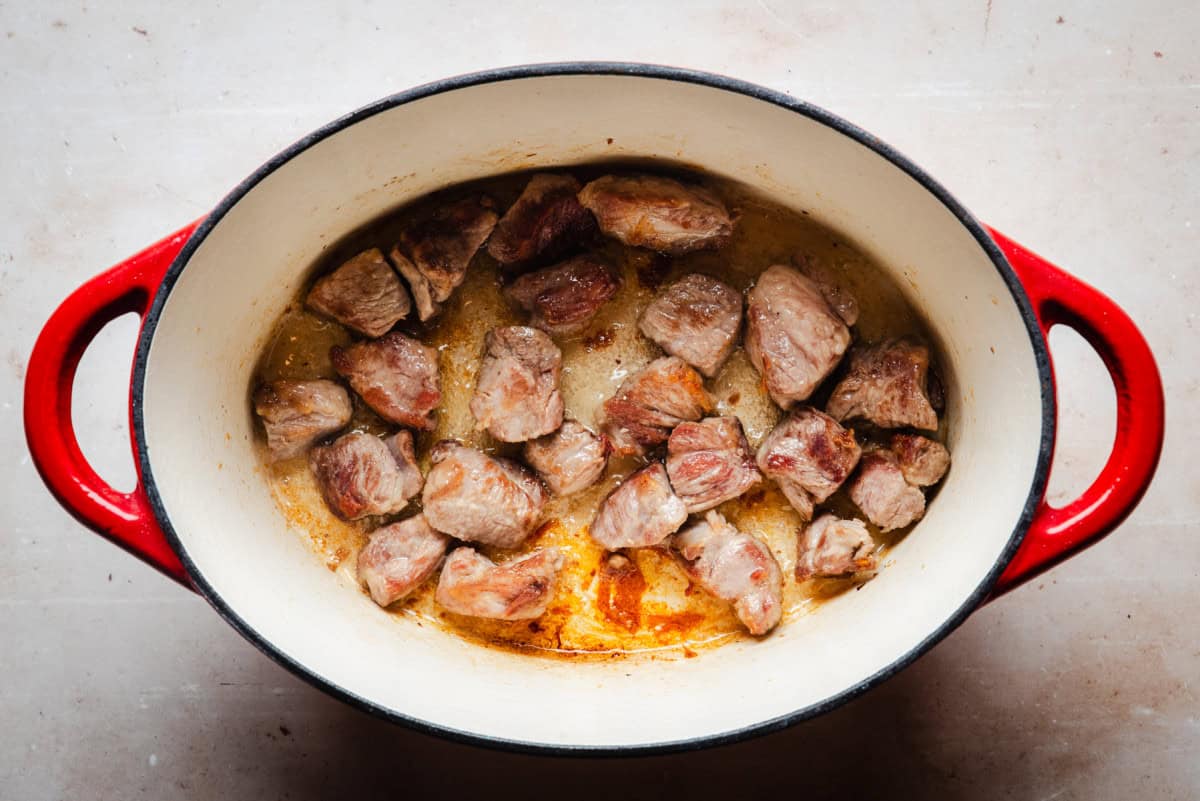
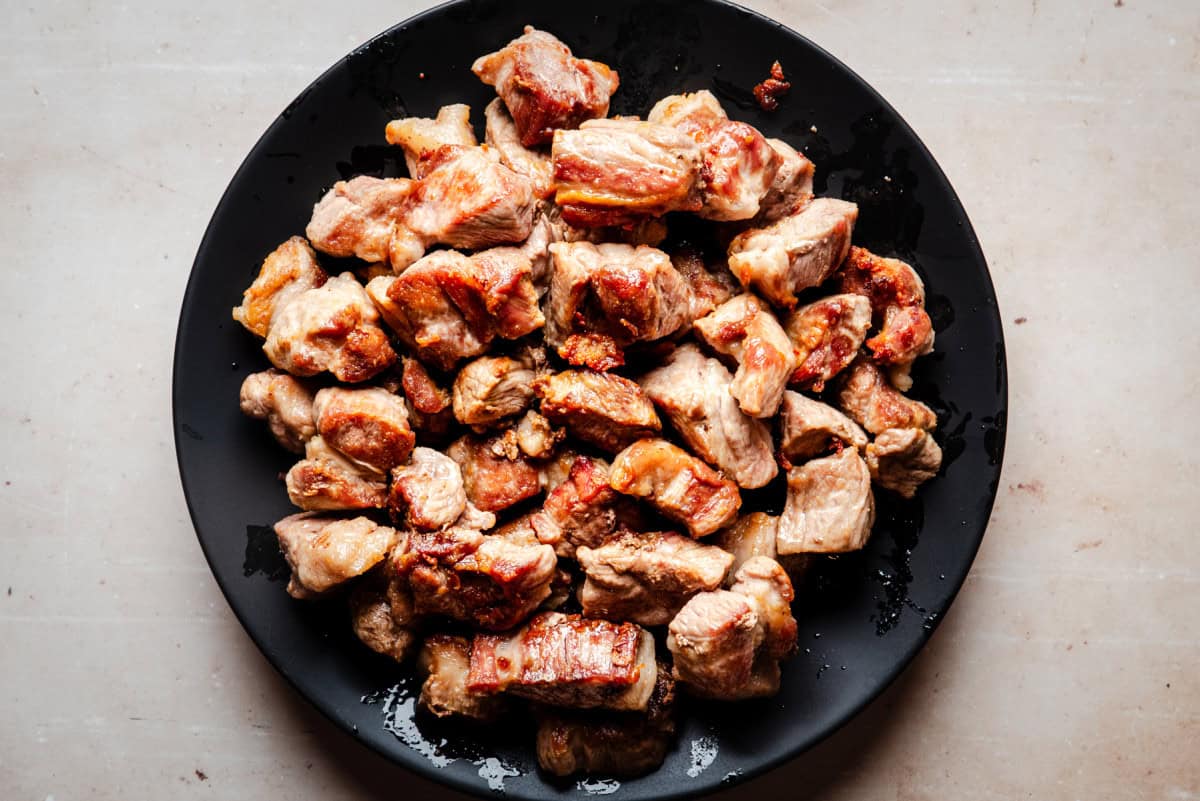
Leaving the drippings in the pan, add the onions until they get soft and golden in color, then add your garlic and cook until you can smell it. Don’t let it burn! Pour broth in next, gently deglazing the bottom of the pan with a spatula or spoon.


Transfer this mixture to a blender and add the spices, honey, vinegar, and additional broth. Blend until smooth, pop the pork back in the pot, pour the sauce over along with the last of the broth, and stir it all together.

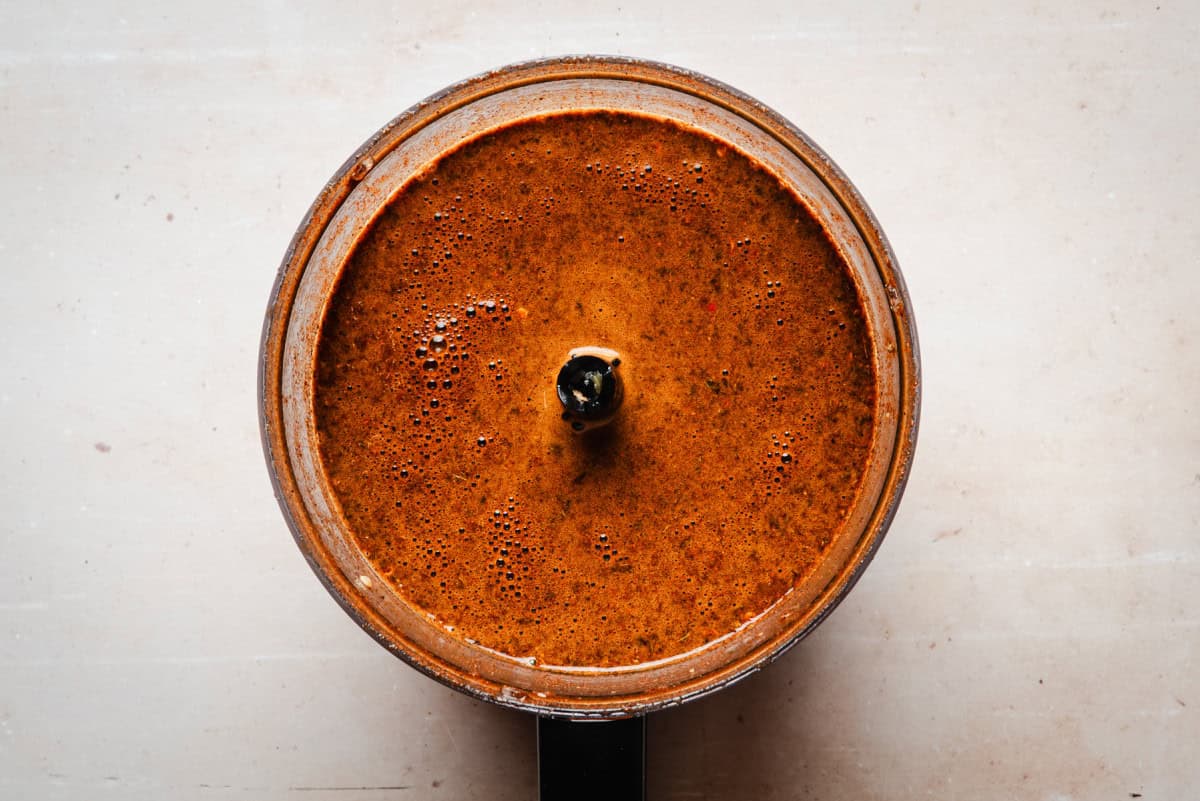

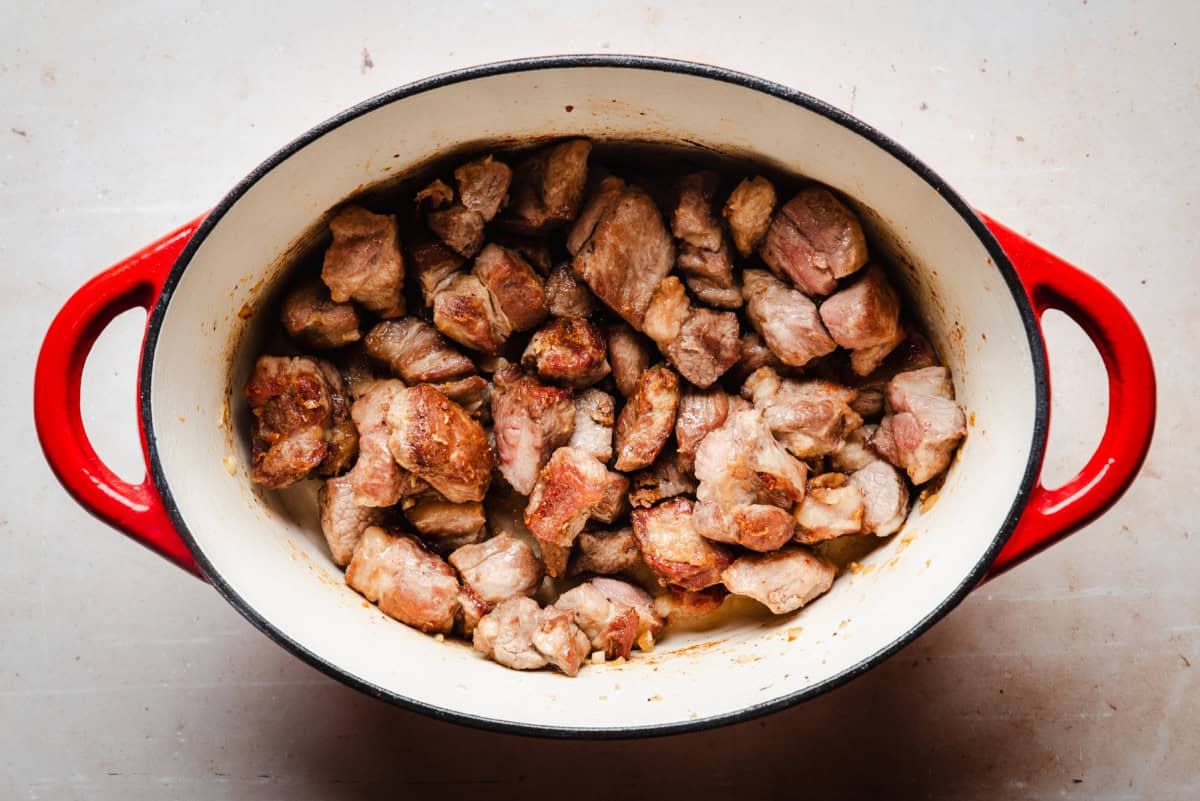

Put the covered pot in the oven and cook for about an hour. The pork should be fork-tender. Serve hot, garnished with diced onion, cilantro, and lime wedges.


7 Recipe Tips
- Brown in Batches: Crowding the pork results in steamed meat rather than crusty browned edges. Make sure to leave space between the pieces.
- Watch the Heat: Stand by your pot and adjust it as needed to sear the meat without burning the drippings.
- Scrape the Bottom: Don’t forget to deglaze the pan. There’s major flavor there!
- Taste the Sauce: Make sure to give your sauce a taste test after you blend it up and before you place it in the pot. You want it well-seasoned before the braise.
- Use a Heavy Pot: To ensure even cooking, use a Dutch oven or another heavy-bottomed pot.
- Rest Before Serving: Always rest your meat. 10 minutes ought to do it. This gives the sauce time to thicken and allows the flavors to meld.
- Make Extra: Don’t be afraid to go big. This dish only gets better with time, and it freezes well.

Recipe Options:
- Traditional Method: Although the one-hour approach is wonderful for a quick weeknight meal, you can absolutely marinate your pork ahead. Anywhere between 8 and 24 hours will do it.
- Spice Level: If you want to adjust the kick, you can add more or less chile caribe. Err on the side of caution when first making this.
- Serving Styles: I love this wrapped in warm flour tortillas, but it’s just as good over rice or with pinto beans and posole.
- Chile Choices: If you don’t have New Mexican red chile powder, you can opt for ancho or guajillo chile powder as well. Regular chili powder is not actually a type of chile, but a blend, so avoid it.
- Alternate Cooking Method: You can simmer instead of bake Carne Adovada, but make sure to watch it.

Storage and Reheating
You can keep leftovers in the fridge for up to four days. Believe it or not, the flavor actually gets better for the first couple, so if you’re serving it to company, feel free to make it ahead. You can also freeze it for three months after cooling it completely. When it’s time to reheat, first thaw and then warm gently, covered, over medium-low heat. If needed, you can pour in a little broth to thin the sauce.


Carne Adovada

Video
Equipment
Ingredients
- 1/4 cup vegetable oil such a avocado oil or other neutrally flavored, high heat oil
- 3 1/2 pounds boneless pork shoulder cut into 3/4-inch cubes
- 6 cloves garlic minced
- 1 medium white onion diced small, plus more for garnish (optional)
- 4 cups chicken broth
- 2 tablespoons ground coriander
- 1 tablespoon ground cumin
- 2 teaspoons dried Mexican oregano
- 2 teaspoons chile caribe (flaked New Mexico red chile)
- 3/4 cup New Mexico Red Chile Powder
- 1 tablespoon honey
- 2 tablespoons red wine vinegar
- 1/2 teaspoon fine sea salt plus more to taste
- chopped cilantro for garnish (optional)
- lime wedges for serving (optional)
Instructions
- Preheat oven to 350°F.
- Heat oil in a large, ovenproof pot or dish over medium-high heat. Brown pork in batches until golden on all sides; transfer to a plate and set aside.
- Pour off all but 2 tablespoons of fat (or add oil if your pork was very lean) and reduce heat to medium. Add onion and cook, stirring occasionally, until softened and golden, about 5 minutes. Add garlic and cook, stirring, for 1 minute more. Pour 1 cup of chicken broth into pot, scraping up any browned bits from the bottom with a wooden spoon. Remove from heat.
- To make chile marinade, transfer onion mixture with broth to the bowl of a food processor. Add coriander, cumin, oregano, chile caribe, red chile powder, honey, vinegar, and 2 more cups of chicken broth; process until smooth. Taste for seasoning and add salt as needed.
- Return browned pork to ovenproof pot and pour chile marinade over along with remaining 1 cup chicken broth; stir well to combine.
- Cover and bake for 1 hour, or until pork is very tender when pierced with a fork. Serve hot in bowls, topped with diced white onion and fresh cilantro if desired. Lime wedges can be served alongside as an optional garnish.
Nutrition
Nutrition information is automatically calculated, so should only be used as an approximation.


