

This licorice recipe is easy and tastes so much better than any black licorice you buy from a store! This Homemade Salty Black Licorice uses involves brown rice syrup for sweetness and molasses for color – no black food coloring because, who needs it!? It’s a lovely black without it. A perfect treat, party favor or edible gift idea.

This post may contain affiliate links. Please read our disclosure policy.
In the summer of my eleventh year, I went to spend a week with my best friend Mary. To my dismay, her family had moved to another town and limited our time together to holiday breaks and summer vacations.
During the week, we had our fill of mischief (almost): getting into several arguments over important things like lyrics to Linda Ronstadt songs, running from her terrifying geese (maybe that was just me), and swimming in the creek behind her house which we called ‘sliming’. The creek wasn’t exactly pristine.
But what I really remember about that visit was the jar of black jelly beans that she’d saved for me, picked out carefully from among the flavors that she liked. This was an especially thoughtful gesture as sugar of all sorts was contraband in her house.
She’d saved them for me because she thought they tasted terrible, but no matter.
Black licorice is one of those divisive flavors, like cilantro and gin. People seem to love it or hate it.
I’m solidly in the love it camp.
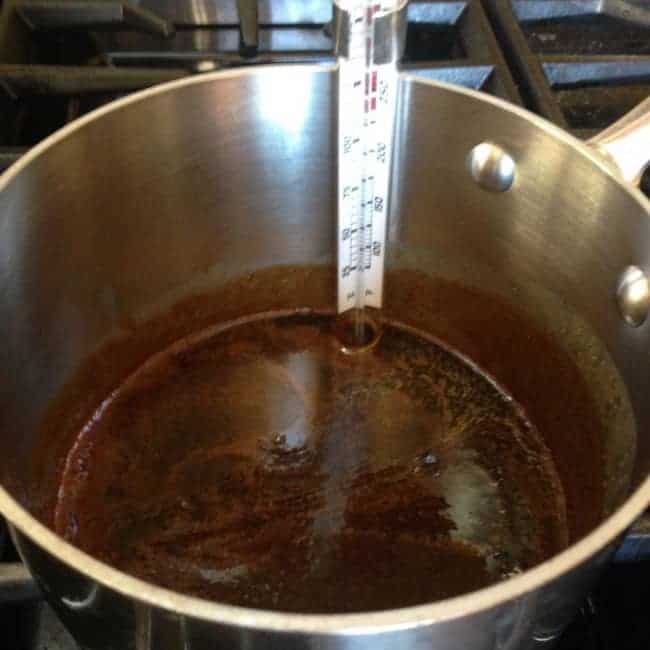
I hadn’t thought much about making my own until I saw this post from Christina of Dessert for Two (recipe here). It looked so easy and delicious, I had to give it a try. It fits both of those adjectives, and now I can’t imagine buying the store bought version. I think I’ll even save a piece or two for Mary – you never know.
This makes a soft, chewy licorice. If you prefer a firmer texture, heat the mixture longer, until it reaches between 260 – 265 °F (like the original recipe from Saveur Magazine). In this version, I made a few changes: swapped in heavy cream for the condensed milk, brown rice syrup for the dark corn syrup, and omitted the black food dye. I also added in kosher salt and finished the little bites with flaky Maldon salt because the only thing better than black licorice is salty black licorice.
More Must-Try Confections


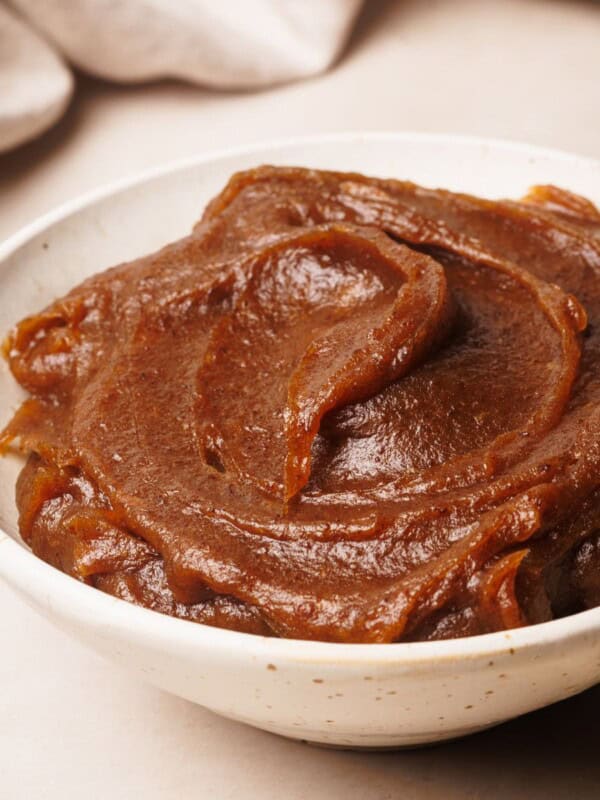

Ingredients
- 1/4 cup heavy cream
- 4 tablespoons unsalted butter
- 1/4 cup brown rice syrup
- 2 tablespoons molasses
- 1/2 cup granulated sugar
- 1/2 teaspoon kosher salt
- 6 tablespoons whole-wheat flour
- 1 tablespoon anise extract
- flaky sea salt for finishing such as Maldon
Instructions
- Line an 9 x by 5 x by 3-inch bread loaf pan with parchment paper, allowing parchment to line sides as well as the bottom.
- Cut out 36 parchment wrappers, about 3½ inches wide and 2 inches long.
- Sift the whole wheat flour into a small bowl and set aside.
- In a narrow, heavy saucepan bring the first 6 ingredients heavy cream through salt) to boil and cook, stirring constantly with a wooden spoon or silicone spatula, for 20-25 minutes, until the mixture reaches 255°F. (Use a candy thermometer to monitor the temperature)
- When the licorice reaches 255°F, remove from heat, stir in whole wheat flour and anise extract. Continue stirring until smooth.
- Carefully pour licorice over parchment in pan.
- When the licorice is nearly cool, sprinkle with Maldon or other flaky salt.
- Cover and refrigerate until cooled completely. Then transfer, with parchment, onto a cutting board.
- With a lightly oiled, sharp knife cut licorice lengthwise into 6, ½-inch strips. Then cut crosswise into 6, 1 ½-inch strips.
- Place one strip of licorice on the edge of a parchment wrapper and roll up. Twist ends to seal. Repeat with remaining strips. Store in the refrigerator in an airtight container.
Nutrition
Nutrition information is automatically calculated, so should only be used as an approximation.


Can I substitute rice flour for the wheat flour to make a gluten free recipe?
Hi Greg! I haven’t tried this recipe with gluten free flour, but I don’t see why it wouldn’t work.
How do you prevent the licorice from becoming taffy like? I want it chewier. Thanks
Hi, Alisa! For a firmer texture heat the mixture longer, until it reaches between 260 – 265°F on your candy thermometer.
We couldn’t find brown rice syrup, so we used barley malt syrup instead and they turned out perfect! Next time we’ll probably use a little more anise to give a stronger licorice flavor!
That’s fantastic, Erin! Thank you for coming back to let me know!! 🙂
Item #4 of HOMEMADE SALTY BLACK LICORICE. has me dumbfounded! Can you explain: In a narrow, heavy saucepan bring the first 6 ingredients heavy creamTHROUGH SALT) to boil and cook,
What is through salt?
Hi, Tony. I’m referring to adding the first 6 ingredients to the saucepan: heavy cream, unsalted butter, brown rice syrup, molasses, sugar and salt. The phrase ‘heavy cream through salt’ is just there so that you don’t have to count down 6 ingredients to know what all to include. 🙂
I tried it, and it turned out crunchy- I was trying for a less soft licorice, but it’s not anything close to the picture. Kinda pliable, but it wants to shatter on my, and wouldn’t smooth out at all. Any suggestions?
Hi Lillian. It sounds like your licorice mixture got too hot, maybe in the ~300°F? I’m so sorry it didn’t turn out with the texture you wanted. My best suggestion for next time is to cook until the mixture reaches 265°F or a little below.
See, I did that: I actually removed it from the heat at 260° because it was starting to burn. Is it possible I’m using my thermometer incorrectly, or that my altitude is playing a role? (I’m at 4000 ft above sea level)
Hi Lilian, I don’t think it’s an altitude issue since you were measuring the temperature. So I’m betting that there is an issue with your thermometer – perhaps it’s not reading accurately or, as you suggested, you may have been measuring incorrectly. Check out this great article from David Lebovitz, lots of great tips and troubleshooting.
Did you use any particular kind of molasses. There are different ones on the market and I am wondering about the outcome if you just choose one.
Thank you!
Hi there, Olivia. I used Wholesome Sweeteners brand organic mollasses – but, I think any variety would work just fine here. If you have a favorite brand, go with that!
Thanks! I can’t wait to try this as I am one of many I know who love licorice!
Looking forward to make these. Thanks for the recipe.
But why don’t you use licorice in your licorice?
I mean real licorice extract and not anise.
BR
Hi there – anise extract is what I could find…I’m sure that licorice extract would be excellent too!
These taste amazing! BUT my candy thermometer must not be working properly because they came out really hard…. I used coconut sugar instead of white and used spelt flour instead of whole wheat. Turned out delicious.
I’m so glad that they taste so good! Interesting about the texture… Do you mean hard like chewy or hard like hard candy?
Mine turned out like hard candy.. what did I do wrong?
Hi, Staycee! I’m sorry the licorice didn’t turn out soft…I know how frustrating that can be! It must have reached too high a temperature, aka ‘hard crack’ stage, 295 to 309°F. Your candy thermometer may be off or it may not have been in a place in the mixture to get an accurate reading.
I’m going to make this licorice for a friend who is in the love, love, love licorice column. In reviewing the recipe I noticed it calls for whole wheat flour. Will a quality, unbleached all purpose flour work? Whole wheat is just not a flour I use; it has to be freshly milled, otherwise it’s bitter. Since I bake a lot, I stock ten different flours in my pantry, but not whole wheat.
I’m thinking the flour is necessary as a pliable binder in the licorice. I have two strong flours: 11.5% protein and a 14% protein. The 11.5% is mailed. I don’t know if the malt will effect the flavor. Sorry for babbling; just thinking out loud as I try figure out a solution to the flour.
Hi Cate…I haven’t tried it with any flour other than whole wheat, but I would think that any whole grain flour would work and perhaps even all-purpose. I think that malt would be fine too. Please let me know how it goes. 🙂
This looks great! Can’t wait to try it out. How long is the licorice good for in the fridge? I’m hoping to gift some to a few friends for the holidays
Thanks, Kay! It should last for up to 2 weeks in the refrigerator. Happy Holidays!
THANK YOU FOR POSTING THIS RECIPE! I haven’t tried it yet, but based on what I read, it looks divine so I rated it 5 stars!
I am allergic to corn and wheat. I’m going to try this recipe, but like your substitutions for rice syrup for the corn syrup, I’m also going to use an alternate flour. I think garbanzo bean flour will work well. It thickens beautifully, and provides a smooth, creamy consistency in everything else I use it for. As for my salt, I have some lovely black salt, that I think will work beautifully!
Black salt! What a great idea…let me know how it goes! 🙂
How about licorice salt? Ok? Dusty bray. By the way I made this recipe about eight months ago and it turned out magnificently. My licorice loving friends have all been asking me for more. Is there anything I should be concerned about if I just double the quantities in the recipe and, there by, make more? Any concerns?
Hi Dusty! So glad you’re enjoying this recipe! I don’t see a problem with doubling the recipe. 🙂
This sounds fabulous. My hubby actually brought me home licorice powder from Sweden and I’m trying to find a few good ways to use it.
Limbergse Kaatjesdrop licorice is what my dreams were made of until high sugar became off limits. A sad tale indeed . . .until now! Thank you!
Recipe looks interesting. I am wondering how come liquorice root (extract/powder) is commonly omitted – although that is what liquorice is. And salty/salted liquorice, essential component is ammonium chloride (NH4Cl). Anise extract, salt and definately molasses needed too, of course.
Hey Harri, great questions, but in all honesty, I have no idea. 🙂
Oh my gosh I just realized what I did. I grabbed WAX paper from my cabinet instead of PARCHMENT paper! LOL! That would make all the difference! I need to read more carefully!
LOL! Mystery solved – well it may not be pretty, but there’s no shame in scraping it off the wax paper and eating it anyway… 😉
No, the licorice is the perfect texture, taste, and everything! It just stuck to the paper. Maybe buttered foil would work better? I heated to 260 for a less soft licorice, it was nice and chewy. I will try again.