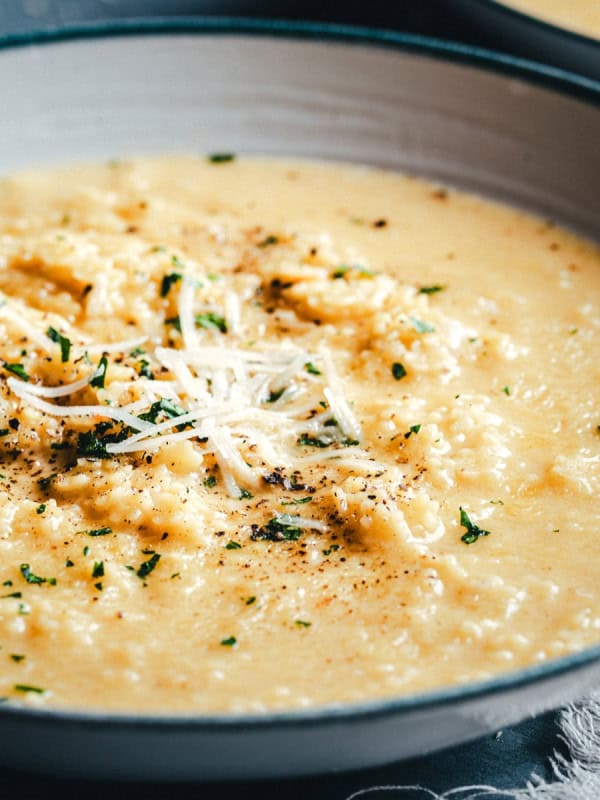
Five ingredients and 35 minutes on the stovetop to skip the jar and get that rich, satisfying homemade tomato sauce flavor? Sign me up. This Pomodoro Sauce recipe brings a mellow and authentic vibe to your weeknight table or weekend dinner party, and it’s just so easy.
This post may contain affiliate links. Please read our disclosure policy.
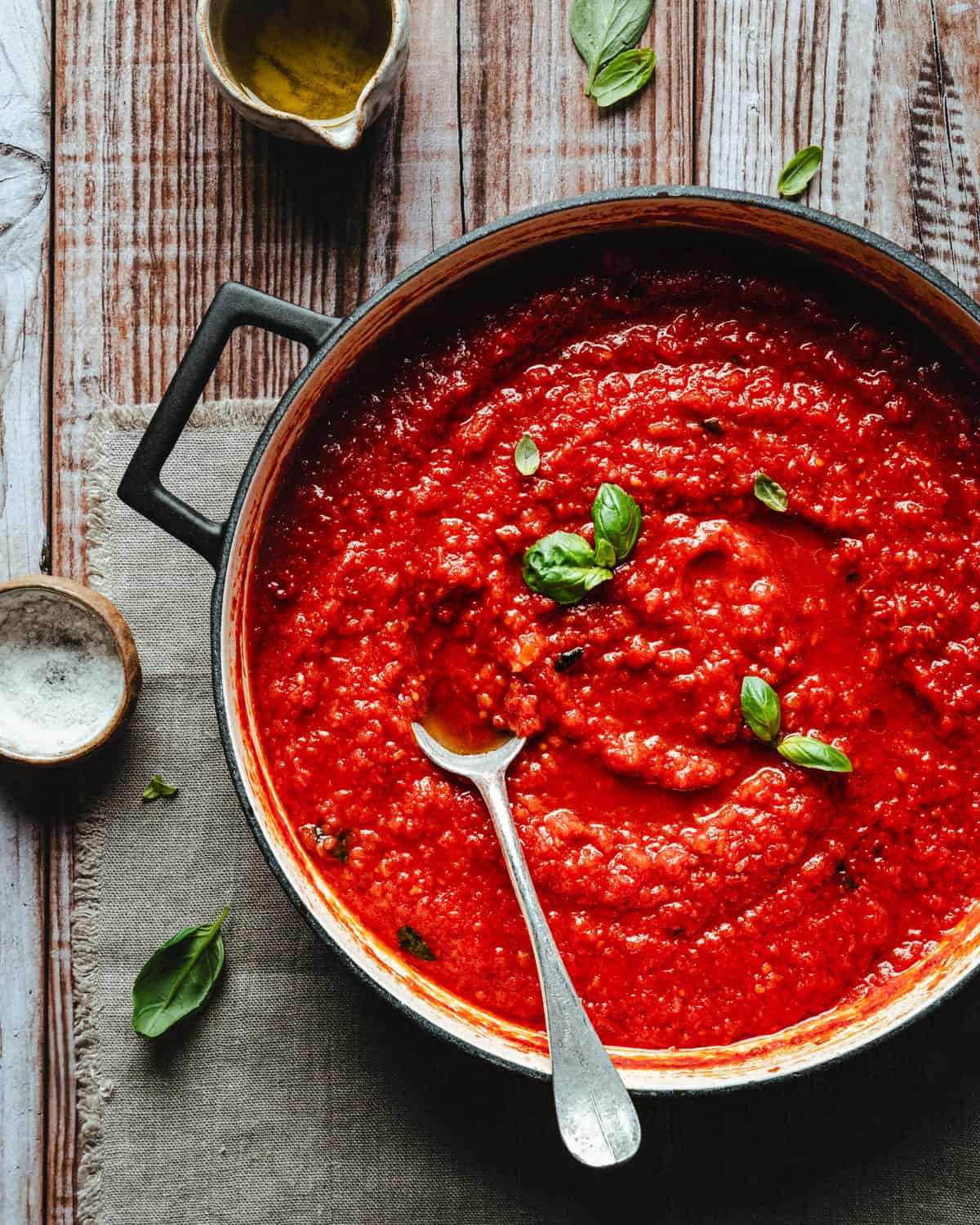
True Pomodoro Sauce requires just five ingredients: canned tomatoes, garlic, olive oil, salt, and fresh basil. A brief 35-minute simmer concentrates the tomatoes while mellowing the garlic until it’s sweet and savory with no sharp bite left.
This recipe takes its inspiration from Domenica Marchetti’s cookbook, The Glorious Vegetables of Italy. Her approach is the one I try to imitate: a few simple but high-quality ingredients that, cooked right, offer incredible depth of flavor. I never skip the opportunity to make a double batch of this, especially since it freezes so well. Boom: on-demand pasta sauce, jars need not apply.
Table of Contents
Recipe at a Glance
- Hands-on time: 5 minutes
- Total time: 40 minutes
- Yields: About 5 cups
- Skill level: Beginner-friendly
- Make-ahead friendly: Yes, refrigerates or freezes well
Pomodoro Sauce Ingredients
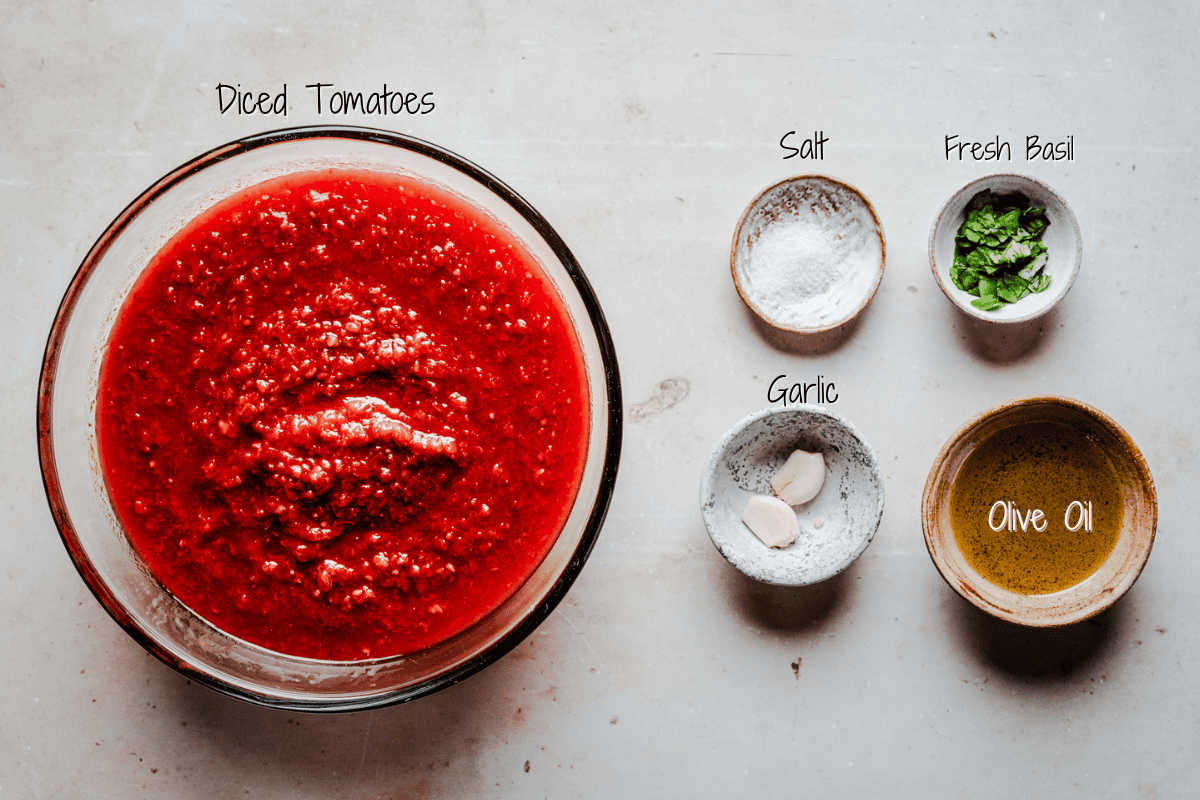
- Extra-Virgin Olive Oil: Always seek out high-quality, cold-pressed, extra virgin olive oil for that light and fruity flavor.
- Garlic Cloves: When it comes to garlic, you want firm, plump cloves. Heads that are sprouting, wilted, discolored, or falling apart are a no-go. One small clove is fine if you like your garlic subtle, but feel free to go bananas and throw in two large ones, as I do.
- Canned Diced Tomatoes With Their Juice: Good diced tomatoes should be packed in their own juices rather than water, and they shouldn’t contain any added sugars or preservatives. San Marzano always comes through, because they’re naturally sweeter and more flavorful than other brands.
- Fine Sea Salt: Fine sea salt is the best approach for even seasoning, because it has a neutral flavor and dissolves easily into the sauce.
- Fresh Basil Leaves: Nice, fresh basil is a deep green color, stands up perkily when you hold it upright, and smells sweet and sharp at the same time. I recommend tearing the leaves by hand rather than chopping them, which leaves valuable aromatic oils behind on the cutting board.
Pomodoro Sauce vs Marinara
It’s natural to conflate Pomodoro Sauce with Marinara, but the former is simpler and smoother. Marinara, on the other hand, is a quick pasta sauce: chunkier, cooked more briefly, and filled with additional ingredients, such as onion and oregano. For a sauce that embellishes the bright tomato flavor without drowning it in other ingredients, you’re really looking for Pomodoro Sauce. That’s not to say the alternative doesn’t have its place, of course. Looking for a hearty addition to your pasta, for instance? Marinara is your guy.
How to Make Pomodoro Sauce
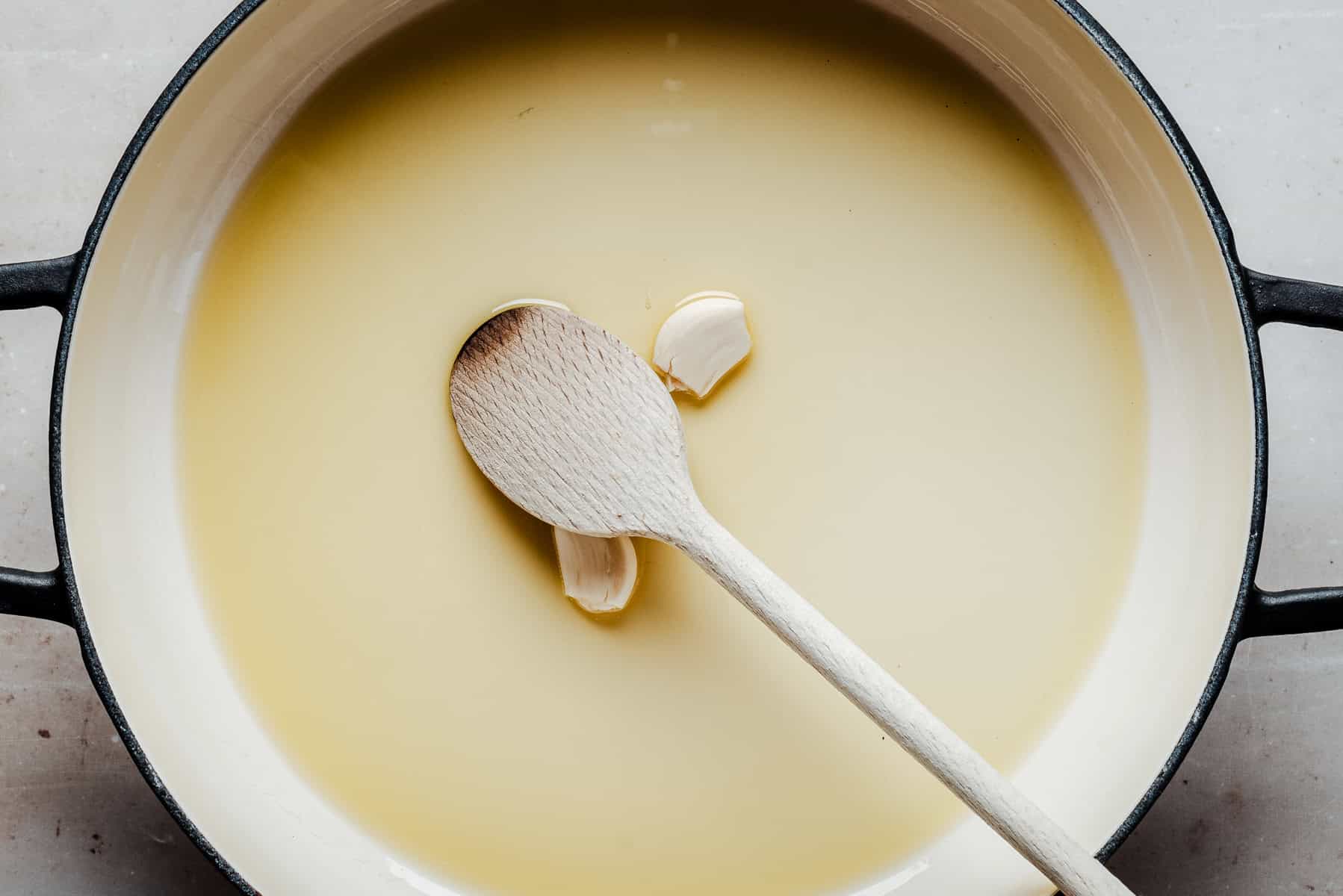
To make Pomodoro Sauce, heat the olive oil in a large saucepan over medium heat. Make sure not to turn it up higher, because garlic burns easily. Add the garlic and press it lightly with a spoon while it cooks to draw out more of the fragrant oil, but don’t let it brown.
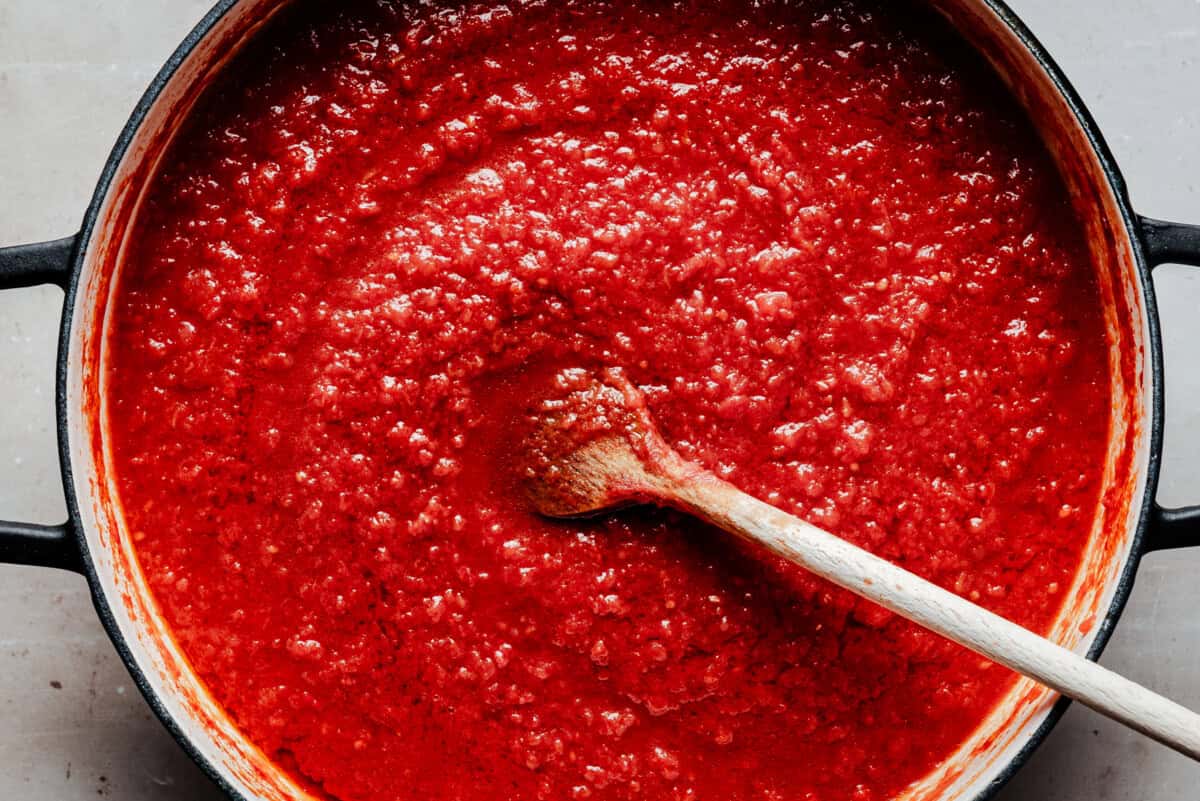
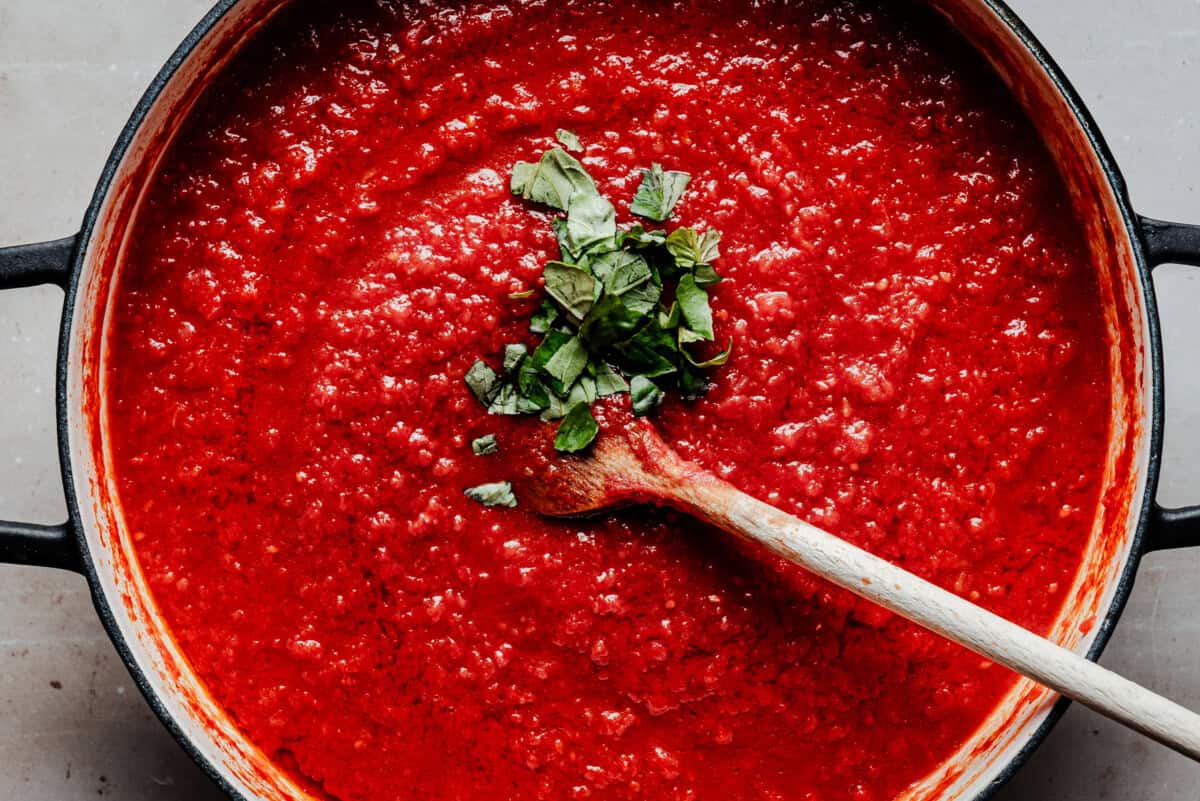
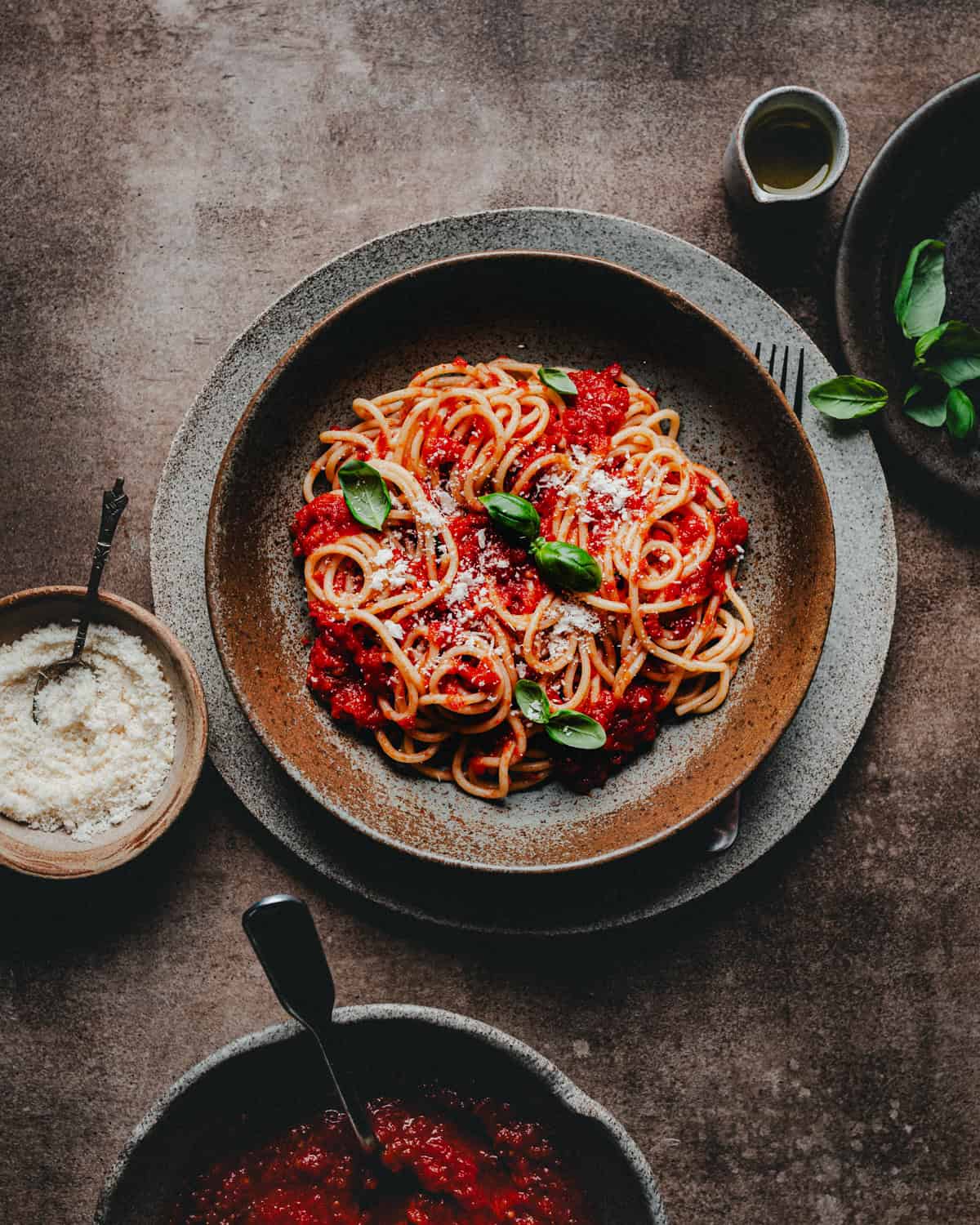
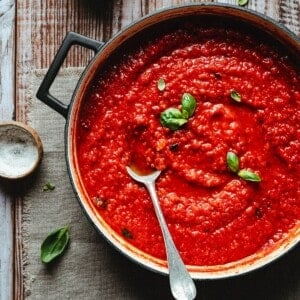
After two minutes, add the tomatoes and juices (beware of splatter), and stir the salt in. Let it simmer uncovered for about half an hour, stirring every so often. You’ll know it’s done when it has thickened and you can see a sheen of oil on top. Add your freshly torn basil, taste, and add salt if needed. Serve it right away, or cool it before refrigerating or freezing.
Pro Tips
- Keep the simmer low: Boiling the mixture will result in a watery sauce. Gentle simmering is what’s needed for a nice, thick, tomato-y sauce.
- Press the garlic: Press the garlic cloves gently while they cook to release their fragrant oils, but don’t let them burn.
- Use a splatter guard: When adding tomatoes to hot oil, use a pan lid or other device to prevent being spattered with hot oil.
- Blend for smoothness: If you like your sauce super velvety, you can purée it with an immersion blender or food processor.
- Basil is key: Don’t skip it, because it truly is necessary for a real Pomodoro Sauce. Make sure to add it off-heat to avoid dulling its spicy aroma and flavor.
Recipe Variations
- Use fresh tomatoes: If you can get fresh tomatoes, do it. Peel, seed, and chop them, then simmer them a bit longer to break them down properly.
- Experiment with other fresh herbs: A sprig of oregano or thyme can deepen that Italian flavor without overwhelming the basil.
- Balance the acidity: Some folks like a little pinch of sugar to round out the sauce’s flavor at the end.
- Kick it up a notch: A touch of red pepper flakes can add subtle heat that still complements pasta and meat well.
- Finish with cheese or butter: I mean, do I even need to say it? A pat of butter or a dusting of Parmigiano-Reggiano just before serving makes everything better.
Make-Ahead, Store and Reheating
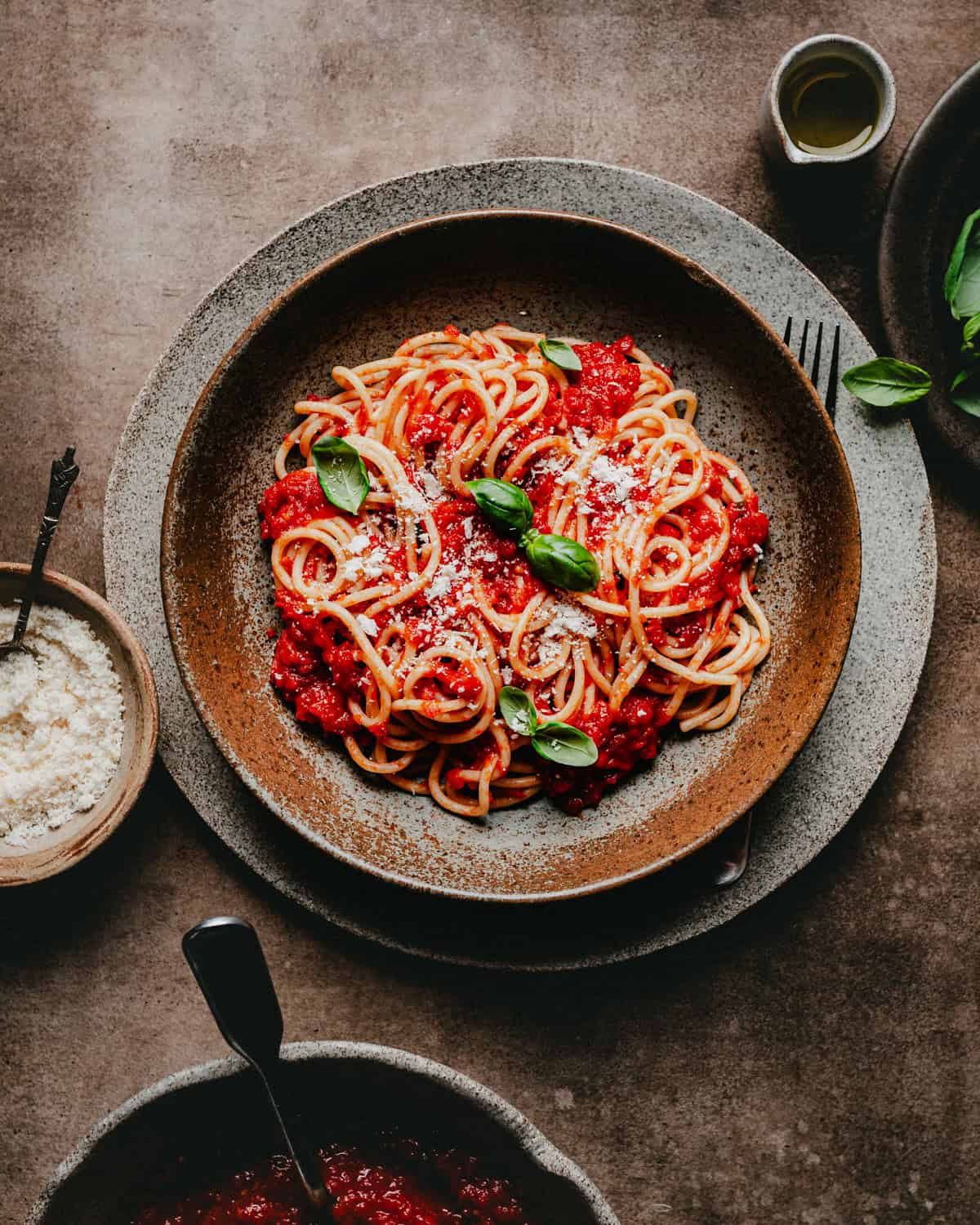
Pomodoro Sauce is very forgiving when it comes to storage. If you won’t use it right away, cool the sauce and then transfer it to an airtight container. It will keep in the fridge for up to three days and in the freezer for up to three months. Just be sure to let it cool completely before moving it to freezer-safe containers.
To use it again, first defrost thoroughly in the fridge. Warm it gently over low heat, then add a bit of water or olive oil to thin it out if needed. Taste your sauce and adjust the seasonings if necessary.
FAQ
It might surprise you to learn that pomodoro simply means “tomato” in Italian. Pomodoro Sauce is a staple that relies heavily on the clean, bright flavors that come from tomatoes, olive oil, garlic, salt, and basil. Real Pomodoro skips the onion, Italian seasoning blend, and other aromatics, instead concentrating the flavors of its five ingredients over stovetop heat. The resulting sauce is delicious in an array of dishes, from pasta to pizza to complementing chicken parmesan.
Yes. If you’re going to use it for pizza, reduce it a bit more so it won’t make your dough soggy.
While you don’t need San Marzano tomatoes, per se, these consistently give me the best results. Either way, remember to look for canned tomatoes without any added sugar or preservatives.
You can add an onion if you like, though it will make the sauce feel heavier and less traditional. Simply dice and sauté it in the oil before adding your garlic.
More Must-Try Italian Sauces



Authentic Pomodoro Sauce Recipe
Ingredients
- 1/4 cup extra-virgin olive oil
- 2 large garlic cloves lightly crushed
- 2 28-ounce cans diced tomatoes with juice
- 1 teaspoon fine sea salt plus more to taste
- 5 large fresh basil leaves torn into small pieces
Instructions
- Heat olive oil in a large saucepan over medium heat, then add the garlic. Press the garlic cloves with a wooden spoon to extract more flavor. Let them cook for about 2 minutes until they begin to sizzle, being careful not to let them brown.
- Add the tomatoes with their juice (carefully, to avoid splatter) and stir to combine. Add salt and increase the heat to medium-high. Once the sauce begins to simmer, lower the heat to medium-low. Allow it to simmer gently for 30-35 minutes, stirring occasionally, until it thickens and you notice oil collecting on the surface.
- Remove sauce from heat and stir in the fresh basil. Taste and adjust with more salt if needed. If you're not using it right away, let it cool before transferring to an airtight container. It will keep in the refrigerator for up to 3 days or in the freezer for up to 3 months.
Notes
- One small garlic clove works if you want a milder flavor, but I usually use two for more depth.
- For a smooth sauce, blend it after simmering, just let it cool a bit first.
- I freeze this in 1-cup portions so it’s easy to thaw just what I need.
- If you’re using it for pizza, simmer it 10–15 minutes longer to thicken.
- Some canned tomatoes can be acidic; I taste at the end and occasionally add a pinch of sugar or drizzle of honey to balance it out.
Nutrition
Nutrition information is automatically calculated, so should only be used as an approximation.