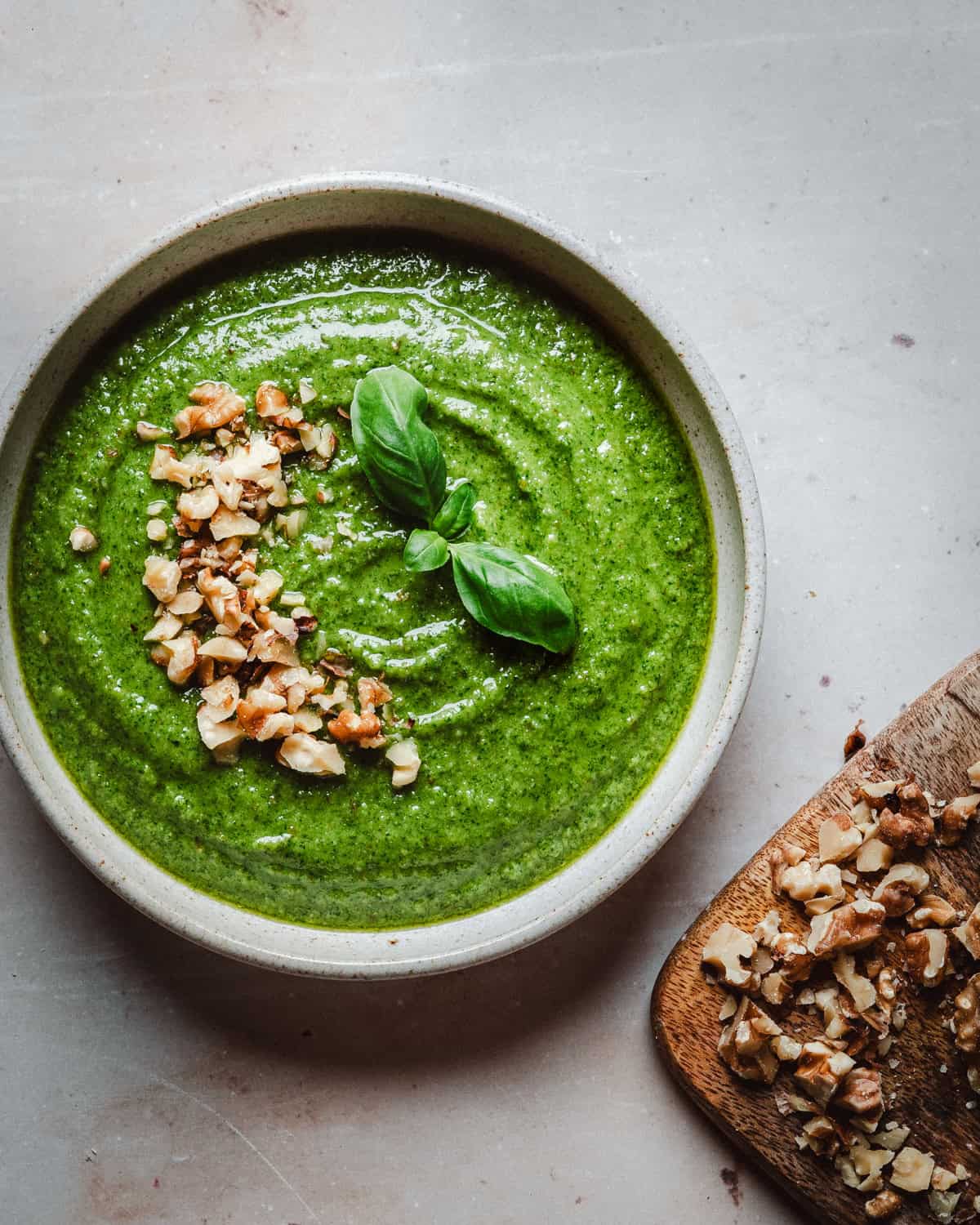
Walnut Pesto is rich, peppery, and perfect for anyone who loves the idea of pesto but not the price of pine nuts. A bold, basil-forward sauce in just 10 minutes.
This post may contain affiliate links. Please read our disclosure policy.
I still enjoy traditional pine nut pesto, but Walnut Pesto is a staple in my kitchen. Walnuts offer a less expensive option with nuts I always have on hand. I don’t think of it as a compromise. While pine nuts have a delicate flavor, walnuts bring a heartier, more substantial taste to pesto that many people actually prefer. When farmers-market stands overflow with bright green bunches, I make several batches and freeze them so I can add fresh-herb punch to winter dishes, too.
Spread this pesto on sandwiches, swirl it into scrambled eggs, or dollop it onto roasted vegetables, any place you’d use the classic version. One quick whirl in the food processor, and you’ve got a sauce that turns simple meals into something worth talking about.
Table of Contents
Walnut Pesto Ingredients
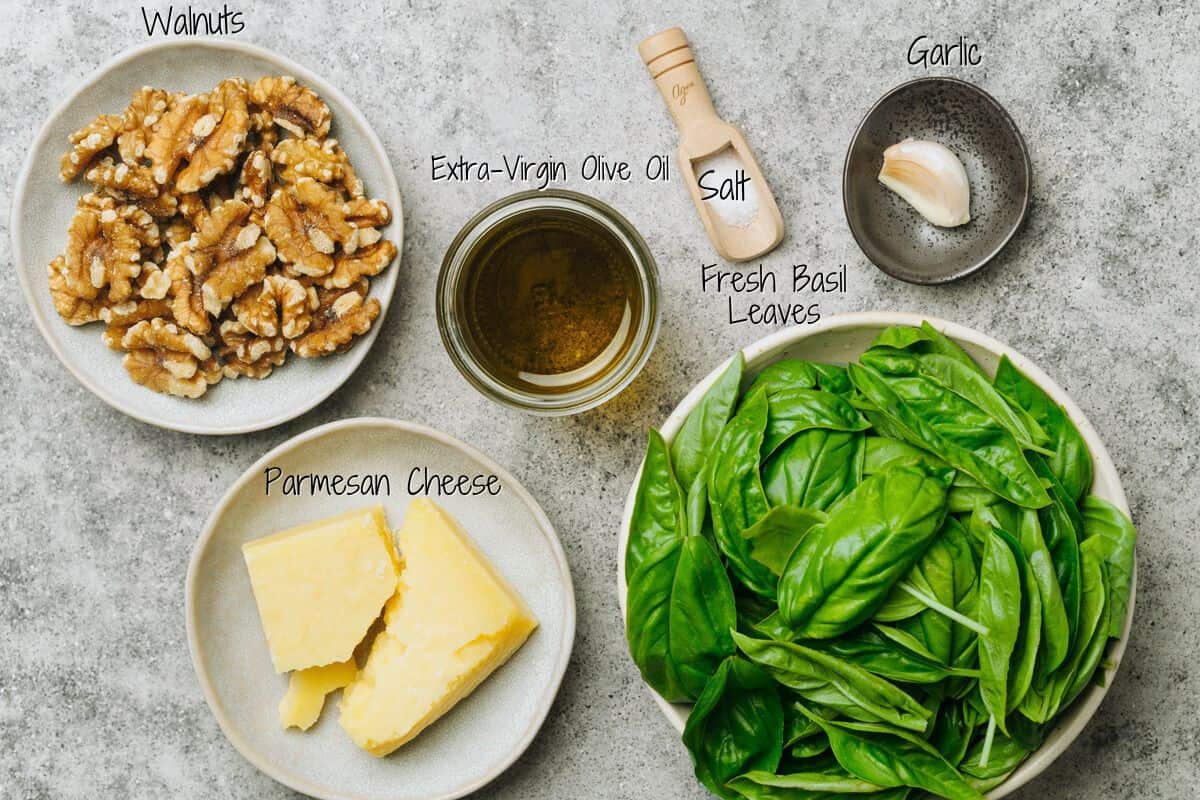
- Fresh basil leaves: Bright green and tender, with stems removed to avoid bitterness.
- Garlic: One clove keeps things balanced; add more for extra bite.
- Walnuts: Halves or pieces that are as fresh as you can find. Sometimes I toast them in a dry skillet for a few minutes.
- Parmesan cheese: Grate it fresh—Parmigiano Reggiano or Grana Padano work best.
- Fine sea salt: Distributes evenly; kosher salt works if that’s what you have.
- Extra-virgin olive oil: Choose a smooth, fruity oil so the basil shines through.
How to Make Walnut Pesto
Chop the solids then blend with oil:
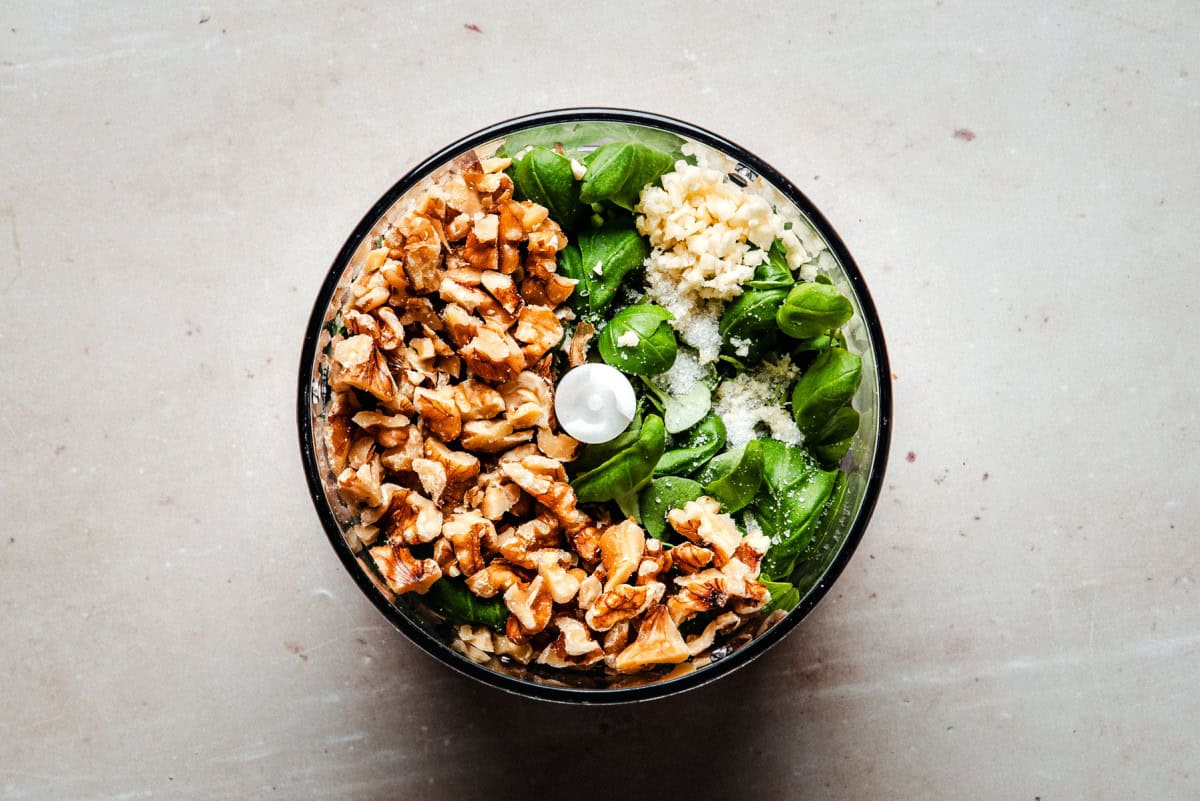
Add basil, garlic, walnuts, Parmesan, and salt to a food processor. Pulse until finely chopped, scraping down the sides as needed. With the machine running, slowly pour in olive oil through the feed tube. Blend until the pesto is smooth and emulsified (about 30 seconds). Taste and adjust seasoning if needed; add a pinch of salt or a squeeze of lemon for brightness.
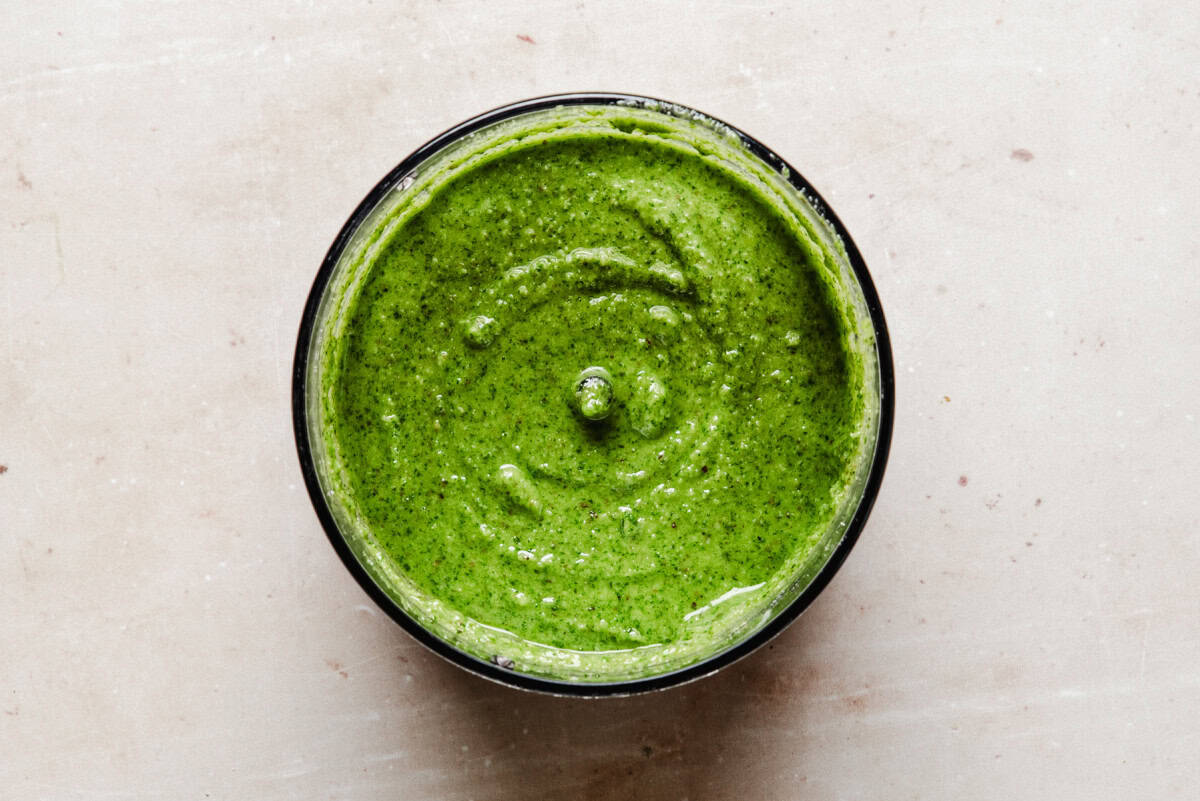
Why This Recipe Works
- Tested balance: I’ve made this dozens of times, and this ratio of basil to nuts to oil hits the right texture and flavor.
- Budget-friendly: Walnuts are less expensive than pine nuts and just as delicious here.
- Freezer-ready: The texture holds up beautifully—no separating or dulling.
Pro Tips
- Use short pulses when chopping to keep the pesto vibrant and avoid overprocessing.
- Drizzle the oil slowly to create a creamy, even emulsion.
- Finish with lemon if the pesto needs a little lift.
- Top with oil before storing to keep the color bright. I always do this if I’m keeping it longer than a day or two.
Recipe Variations
- Nut swap: Try pecans for a softer, sweeter flavor, or almonds for firmer texture. (see my Almond Pesto recipe)
- Cheese swap: Pecorino Romano gives a saltier, sharper edge.
- Herb mix: Replace up to half the basil with parsley or arugula.
- Spicy kick: Add red pepper flakes for gentle heat.
Use to Make
Make-Ahead and Storage
Refrigerate in an airtight container up to 1 week. To help preserve its color, smooth the surface and top with a thin layer of olive oil. For longer storage, freeze in ice cube trays, then transfer to a freezer bag for up to 6 months. Great for tossing into hot pasta, spreading on sandwiches, or stirring into soup.
A spoonful of this pesto makes plain pasta feel dressed up, and brings rich, herby flavor to simple vegetables or eggs. I make it for the taste, but it never hurts that it’s also quick, versatile, and easy to freeze.
More Pesto Recipes


Walnut Pesto
Video
Equipment
Ingredients
- 2 cups fresh basil leaves about 1 1/2 ounces
- 1 clove garlic (see recipe note #2)
- 1/3 cup coarsely chopped walnuts
- 2 ounces grated Parmesan cheese
- 1/4 teaspoon fine sea salt or 1/2 teaspoon kosher salt
- 1/2 cup extra virgin olive oil
Instructions
- Add the basil, garlic, walnuts, cheese, and salt to your food processor bowl. Pulse several times until everything is finely chopped, pausing to scrape down the sides with a spatula as needed.
- With the food processor running, add oil through the feed tube in a slow steady stream. Continue processing until smooth. Use right away, or store following the directions in the recipe notes.
Notes
- Transfer the finished pesto to an airtight container for refrigerator storage (keeps up to one week). To maintain its vibrant green color, smooth the surface and pour a thin layer of olive oil on top. For longer storage, freeze for up to 6 months. A convenient method is to freeze portions in an ice cube tray, then transfer the frozen cubes to a freezer bag for easy use.
- For a stronger garlic flavor, increase to 2 or 3 cloves.
- This recipe yields approximately 1 cup of pesto.
Nutrition
Nutrition information is automatically calculated, so should only be used as an approximation.