

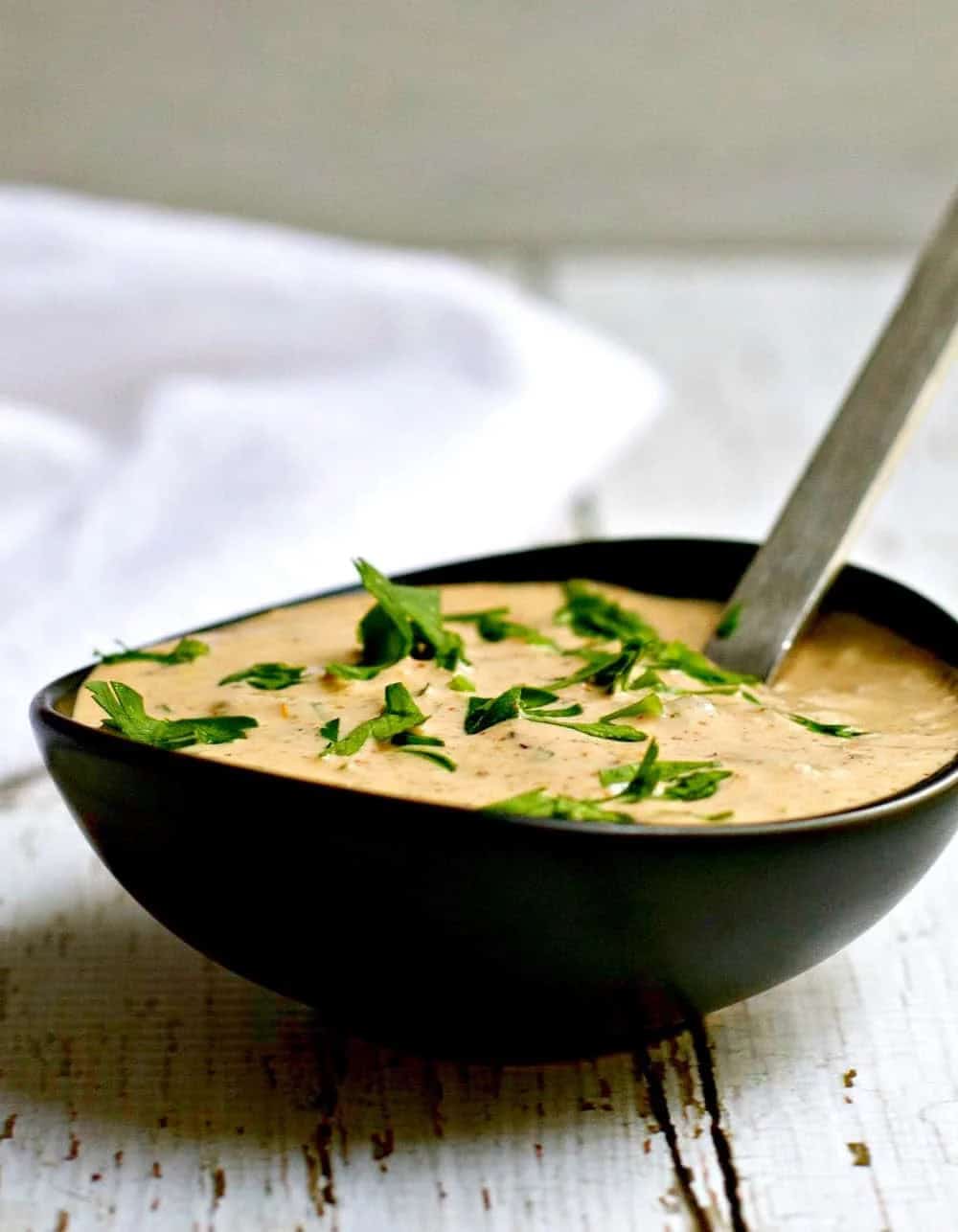
Remoulade Sauce won me over on my first trip to New Orleans. I still remember that first taste, creamy and spicy and layered in a way I hadn’t expected. I’ve tried a lot of versions since, and this is the one I keep coming back to. It starts with a mayonnaise base and gets its character from Cajun seasoning, whole grain mustard, hot sauce, and fresh horseradish.
This post may contain affiliate links. Please read our disclosure policy.
I’ve found that the best remoulade sauces start with good mayonnaise rather than olive oil (though some Louisiana recipes insist otherwise). I’ve also skipped the dill pickles or pickle relish that many recipes include. They compete with the capers and muddy the bright flavors I love. Whether you’re serving it with crab cakes, using it as a dip for boiled shrimp, slathering it on a po’ boy sandwich, or making a proper Shrimp Remoulade, this sauce makes seafood taste even better.
“This remoulade/sauce is absolutely delicious!!! Perfect on any kind of seafood, especially crayfish, prawns and fish cakes.”
elisabeth
Table of Contents
Recipe at a Glance
- Prep Time: 15 minutes
- Total Time: 15 minutes
- Yield: 6 servings
- Skill Level: Easy
Remoulade Sauce Ingredients

- Mayonnaise: Use your favorite brand of full-fat mayonnaise (not salad dressing) for the base.
- Whole Grain Mustard: Whole grain mustard adds little pops of mustard seed throughout the sauce. Smooth Dijon works too, but the flavor is usually sharper and you’ll lose the texture.
- Ketchup: Just a touch of ketchup, for color and a little sweetness against the spice. I like to use brands that don’t use high fructose corn syrup.
- Garlic: One small clove of fresh garlic.
- Fresh Horseradish: Freshly grated horseradish has more life to it than prepared. The pungency varies a lot in a fresh root, so taste as you go.
- Lemon Juice: Fresh lemon juice, not bottled.
- Capers: I coarsely chop my capers so you get little bursts of brine in every bite.
- Fresh Parsley: Ideally flat-leaf Italian parsley.
- Green Onion: Both the white and green parts of the green onion, for a mild onion bite and a little color.
- Cajun Seasoning: Cajun seasoning is what gives the sauce its Louisiana character. Creole seasoning works too and is often a bit milder.
- Hot Pepper Sauce: I use Tabasco or Crystal hot sauce. Adjust to your heat preference.
How to make Remoulade Sauce
In a medium bowl combine: mayonnaise, mustard, ketchup, garlic, horseradish, lemon juice, capers, parsley, green onion, Cajun seasoning, and hot sauce; stir until smooth. Refrigerate for at least an hour before serving.

5 Recipe Tips
- Go light on the heat. The Cajun seasoning and hot sauce are where it’s easy to overdo it. I always start with less than I think I want, mix everything together, then taste and add more. The heat needs to play nicely with whatever seafood you’re serving, not steal the show.
- Chop, don’t mince. Coarsely chop the capers, parsley, and green onions. You want to see flecks of each one in the finished sauce, and you want to taste them individually as you eat.
- Make it ahead. Mix the sauce at least an hour before you plan to serve it. It really does taste better after the flavors have had time to come together in the fridge.
- Thin with lemon, not water. If the sauce ends up thicker than you want, a splash of lemon juice keeps it bright. Water just flattens the flavor.
- Fresh matters here. Fresh lemon juice and fresh horseradish make a real difference, and bottled versions of either won’t get you to the same place. I keep a piece of horseradish root in the freezer so I always have it on hand. It grates easily when frozen and lasts for months.
Recipe Options
- Lighter version. Swap half the mayo for Greek yogurt. The character shifts but it’s lovely with delicate seafood like sole or scallops.
- No whole grain mustard? Dijon works fine, though you’ll lose those little pops of mustard seed.
- No fresh lemon? White wine vinegar is a workable swap. The tang is a bit different but the sauce still comes together.
- More heat. I’ll add a pinch of cayenne along with the extra hot sauce. The two kinds of heat layer differently than just dialing up the Tabasco.
- Different herb. Fresh dill is good in place of parsley if you’re serving the remoulade with salmon or trout instead of crab or shrimp.
- Milder version. Creole seasoning is what I reach for when I’m cooking for someone who doesn’t love spicy food. You still get the Louisiana flavor without the bigger kick.
Tartar Sauce vs. Remoulade: What’s the Difference?
Both sauces start with mayonnaise but they’re meant for different things. Tartar sauce is simple. Mayo, pickles, sometimes a little lemon and herbs. It’s what you want with fish and chips or on a fried fish sandwich, where you need something cool and creamy to sit against the hot crispy fish.
Remoulade is more complex and comes in two main styles. French Remoulade s the subtler one, closer to tartar but with capers, herbs, and sometimes anchovies. Louisiana remoulade, the version on this page, goes bigger with Cajun spices, mustard, and hot sauce. It’s the sauce for crab cakes, shrimp cocktail, or a po’ boy when you want something that holds its own next to the seafood.
Storage
Leftover Remoulade Sauce keeps in an airtight container in the fridge for up to 2 weeks if you used store-bought mayonnaise. If you used homemade mayo, plan to use it within a week. Stir before serving.
Serving Suggestions


Video
Ingredients
- 1 cup mayonnaise
- 2 tablespoons whole grain mustard or dijon mustard
- 1 tablespoon ketchup
- 1 small clove garlic minced
- 2 teaspoons grated fresh horseradish or prepared horseradish
- 1 tablespoon lemon juice ideally fresh
- 1/4 cup capers coarsely chopped
- 1/4 cup fresh parsley coarsely chopped
- 1 green onion (scallion) coarsely chopped
- 2 teaspoons Cajun seasoning or Creole seasoning (less spicy)
- 1 teaspoon hot pepper sauce such as Tabasco brand
Instructions
- Stir all ingredients together in a medium bowl until smooth. To allow flavors to meld, refrigerate for an hour or more. Serve.
Notes
- Makes about 1-1/3 cups
- Use within 2 weeks if using store bought mayonnaise and 1 week with homemade mayonnaise.
Nutrition
Nutrition information is automatically calculated, so should only be used as an approximation.


It turned out beautiful! Awesome drizzled over pan seared scallops 😎
That’s fantastic, Elaine! So glad you enjoyed it.
Very interesting and especially since I didn’t know anything about horseradish root, always bought horseradish as a condiment. I will have to try this and any other recipes my fertile imagination can come up with to make using horseradish root as a major addition.
Fresh horseradish root was a revelation for me too, Tim. It adds such wonderful flavor to this sauce!
Loved this recipe!
So glad you enjoyed it!