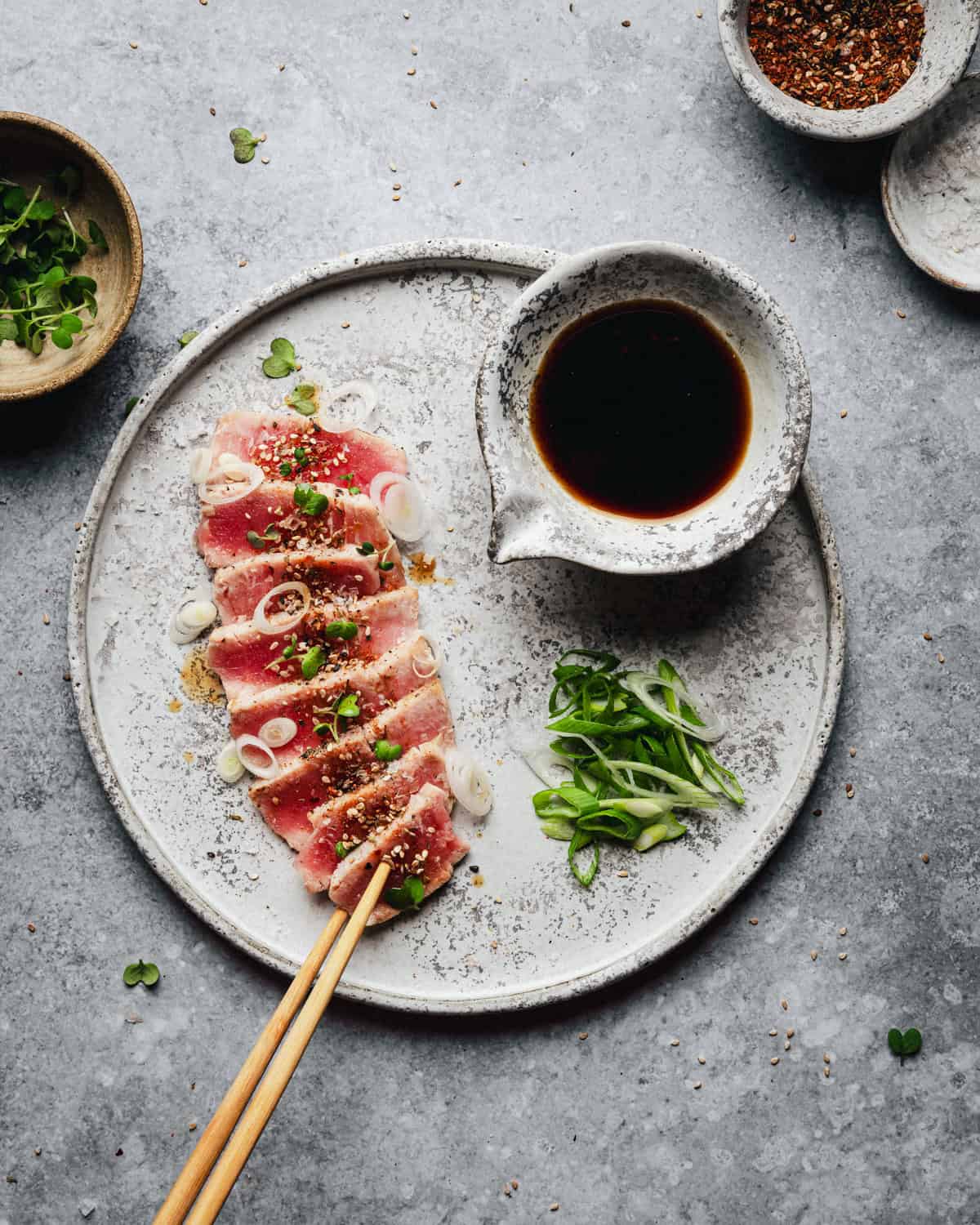
Tuna Tataki brings restaurant-level flavor home with just a few ingredients in 20 minutes. Ahi tuna is seared fast, sliced thin, and topped with ponzu ginger sauce.
This post may contain affiliate links. Please read our disclosure policy.
Tuna Tataki is one of those dishes I used to only order at restaurants, convinced it was too fussy to pull off at home. Those perfectly seared edges, the cool rare center, and a sauce with just the right balance of sweetness, tang, and umami felt worth the price for a few elegant slices.
Then I watched a chef make it from start to finish in under five minutes. The “secret” wasn’t a trick technique, it was quality tuna and timing: a great piece of ahi, a very hot pan, and the discipline to pull it off the heat fast. The ponzu–ginger sauce takes seconds. Now I still order it out, but only to compare notes.
Table of Contents
Recipe at a Glance
- Ready in about 20 minutes (5 minutes of cooking)
- Just a handful of ingredients
- Sear outside, keep the center sashimi‑rare
- Simple ponzu–ginger sauce
- Easy to scale for appetizers or a light main
Tuna Tataki Ingredients
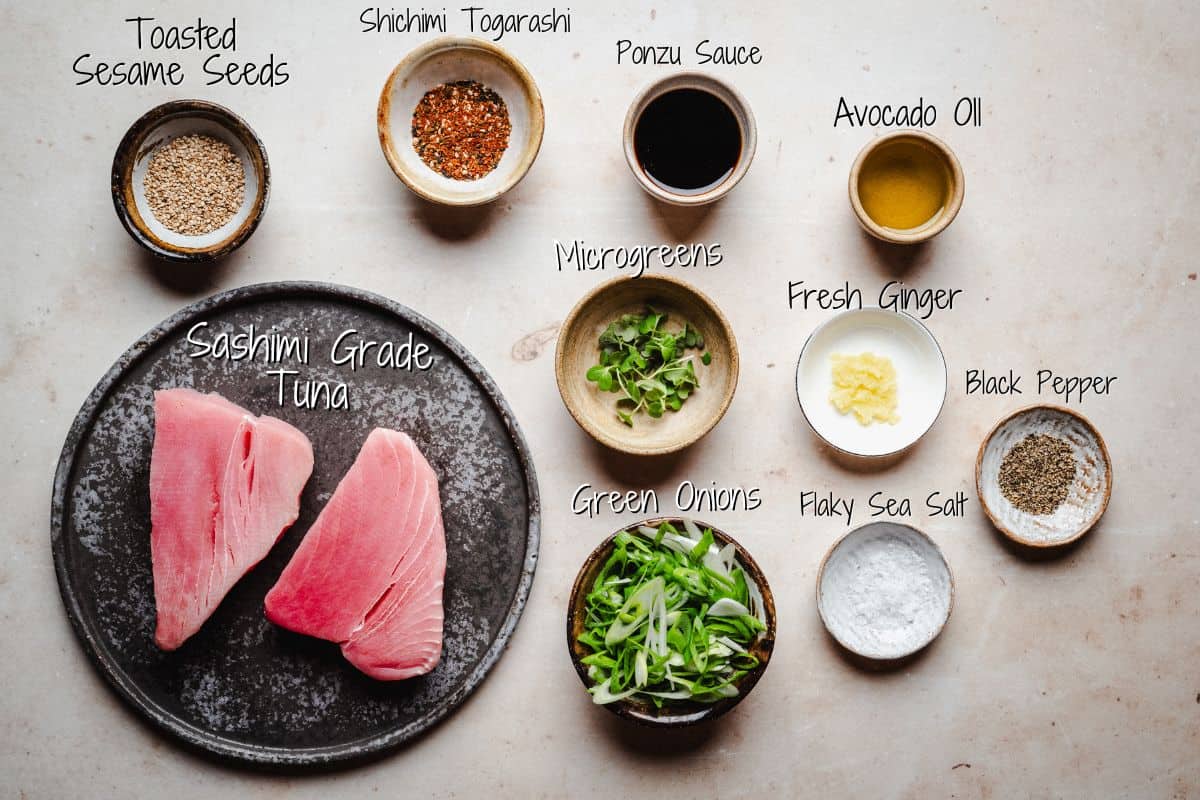
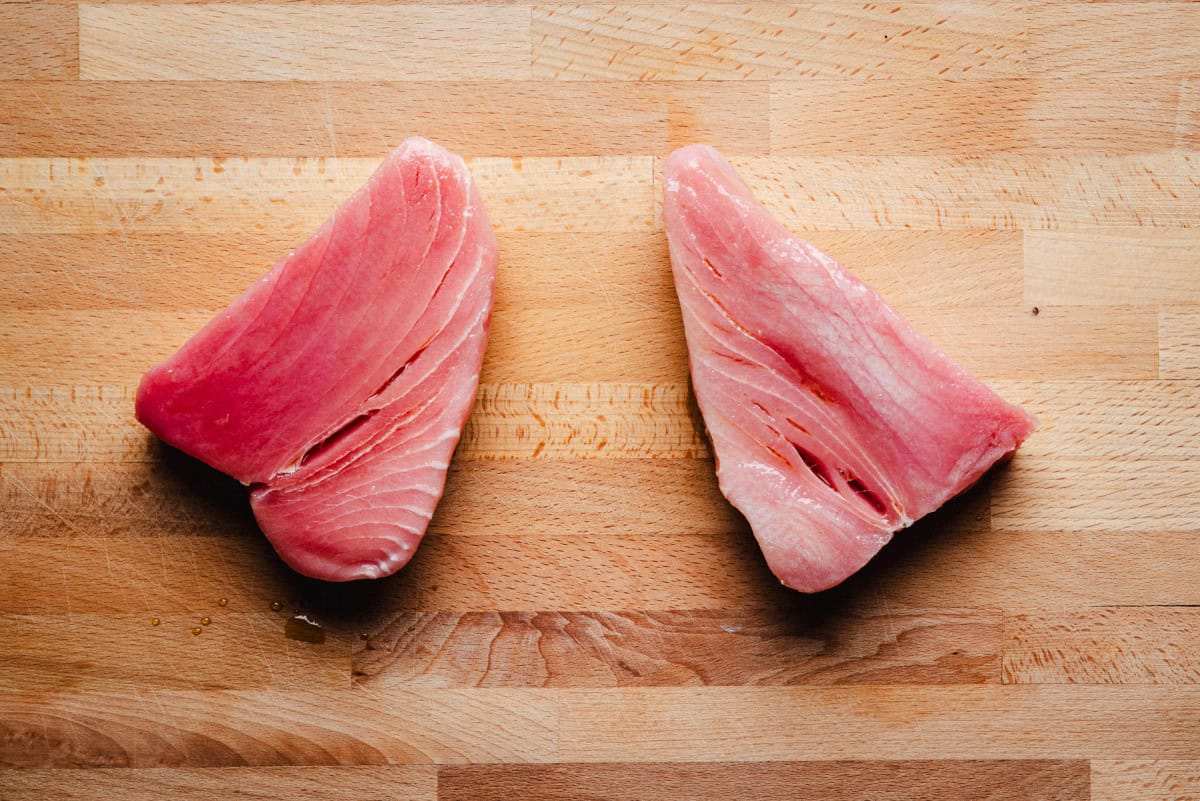
- Ahi tuna: Look for sashimi-grade steaks that are deep red, smell clean, and feel firm to the touch. I try to find ones that are at least 1½ inches thick with no brown edges. Ask your fishmonger if you’re unsure—it’s worth getting this part right.
- Ponzu sauce: There is a lot of variation between brands of this citrusy Japanese soy sauce. I stick with ones that use natural ingredients and skip corn syrup.
- Fresh ginger: Choose firm roots with smooth, tight skin. I keep mine in the freezer and grate it while still frozen—it’s easier and less fibrous that way.
- Avocado oil: My favorite high-heat oil for searing. It should be clear and neutral in flavor. Any mild oil with a high smoke point will work; I’ve also used grapeseed oil with good results.
- Green onions: Crisp stalks with no yellowing are ideal. I use both the white and green parts—thinly sliced on the diagonal looks nicest.
- Toasted sesame seeds: White, black, or mixed—they all work. Just make sure they smell toasty and nutty, not stale.
- Shichimi Togarashi: A colorful Japanese spice blend with red chili, sesame, citrus peel, and sometimes seaweed. Each brand varies a little, so use what you like.
- Flaky sea salt (optional): A final sprinkle of Maldon or any flaky salt adds crunch and brings everything into balance. I like to finish with just a touch.
- Microgreens (optional): These delicate greens add color and a little freshness to the plate. I’ll use them if I have them on hand, especially for serving guests.
Why This Recipe Works
- High heat, short sear: A very hot pan gives you a browned edge while the center stays cool and raw. I use either a cast iron or nonstick skillet.
- Mix the sauce first: Having the ponzu–ginger ready means I can serve the fish immediately while it’s still fresh and warm.
- Block thickness matters: I’ve found that 1½- to 2-inch thick tuna gives the best contrast between crust and center and is easier to slice thin.
- Minimal handling: Patting the fish dry and using just enough oil gives it that clean sear instead of a gray edge or soggy texture.
How to Make Tuna Tataki
Make the sauce and prep the tuna
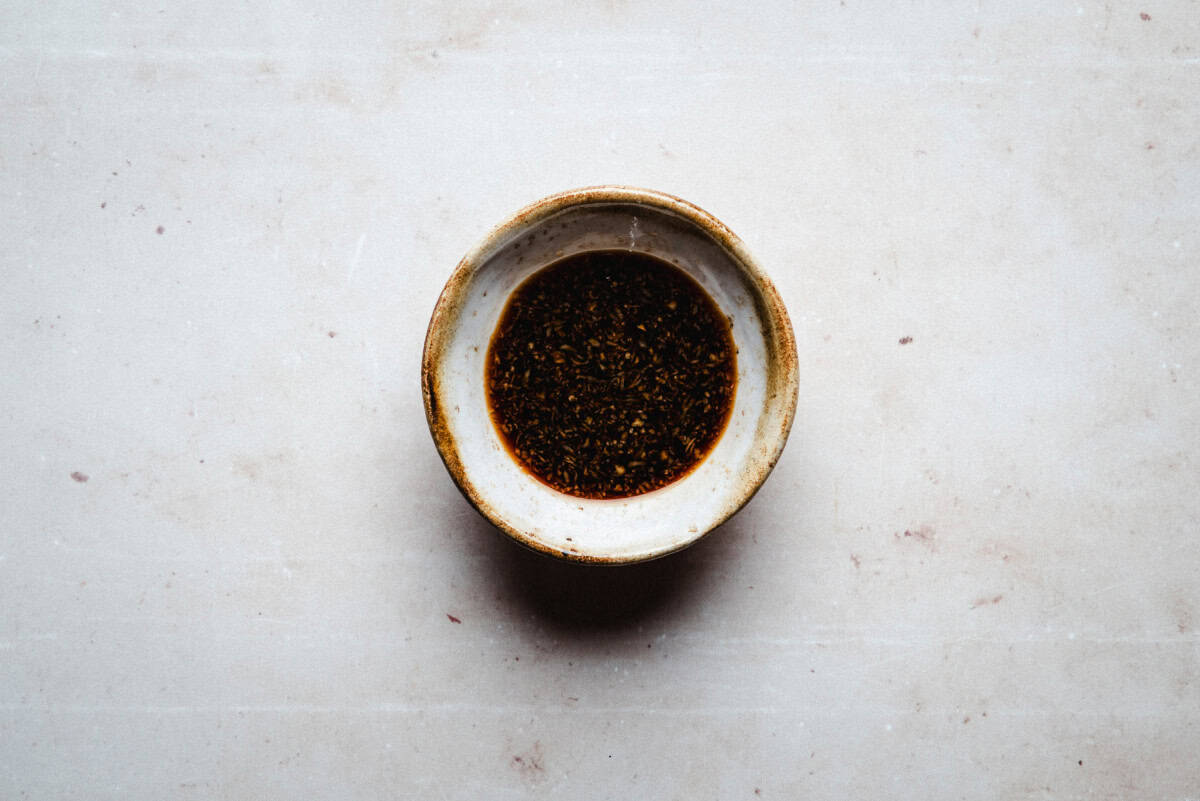
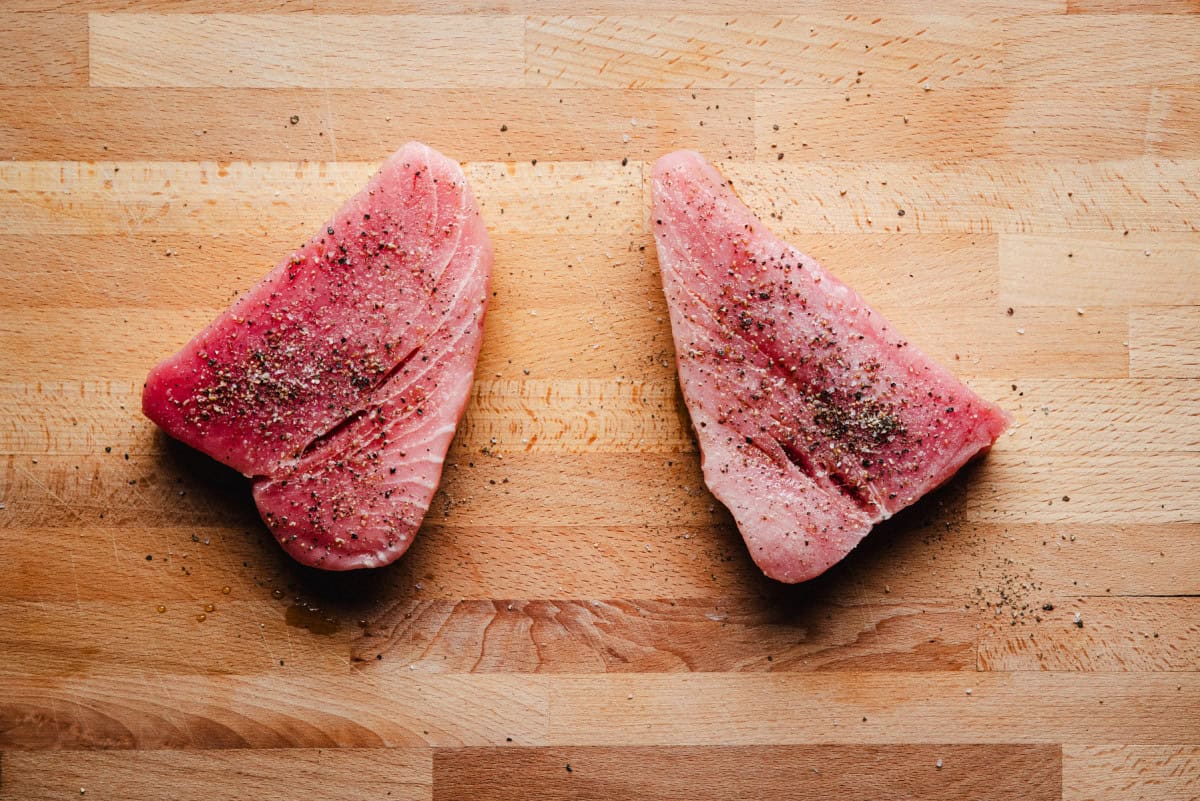
Stir grated ginger into ponzu and set aside. Pat the tuna dry, rub or brush all sides with avocado oil, and season lightly with salt and pepper.
Sear fast and hot
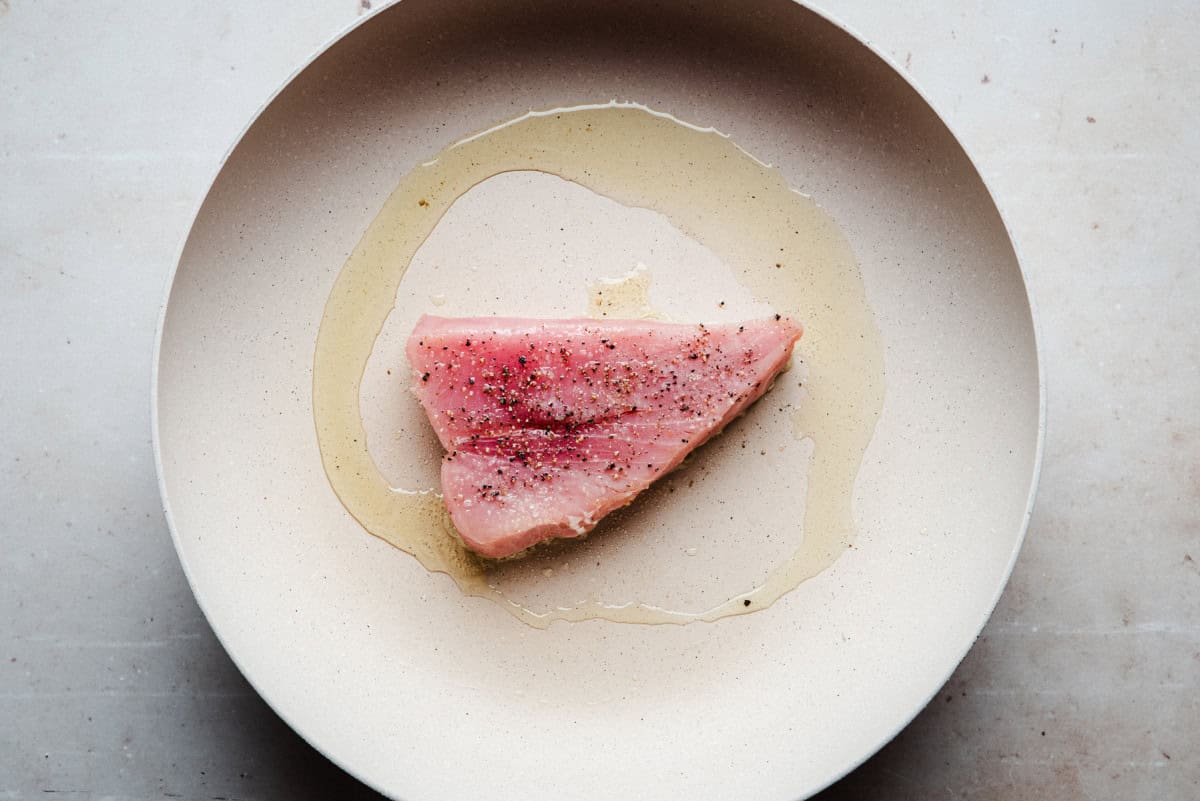
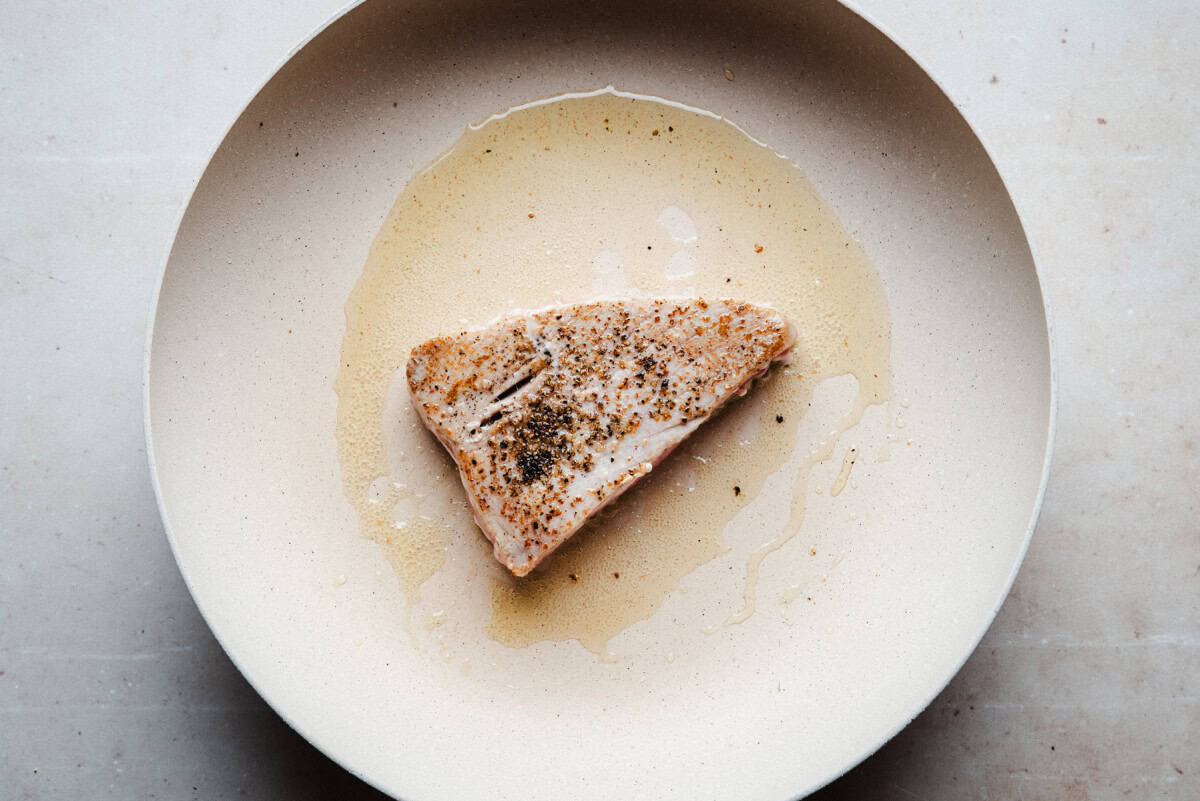
Heat a cast iron or nonstick skillet over medium‑high until very hot. Add a thin layer of oil. When it shimmers (not smoking), lay the tuna in the pan. Sear 1½ to 2 minutes until the surface browns, flip, and sear 1 to 2 minutes more. The center should stay rare.
Slice and finish
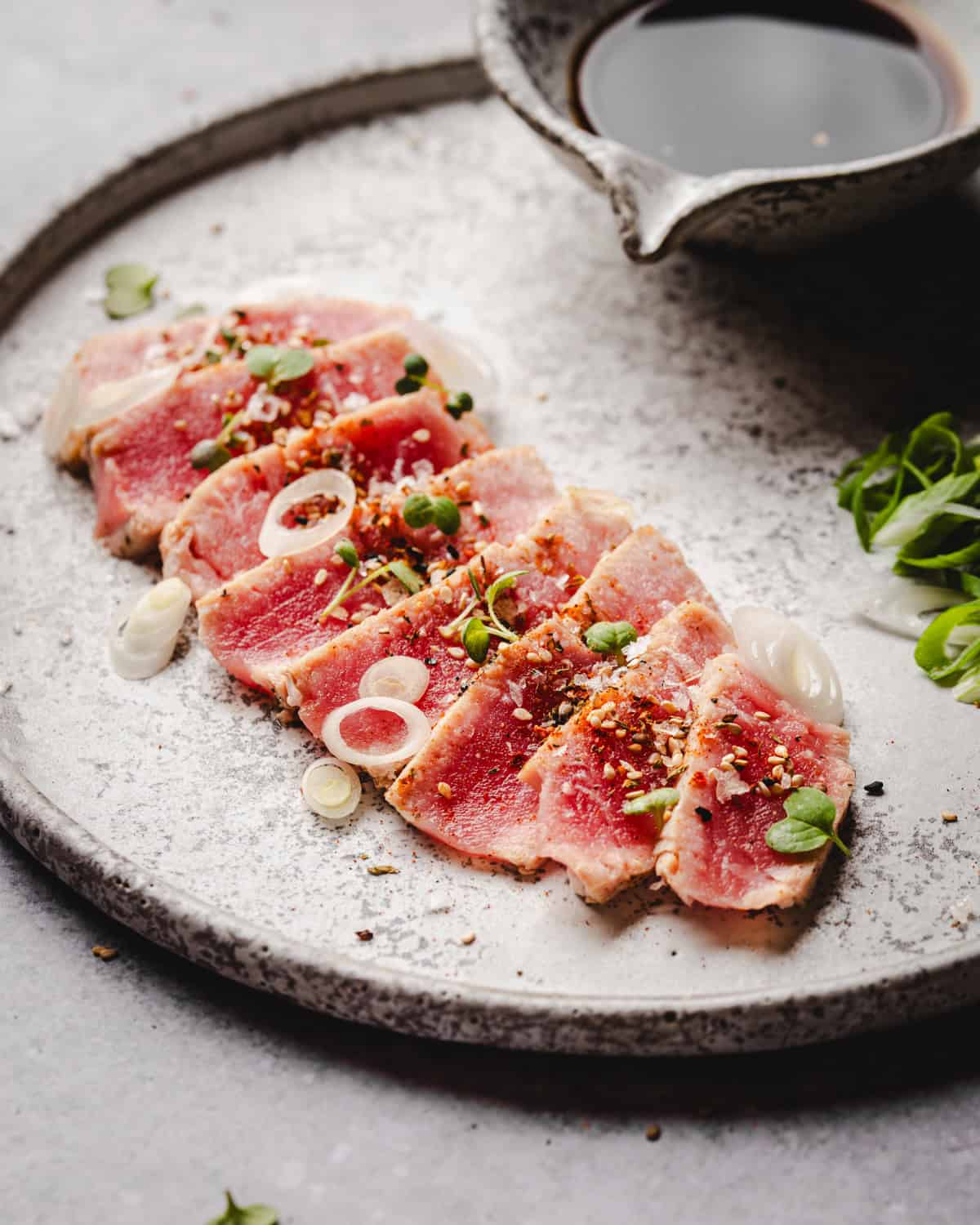
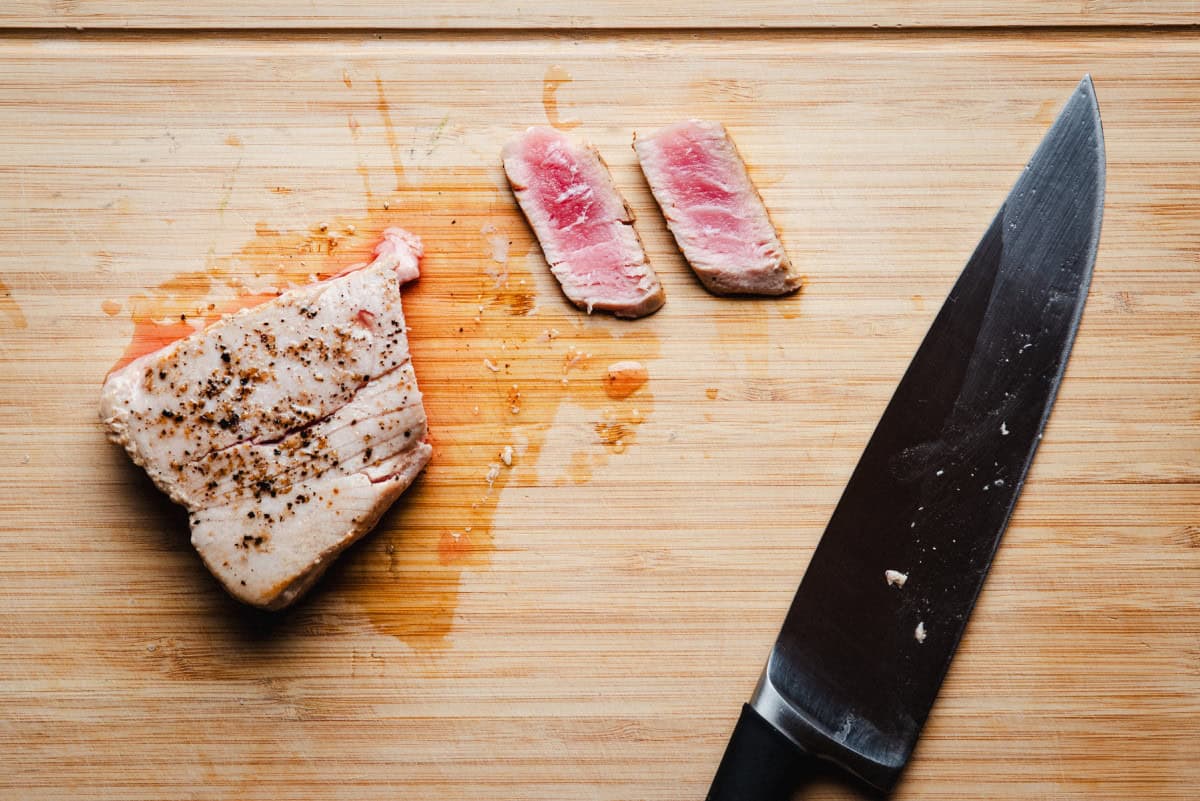
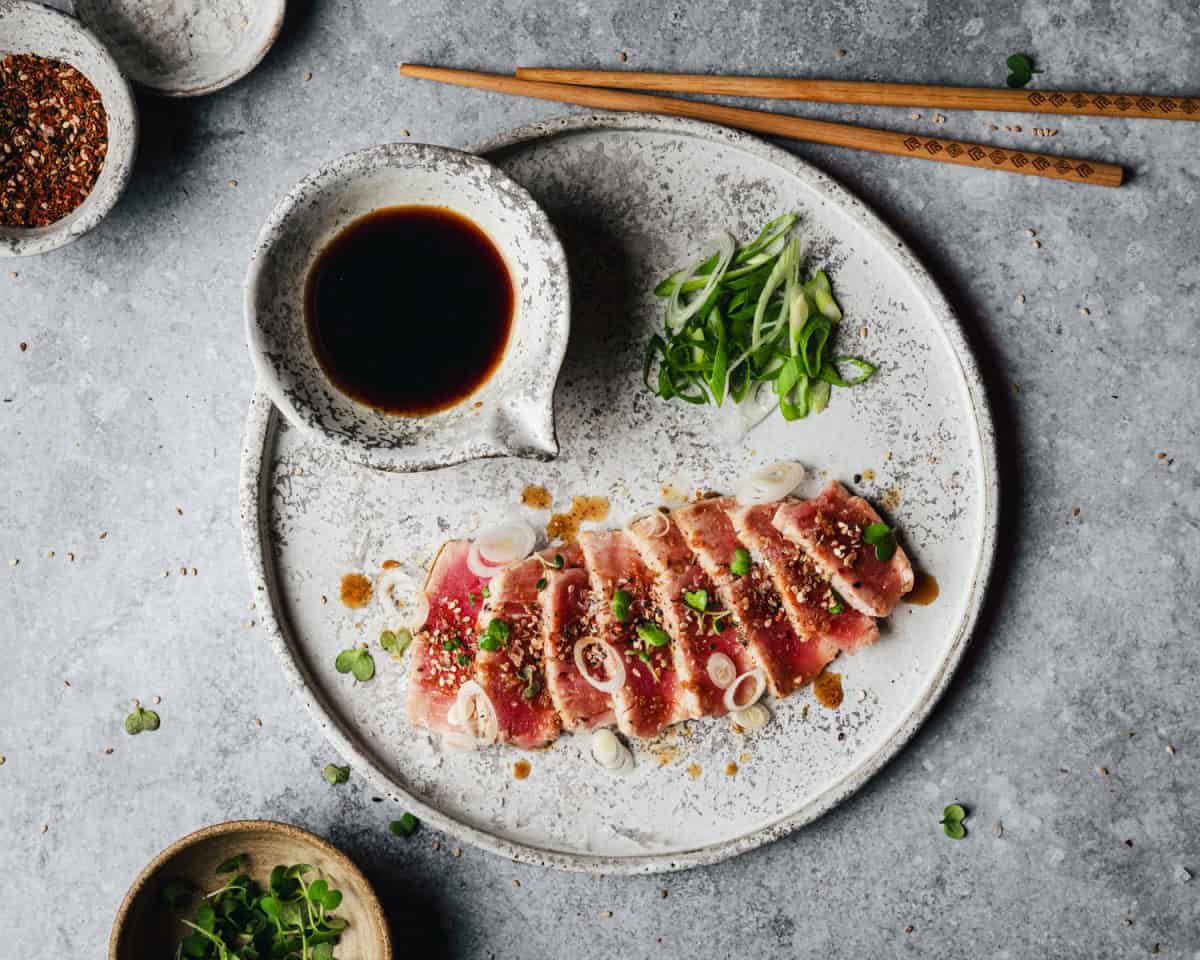
Transfer to a cutting board. Let it cool a few minutes if you want cleaner slices. With a sharp knife, slice thinly across the grain. Arrange on a platter, drizzle with the ponzu–ginger sauce, and top with green onion, sesame seeds, shichimi togarashi, and flaky salt. Add microgreens if you like. Serve right away.
Pro Tips
- Pat the Tuna Dry: Before seasoning, pat your tuna dry with paper towels. It’s a small step, but I’ve found it makes a big difference in getting that golden sear instead of steaming the surface.
- Prep Everything First: Have all your garnishes and sauce ready before you start cooking. Once the tuna hits the pan, it goes fast—best to serve it right away while the center is still cool.
- Watch the Heat: Your pan should be hot, but not smoking. I look for the oil to shimmer, then add the tuna; it sears quickly and stays tender inside.
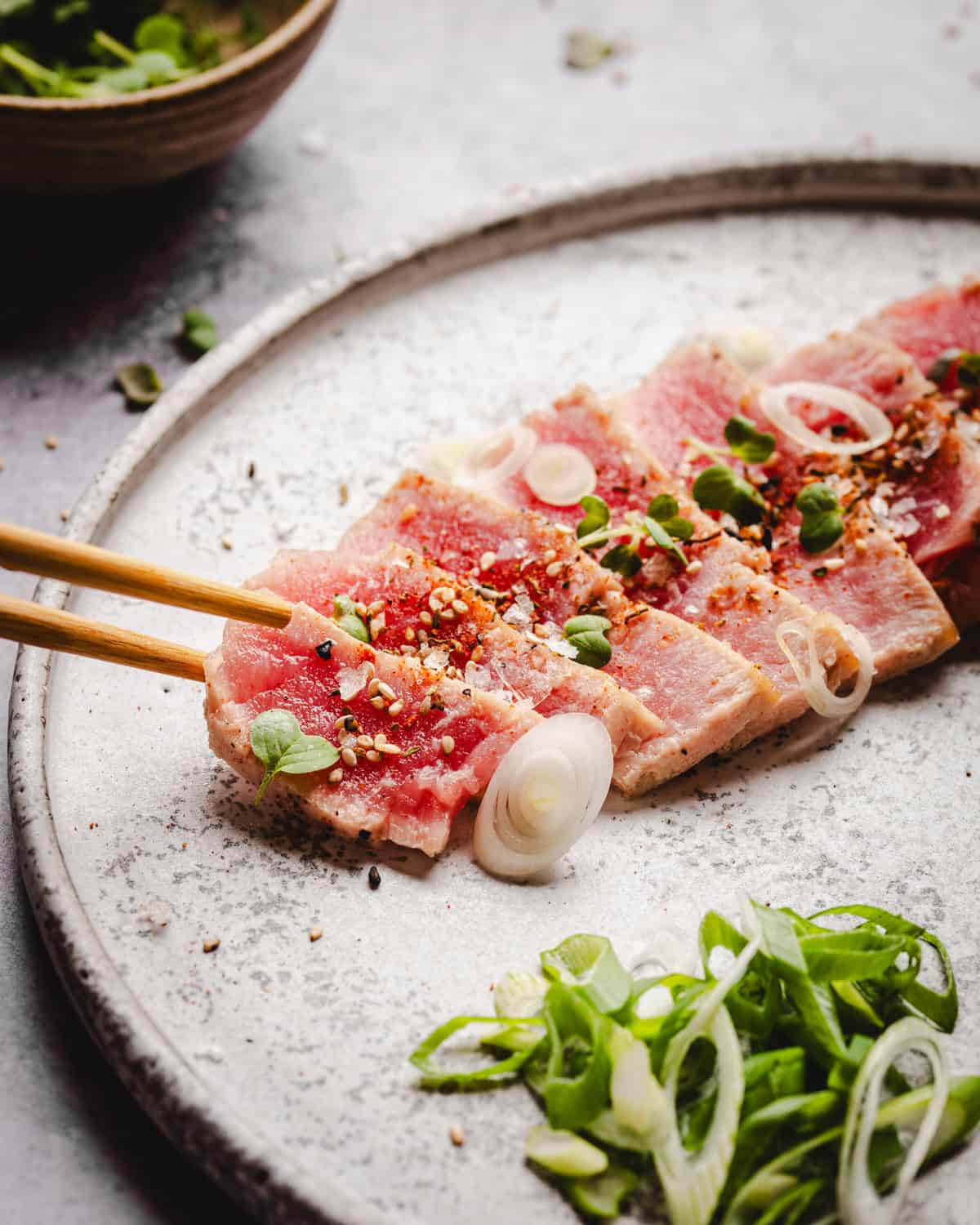
- Slice Against the Grain: Cut perpendicular to the visible lines in the flesh for the most tender bite (see photos below). I keep a dedicated knife just for this kind of clean slicing.
Recipe Options
- Add Citrus: Fresh citrus segments like blood orange or grapefruit make beautiful additions to the plate. I like to add thin slices of Meyer lemon when they’re in season for a subtle sweetness.
- Spice Alternatives: Don’t worry if you can’t find shichimi togarashi. I’ve used everything from a light sprinkle of red pepper flakes to a tiny pinch of cayenne when I’ve run out.
- Swap in Eel Sauce: For a richer, slightly sweet finish, drizzle with store-bought or homemade eel sauce instead of ponzu. I’ve done this when I want something a little bolder—especially good if you’re serving with rice.
FAQ
Yes. Look for sashimi- or sushi-grade (often previously frozen). Ask a trusted fishmonger and keep it very cold until searing.
If you don’t have ponzu sauce, you can quickly mix 2 tablespoons soy sauce with 1 tablespoon fresh lemon juice and a splash of mirin. I’ve done this in a pinch and it works well.
Aim for about ¼ inch. Chill the seared block a few minutes for cleaner cuts.
Make this Tuna Tataki when you want to treat yourself to a restaurant-caliber meal without the restaurant price tag. Nailing that quick sear while keeping the center cool and rare is surprisingly satisfying. The whole dish takes about 20 minutes, but it’s just as worthy of a dinner party as it is for a quiet evening when you want something a little different. Stick with the same technique and change up the seasonings, and you’ve got dozens of variations on a simple, elegant idea; no special tools required. Just great fish and a hot pan.
More Amazing Tuna Recipes


Tuna Tataki Recipe
Video
Ingredients
For the sauce
- 2 tablespoons ponzu sauce
- 1/2 teaspoon finely grated fresh ginger
For the tuna
- 1 pound ahi tuna or yellowfin tuna, 1½ to 2 inches thick (one center-cut block or steak)
- 2 teaspoons neutral high-heat oil (avocado or grapeseed), plus more for the pan
- Kosher salt and freshly ground black pepper
For Serving
- 2 green onions thinly sliced on the diagonal
- 2 teaspoons toasted sesame seeds
- shichimi togarashi (Japanese seven-spice blend), to taste
- flaky sea salt (such as Maldon), optional
- micro greens optional
Instructions
Make the ponzu-ginger sauce
- In a small bowl, combine ponzu and grated ginger; set aside.2 tablespoons ponzu sauce, 1/2 teaspoon finely grated fresh ginger
Season and oil the tuna
- Pat tuna dry. Rub or brush all sides with oil, then season lightly with salt and pepper.1 pound ahi tuna, 2 teaspoons neutral high-heat oil
Sear quickly on high heat
- Heat a cast iron or nonstick skillet over medium-high until very hot. Add a thin film of oil. When it shimmers (not smoking), sear the tuna 1½ to 2 minutes on the first side, until browned. Flip and sear 1 to 2 minutes more; the center should stay rare.
Slice and finish
- Transfer to a cutting board. (Chill 3–5 minutes for easier slicing, optional.) Using a very sharp knife, slice thinly across the grain. Arrange on a platter, drizzle with the ponzu-ginger mixture, and sprinkle with green onion, sesame seeds, shichimi togarashi, and flaky salt. Add microgreens if you like. Serve immediately.
Notes
- Sourcing: Look for sashimi- or sushi-grade tuna (often previously frozen). Keep it very cold until you’re ready to sear.
- Visual doneness cue: Exterior should be browned, edges just opaque, center still deep red.
- No thermometer needed: This is all about a quick sear; timing plus color is your guide.
- Slice tip: A long, sharp knife (or slicing knife) makes it easier to cut clean, thin slices.
- Sauce volume: Double the ponzu and ginger if you want extra for dipping.
- Make ahead: You can sear the tuna up to 4 hours ahead, wrap tightly, refrigerate, then slice and garnish just before serving.
- Leftovers: Best eaten the day it’s made. If needed, refrigerate tightly wrapped for up to 24 hours.
Nutrition
Nutrition information is automatically calculated, so should only be used as an approximation.